Monday, December 30, 2013

2013: A Reporter's Notebook of the Year Gone By

Busy as I was working on two books this year, my output in terms of articles was minimal. Nevertheless, I did manage to address some issue confronting Miami, the city that I live in, as well as Mexico, Haiti and a few other locales. I was also fortunate enough to have my book on the Democratic Republic of Congo reviewed by Kris Berwouts, an always-perceptive veteran analyst of that country.

In hopes for a more gentle 2014, and with much love,

MD


Letter From Miami for the Huffington Post (9 August 2013)

Why Arrest of Zetas Leader Does Not Mean End to Mexico's Drug War for the Huffington Post (16 July 2013)

CAR rebel victory throws resource deals into doubt for FDI Magazine (12 June 2013)

What Venezuelan President Hugo Chávez left behind: A Review of Rory Carroll's Comandante: Hugo Chavez's Venezuela for the Miami Herald (24 March 2013)

Michael Deibert's Haiti Bookshelf for the Huffington Post (18 March 2013)


A journalist ventures back to a troubled, seductive Haiti: A Review of Amy Wilentz's Farewell, Fred Voodoo: A Letter from Haiti for the Huffington Post (18 January 2013)

Reporter depicts events surrounding Haiti earthquake: A Review of Jonathan M. Katz's The Big Truck That Went By: How the World Came to Save Haiti and Left Behind a Disaster for the Miami Herald (14 January 2013)

Reviews of my work

The Democratic Republic of Congo: Between Hope and Despair reviewed by Kris Berwouts for African Arguments (10 December 2013)
 

Books in 2013: A Personal Selection

During a year in which I published one book, The Democratic Republic of Congo: Between Hope and Despair (Zed Books), and finished another, the forthcoming In the Shadow of Saint Death: The Gulf Cartel and the Price of America's Drug War in Mexico (Lyons Press), I also got a fair amount of reading done. As has become something of a yearly tradition, here are the books that made the biggest impression on me in 2013.

Oblivion: A Memoir by Héctor Abad

This work of non-fiction by one of Colombia’s best-known novelists is the moving and painful story of his father, Héctor Abad Gómez, an idealistic physician who was slain by right-wing paramilitaries in 1987 for his work on behalf of the country’s poor and disenfranchised. In the story of his family and of his father, Abad manages to evoke the as-yet-unresolved struggles of an entire country.

Book of Clouds by Chloe Aridjis

A dreamlike and often eerie depiction of a young woman adrift in Berlin, this first novel by the Mexican writer Chloe Aridjis bodes for great things in the future.

The Corpse Had a Familiar Face by Edna Buchanan

An essential bit of Miami noir, this memoir was first published in 1987, the world this book by a former Miami Herald crime reporter depicts was wistful and vanishing (and quite dark) even then. It was a world where much of Miami Beach was still populated by retirees rather than club kids and where journalism was made up largely of regular working stiffs like everybody else and the idea of a journalism “school” was letting someone getting their hands dirty on a tough beat rather than further lining the coffers of  elite universities. “Once a sleepy resort that shut down during the off season,” Buchanan writes, “Miami now copes year-round with concentrations of everything corrupt, bizarre or dangerous from everywhere in the world.”

The Accidental President of Brazil: A Memoir by Fernando Henrique Cardoso

A presidential memoir that is actually more engaging before the subject becomes president, this book by Brazil’s 34th president is most interesting in its depiction of the long, arduous struggle that often diffuse democratic forces there waged against a durable military dictatorship. An interesting portrait of statecraft and democratization. 

Comandante: Hugo Chavez's Venezuela by Rory Carroll

A penetrating and tragicomic look inside the country that Hugo Chávez ran from 1999 until his death this year, this book by the Guardian’s former Caracas correspondent, examines how Chávez created something unique in the country, “an authoritarian democracy...a hybrid system of personality cult and one-man rule.” Examining how, after a failed 2002 coup attempt, Chávez fell ever-more under the spell of Cuban leader Fidel Castro (“The Cubans took us over” states a former ally glumly), Carroll examines how the Cubans supplied revolutionary manpower in exchange for cheap Venezuelan oil, with Cuban doctors pouring into the country to provide their services in the slums , but soon enough returning to Cuba, moving on to work in Bolivia or defection to Colombia or the United States. Their clinics were abandoned, as government officials sought care from elite private hospitals. Roads, bridges and factories all crumbled due to mismanagement and lack of maintenance. And as Chávez’s revolution went along, Venezuelans killed one another in ever greater numbers, with Carroll finally concluding that “the revolution inherited grave social problems and made them worse.” Required reading for anyone interested in modern Latin America. You can read my review in the Miami Herald here.

The Mind of the South by W.J. Cash

A curious amalgam of history, sociology and journalism, this pioneering 1941 work by South Carolina native W.J. Cash lays bare some of the attributes and many of the deficits of his native region, including an exaggerated (and easily offended) sense of honor, a florid religiosity and a maudlin sentimentality focused on a mythology of a past that had never in fact existed. Cash witheringly analyzes “the cult of the Great Southern Heart” that ceaselessly attempted to recast the pre-Civil War era south as “the happy country,” and asserts that the south’s view of itself and the outside world was a “tribal complex” which he compared to fascist Italy, Nazi Germany and Soviet Russia. As with the writing of the great historian John Hope Franklin, the book also serves as a reminder of how, for decades after the Civil War, the Democratic Party was the party of white supremacy, built on white poverty, a commitment that only began to change under Franklin Delano Roosevelt and Harry S. Truman during the 1940s. Essential reading.

Midnight in Mexico: A Reporter's Journey Through a Country's Descent into Darkness by Alfredo Corchado

An immigrant’s memoir as much as a drug war thriller, this book is the heartfelt and affecting story of a Mexican native son who crossed to El Norte with his family’s dreams and then returned to Mexico as a reporter, only to watch a long hoped-for democratic transition descend into a mire of drug-related violence.


Walking Ghosts: Murder and Guerrilla Politics in Colombia by Steven Dudley

As peace talks between the government of Colombia’s president Juan Manuel Santos and the Fuerzas Armadas Revolucionarias de Colombia (FARC) rebel group dragged on throughout much of 2013, perhaps few observers watching them, hoping for a breakthrough and a political opening, realize that the FARC already had a political opening. The Unión Patriótica, a political party founded by the FARC in 1985 in the midst of negotiations with the government of then-president Belisario Betancur, in fact contested elections around the country for several years. That is, before they were all but wiped out by a savage extermination campaign launched by right-wing death squads collaborating with the Colombian military, and undermined by the wild-eyed paranoia and authoritarianism of FARC leader Jacobo Arenas (who died in 1990). The story of of the UP’s creation and extermination forms the crux of this book by veteran Latin American journalist Steven Dudley (who co-founded InSight Crime, a joint initiative of American University in Washington DC, and the Foundation InSight Crime and currently serves as its co-director). The book’s style can at times be distractingly repetitive, but there are still sobering lessons here about the difficulty for Latin America’s oldest and largest rebel group to “come in from the cold” and why Colombia’s long war may not be over yet.

In Evil Hour By Gabriel Garcia Marquez

For a writer who had such such progressive, even utopian, dreams in the political realm, Colombia’s most famous author could certainly have a rather misanthropic view of human beings themselves, and nowhere more so than in this 1962 novel originally titled Este pueblo de mierda (This Town of Shit) but finally published as La mala hora and translated into English as In Evil Hour. Centering around the intrigues of a small Colombian town and a series of poison pen letters posted in public places, the book is a fascinating insight into the beginnings of one of the 20th century's most important writers.

Hemingway's Boat: Everything He Loved in Life, and Lost by Paul Hendrickson

Overlong and sometimes given to trying to copy its subject’s distinctive prose style, this book by journalist Paul Hendrickson focusing on events connected to Ernest Hemingway's 38-foot fishing boat named Pilar is still moving and troubling, particularly when looking at Hemingway's slide into instability, mental illness and eventually suicide and the wreckage this left for his family. Often moored in Key West or near Havana (where she now rests), the Pilar was the vessel that shuttled one of America’s greatest writers through some of his most pivotal, and often happiest, moments, and Hendrickson has found a compelling new angle to cut through the Papa myth and see the troubled and acutely sensitive man behind it.

Franklin D. Roosevelt and the New Deal: 1932-1940 by William E. Leuchtenburg

A fascinating depiction of the extraordinary political skills and accomplishments of one of our greatest presidents, who took the helm of the ship of state at one of its moments of greatest need.


The Death of a President: November 20–November 25 by William Manchester

Key scenes that have faded away in the mists of history - the political infighting that brought John F. Kennedy to Dallas, the chaos at Parkland Hospital following the shooting, the vigil at the airport in Washington as the plane bearing the president’s body landed that cool, damp November night - are brought vividly to life in this excellent book by William Manchester on Kennedy's November 1963 assassination. Other aspects of the story, such as the poisonous right-wing hatred of the president that found Dallas at its epicentre and the pivotal role Ethiopia's Haile Selassie played during Kennedy's funeral and after are also presented to great impact.

The Beast: Riding the Rails and Dodging Narcos on the Migrant Trail  by Óscar Martínez

This book by a reporter for El Salvador’s El Faro website is a terrific example of what fearless enterprising reporting can accomplish, tracing the grinding and danger-filled journey of Central American migrants from the Guatemalan border all the way through Mexico and to the border with the United States, the promised El Norte so close and yet so far behind a border wall and across scoring desert and treacherous rivers Martínez does a stellar job of humanizing the immigration debate in the stories of the men and women willing to risk everything for the chance at a better life and the predators that dog them every step of the way.

Sunday, December 15, 2013

The Democratic Republic of Congo: Between Hope and Despair by Michael Deibert – Reviewed by Kris Berwouts

The Democratic Republic of Congo: Between Hope and Despair by Michael Deibert

Reviewed by Kris Berwouts 

Posted on December 10, 2013 by AfricanArgumentsEditor

(Please read the original review here)

Joséphine Mpongo Nsimba has a difficult life but despite this, she tries to enjoy it. She wakes up before dawn and leaves the house to sell omelets at Kinshasa’s main market. Her income is hardly enough to make a living for herself and her children – prices have fallen recently because cheap eggs coming from outside the continent spoiled the market.  After work, she rehearses.

Josephine plays cello in a symphonic orchestra of gifted amateur musicians, determined and passionate to perform music together in one of the most chaotic cities in the world.  The Film ‘Kinshasa Symphony’ shows how a group of Congolese citizens has managed to forge a system as complex as a symphonic orchestra in a town as complicated as Congo’s capital. The movie is deeply human, intensely real, it paints scenes of extreme grimness as well as portraits of people determined to follow their dreams. Ther are people who continue to believe that, one day, the future will be better despite current indications to the contrary.

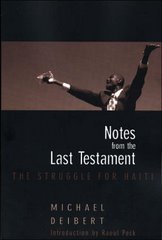
Josephine is also pictured on the cover of Michael Deibert new African Arguments book ‘The Democratic Republic of Congo: Between Hope and Despair’, a groundbreaking examination of one of Africa’s most iconic and tragic countries and  a must-read for people interested in contemporary African politics in general and the Great Lakes Region in particular. Deibert is a journalist and author who has written for the Washington Post, the Wall Street Journal, the Guardian and Le Monde Diplomatique. He has also been a featured commentator on international affairs for the BBC, Channel 4, Al Jazeera, WNYC New York Public Radio and many others. He is the author of Notes from the Last Testament: The Struggle for Haiti (2005).

Congo and Central Africa have been shaped by complex regional dynamics, through which local cleavages and national conflicts have spilled over national borders. Each country in the region has a complex internal situation and a violent recent history, where local contradictions have become polarized and entangled with those of neighbouring countries. Following the end of the Cold War and throughout the 1990s these regional dynamics developed into an avalanche of killing and destruction. During the two wars in the DRC (1996-1997 and 1998-2002) which followed the genocide in Rwanda, the Congo and particularly its eastern provinces became the battlefield of “Africa’s First World War”.

In the book, Michael Deibert has connected thousands of threads to weave into a variegated and subtle tapestry which paints Congo’s history from the dark days of Belgian conquest and tyranny to the modern day atrocities carried out by warring militias and their legions of child soldiers.

Between Hope and Despair closely examines the Congolese state – the result of half a century of post-colonial history and a country that faced its first threat of implosion only days after it achieved independence, became a major pawn on the chess board of the cold war and developed under Mobutu a system for which the word ‘kleptocracy’ had to be invented. Deibert describes how this state was shaped by the long-term involvement of the United States and Europe in supporting and arming many of the belligerents in Congo’s conflicts, the ongoing murky role played by foreign interests in exporting mineral resources linked to the country’s  continuing instability and Congo’s own tortuous political and ethnic legacies.

His judgment is hard: “Drifting and myopic policies drawn up by a succession of international leaders were most often forged in the context of imagined grand geo-politics rather than the realities on the ground, allowing both Kabila and Congo’s neighbor to operate with brutality and impunity. Predatory and unscrupulous foreign business practitioners stepped into the void left by corruption and nepotism and continue to bleed the country dry of its mineral riches.”

Michael Deibert takes us with him on his journey down Congo’s muddy roads from the war-torn hills in the Kivus to the chaotic, pulsing capital of Kinshasa, presenting us the  Congolese polyphony  from impoverished gold prospectors and market women to government officials. His heart is with the communities and his book blames the world leaders who’ve either turned a blind eye to or directly fomented the misery of the Congolese people.

“… the bloodshed that has befallen the country (…) is not the result of some sort of indigenous, irresistible, immemorial blood lust on the part of the Congolese, but rather has been a tool used by individuals and governments  to advance their own political and economic goals throughout the territory Congo occupies, a state of affairs that has been true for the last 140 years.”

I don’t think I will put Deibert’s work back on the bookshelf. I will keep it within reach on my desk. Apart from an empathic narrative of hope and despair and a solid holistic analysis grounded in history, it is also a very practical mini-encyclopedia on Congo’s devastating conflicts and the many attempts to end them. If something happens tomorrow – the death of a key player of the last two decades, the outbreak of new violence in Ituri or the province of Bas-Congo, a new arrest warrant issued by the ICC -  it would only take me a few minutes to freshen up with the necessary background knowledge from Deibert’s book, allowing me to fully understand any new development.

Kris Berwouts has, over the last 25 years, worked for a number of different Belgian and international NGOs focused on building peace, reconciliation, security and democratic processes. Until recently, he was the Director of EurAc, the network of European NGOs working for advocacy on Central Africa. He now works as an independent expert on Central Africa.

One of the greatest


Wednesday, December 11, 2013

Ai Weiwei at the Pérez Art Museum Miami


Ai Weiwei's commentary on the 2008 Sichuan earthquake, which killed nearly 70,000 people, a death toll blamed largely on government corruption and shoddy contruction. On the ground, rebar recovered from the rubble of collapsed schoolhouses and then painstakingly straightened again. On the wall to the left, a list of names of Chinese students who died in the earthquake. On the far wall, photos of the construction of the Beijing National Stadium, constructed for the 2008 Olympic Games.

Sunday, December 08, 2013

Friday, December 06, 2013

RIP, Madiba


"I have fought against white domination, and I have fought against black domination. I have cherished the ideal of a democratic and free society in which all persons live together in harmony and with equal opportunities. It is an ideal, which I hope to live for and to achieve. But if needs be, it is an ideal for which I am prepared to die."

Monday, November 25, 2013

Miami Book Fair

Former United Nations official Mukesh Kapila, author of Against a Tide of Evil: How One Man Became the Whistleblower to the First Mass Murder of the Twenty-First Century, and I holding one another's books at the Miami Book Fair. We spoke about Sudan's Darfur region and the Democratic Republic of Congo, respectively.

Photo © Michael Deibert

Thursday, November 21, 2013

Saturday, November 02, 2013

Wednesday, October 23, 2013

SOAS Book Launch for The Democratic Republic of Congo: Between Hope and Despair

The good people at the School of Oriental and African Studeis (SOAS) in London, along with Zed Books and the Royal African Society, earlier this week held a launch event for my new book, The Democratic Republic of Congo: Between Hope and Despair. I was honored to be part of a panel discussion with both former Coordinator of the United Nations Group of Experts on the Democratic Republic of Congo Fred Robarts and Coordinator of the UK Voices of African Women Campaign Marie-Claire Faray-Kele. The spirited and well-informed discourse both among the panelists and the audience gave me great hope that perhaps the world is finally becoming aware of what has been going on in Congo over the last 15 years and that, perhaps, things may even begin to change. My sincere thanks to all the thoughtful, committed people who showed up on Monday night.


Photos © Michael Deibert

Monday, October 21, 2013

London


"I love this place. It's just like home, filthy and full of strangers."

Saturday, October 12, 2013

Tuesday, October 01, 2013

A note on the debt ceiling debate and the government shutdown

Just so everyone is clear: The debt ceiling vote involves paying for spending that the congress already voted to authorize, not future spending. In other words, the same Republican-controlled House of Representatives that signed off on future spending last year is now refusing to pay for it when the bill comes due. A lot of people seem to think it means future spending, but it does not. In exchange for paying debts they have already incurred, the House Republicans are demanding that president jettison the Affordable Care Act, his signature piece of legislation, which was passed by both houses, signed into law, found constitutional by the Supreme Cort and reinforced by the 2012 election. He's not going to reverse his own greatest legislative victory, Tea Party, no matter how many Civil War reenactments you stage.

Thursday, September 26, 2013

New report by the UN High Commissioner for Human Rights on the Democratic Republic of Congo

The new report by the United Nations High Commissioner for Human Rights on the Democratic Republic of the Congo in important, if troubling, reading. It says, in part:

The High Commissioner notes that the situation of human rights had significantly deteriorated since her previous report to the Council, especially in the eastern part of the country, where...an important increase in the number of human rights violations and serious violations of international humanitarian law that could amount to war crimes, committed by national security and defence forces, as well as by foreign and national armed groups. The increase in gross human rights violations during the period under review can be attributed to various armed groups, including Mouvement du 23 mars (M23), and to the security and defence forces, in relation to M23 activities. M23 combatants were indeed responsible for gross human rights violations and serious violations of international humanitarian law, including summary executions, rape and child recruitment. Other armed groups, which took advantage of the security vacuum that followed the redeployment of FARDC units to combat M23, since May 2012, were also responsible for gross human rights violations and serious violations of international humanitarian law. Such groups have sought to extend their influence and control over areas rich in natural resources in the eastern part of the country, committing attacks against civilians, often on ethnic grounds. In addition, in the context of operations against M23, members of the Congolese defence and security forces allegedly committed gross human rights violations and serious violations of international humanitarian law...
The full report can be read here.

Monday, September 23, 2013

The Democratic Republic of Congo: Between Hope and Despair events


The autumn book tour schedule thus far for my new book, The Democratic Republic of Congo: Between Hope and Despair, published by Zed Books in cooperation with the Royal African Society, the International African Institute and the World Peace Foundation, will be as follows. One or two other events are in the works, as well, and the schedule will be updated in due course.

October 14 

Books & Books in Coral Gables, Miami, Florida, at 8pm.

October 21 

The School of Oriental and African Studies (SOAS) in London, at 6pm. Book launch and panel discussion with Coordinator of the UK WILPF Voices of African Women Campaign Marie-Claire Faray-Kele. Event held in partnership with ZED Books and the Centre of African Studies.

October 30 

Tulane University in New Orleans, Room 201 of the Lavin-Bernick Center for University Life from 4pm to 6pm. Event sponsored by Department of Political Science

November 7 

The University of South Carolina in Columbia, Gambrell 431at 4pm. Event sponsored by the African Studies Program.

November 11

Busboys & Poets (5th and K Street Branch) in Washington, DC. Time 6:30-8:00pm. Events co-sponsored by Friends of the Congo.

November 15 

Bluestockings in New York City. Time TBA.

November 23 & 24 

The Miami Book Fair in Miami, time and location TBA.

Sunday, September 22, 2013

Letter to The New York Times' Public Editor Margaret Sullivan on photos of the Westgate Mall shootings in Kenya

Greeting, Ms. Sullivan,

My name is Michael Deibert and I am an author and journalist who has reported from Africa off and on since 2007, having most extensively worked in the Democratic Republic of Congo.

I am writing to you in your role as Public Editor to express my concern at the photos of dead bodies from the Westgate Mall shootings in Kenya - their faces fully visible - that were published on the New York Times website yesterday. The URL can be found here: [not linking to photos here]

Quite honestly, as a journalist who has reported on conflict for going on quite a number of years, I was shocked and dismayed by this. Would the New York Times run photos of blood-soaked dead white Americans after one of the many mass shootings that occur in the United States? I doubt it. That they did so after the mass killings in Nairobi yesterday is very troubling, not just to me, but also to many other journalists, academics and analysts who focus on Africa.

There are ways to depict violence so that people are not immediately recognizable to their loved ones, friends, and so on, and everyone, American, African, or whatever their nationality, deserves some dignity in death. One can show dead bodies without showing their faces, leaving people confronted for the rest of their lives with images of their family members and other loved ones soaked in blood and torn asunder. I've seen plenty of bodies dead through violence over the years, so I am not asking that the end result be sanitized, but rather wondering why some slight restraint was not used in allowing the bodies to be so immediately recognizable.

I would also stress that I am
not at all taking the photographer to task for shooting as many images as he could in such chaotic circumstances - and showing great personal bravery in the process - but rather why the editors would chose to run some of them.


So, I ask, why this apparent double-standard when it comes to the sensitivities of people in Africa as opposed to people in the United States?

If you choose to reproduce this message, please reproduce it only in its entirety.

I appreciate any light you may be able to shed on this matter.

Sincerely,

MD