Sunday, December 26, 2021

Michael Deibert interviewed in La Tercera

I was interviewed in Chile's La Tercera about the assassination of Haiti's president Jovenel Moïse. The full article files and the original can be read here.

Magnicidio en Haití: la visión de un exagente de la CIA y un periodista que conoció a Moïse
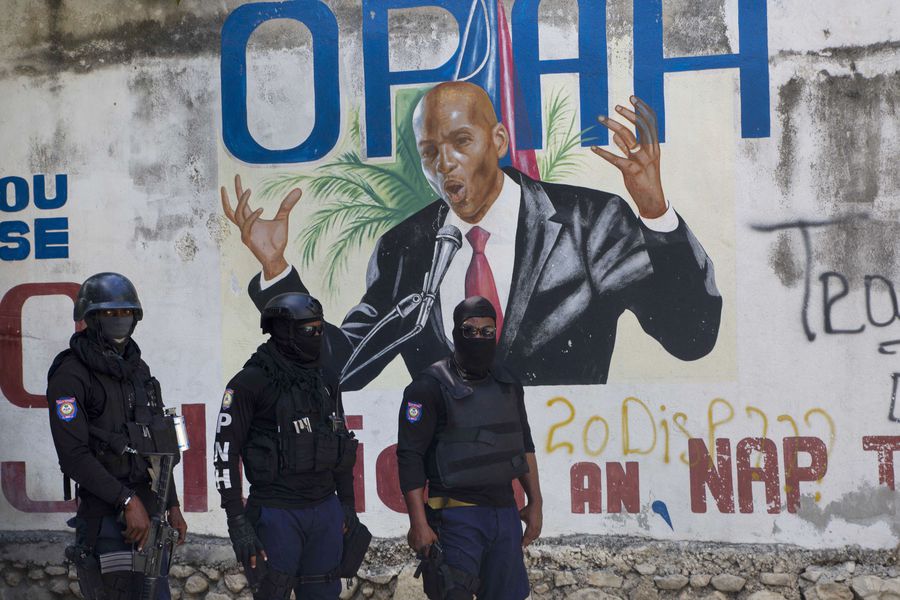
Policías haitianos pasan frente a un mural que representa al fallecido Presidente Jovenel Moïse, cerca de su residencia en Puerto Príncipe. Foto: AP.

Fulton Armstrong fue el jefe de la CIA en el país caribeño durante la década de los 90 y Michael Deibert entrevistó en dos ocasiones a Jovenel Moïse. Ambos entregan a La Tercera su análisis sobre las consecuencias del asesinato del presidente haitiano.

Fulton Armstrong: “Este Estado fallido se puede deslizar a una crisis de proporciones históricas”
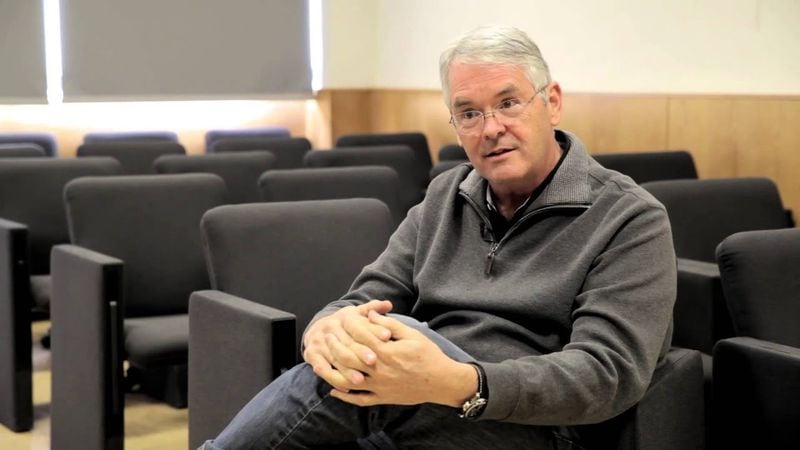
Fulton Armstrong, exjefe de la CIA en Haití durante los 90.

Sirvió en la Sección de Intereses de EE.UU. en La Habana y fue jefe de la CIA en Haití durante los 90. Hoy es miembro del Centro de Estudios Latinoamericanos y Latinos de la American University.

El de Jovenel Moïse no es el primer magnicidio en Haití. En 1915, el Presidente Jean Vilbrun Guillaume Sam fue asesinado por una turba enfurecida después de esconderse en la embajada francesa. Pese a este antecedente, ¿le sorprendió la muerte de Moïse?

En cierto sentido, el asesinato no fue sorprendente. Moïse estuvo involucrado en un juego de poder prolongado y, como muchos otros políticos haitianos, utilizó las pandillas para impulsar su agenda en las calles. Es una estrategia arriesgada y, por supuesto, antidemocrática. Un hombre que vive por la espada puede morir fácilmente por la espada. Pero a otro nivel, es impactante que un jefe de Estado haya sido asesinado. Es sintomático de la ruptura del orden social y, lo que es más importante, de las instituciones. Haití ha estado en crisis durante muchos años y ahora se dirige a una crisis aún más profunda.

En una entrevista en febrero, Moïse denunció que había un golpe de Estado en marcha organizado por “un pequeño grupo de oligarcas”. ¿Quién podría estar detrás de este asesinato? ¿Quién se beneficia con la muerte de Moïse?

Es difícil separar la retórica egoísta de Moïse de lo que realmente sucedió. Las acusaciones de Moïse sobre un “pequeño grupo de oligarcas” tienen valor político para él, pero corren el riesgo de presentarlo como un noble defensor de las masas pobres del país, una caracterización que se contradice con algunos hechos. Nuestros corazones tienen que estar con Moïse y su familia, pero eligió seguir estrategias que también olían a golpe de Estado: cerrar la Legislatura, empujar a un lado al Poder Judicial y promover una reforma constitucional que aumentó su propio poder. Las autoridades en Puerto Príncipe afirman que han matado a los asesinos, pero tenemos que ser claros al respecto y reconocer que los agentes de bajo nivel que hicieron el golpe no lo hicieron por iniciativa propia. Fuerzas poderosas estuvieron detrás del asesinato. Los beneficiarios de la muerte de Moïse son, si la historia es una guía, “todos” menos el presidente fallecido. Su asesinato provocará un festín.

¿El país puede quedar al borde del caos otra vez?

El caos es inevitable en este punto. De hecho, la situación ya era caótica durante meses. La “comunidad internacional”, incluida la OEA, EE.UU. y América Latina, optó por ignorar el caos, pero eso no significa que no fuera caótico. Es justo preguntar cómo Haití, sin una Legislatura, sin un Poder Judicial creíble y sin siquiera un primer ministro legítimo, se va a gobernar a sí mismo. Entonces, sí, el país está al borde del caos nuevamente. Si la comunidad internacional opta por ignorarlo, este Estado ya fallido se deslizará hacia una crisis de proporciones históricas. Para un país que ha vivido en crisis durante décadas, eso dice mucho.
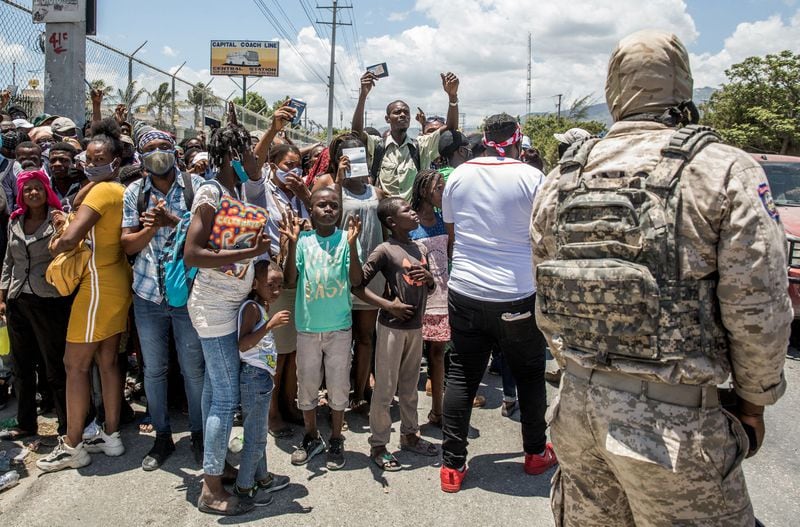
Ciudadanos haitianos se reúnen frente a la Embajada de EE.UU. en Puerto Príncipe, pidiendo asilo luego del asesinato del Presidente Jovenel Moïse. Foto: AFP

Haití ha luchado contra la inestabilidad política desde el fin de las dictaduras de François y Jean-Claude Duvalier. A su juicio, ¿por qué el país ha sido incapaz de superar esta inestabilidad que ya parece endémica?

Buena pregunta. La historia de Haití, desde el momento de la independencia del país, ha sido de sufrir presiones externas e internas. La mayoría de las voces internacionales decisivas -incluidas Francia y Estados Unidos- pusieron sus intereses políticos venales, incluido el apoyo a la esclavitud, y trataron de asfixiar al país. Haití, que anteriormente era la potencia dominante en la isla de La Española, descendió en espiral y ha sido el país más pobre del hemisferio occidental durante muchos años. La inestabilidad del país no es, estrictamente hablando, “culpa” de la comunidad internacional, pero está claro que no hemos ayudado. A medida que las fuerzas internas aumentan para desafiar la estabilidad e incluso los signos ocasionales de cultura democrática en el país, no hemos podido encontrar la manera correcta de hacerlos retroceder.

Haití, que estuvo sujeto a una controvertida misión de estabilización de la ONU entre 2004 y 2017, ¿podría enfrentar otra intervención de este tipo si la situación de seguridad empeora tras el asesinato de Moïse?

Las misiones de la ONU pueden haber sido controvertidas, pero proporcionaron cierta influencia estabilizadora durante muchos años, especialmente desde la restauración del Presidente Aristide en 1994. Es natural y probablemente correcto que recurramos a la ONU una vez más para proporcionar algo de liderazgo y asistencia en Haití. Estados Unidos bajo Donald Trump y, desafortunadamente, incluso bajo Joe Biden no ha logrado proporcionar algo de liderazgo. En este vacío, solo la ONU ha demostrado liderazgo, por lo que es natural volver a buscar ese liderazgo.

¿Cree que están dadas las condiciones para realizar las elecciones presidenciales, legislativas y el referéndum constitucional programados para el próximo 26 de septiembre?

Yo tampoco creo en Santa Claus, el Conejo de Pascua o el Hada de los Dientes. Haití no tiene las condiciones necesarias para unas elecciones creíbles o un referéndum. Un gobierno interino tendrá que crear esas condiciones, un proceso que no será rápido.

Michael Deibert: “Hay una élite política corrupta y depredadora que se beneficia del caos”

Michael Deibert, periodista estadounidense que entrevistó dos veces a Jovenel Moïse.

Periodista y escritor de EE.UU. ha informado sobre Haití durante casi 25 años. Autor de Haití no perecerá: una historia reciente (2017) y Notas del último testamento: la lucha por Haití (2005).

El de Jovenel Moïse no es el primer magnicidio en Haití. En 1915, el Presidente Jean Vilbrun Guillaume Sam fue asesinado por una turba enfurecida. Pese a este antecedente, ¿le sorprendió la muerte de Moïse?

Moïse era una persona complicada e imperfecta sentada sobre un sistema letal mucho más grande que él y, en su deseo de cambiar Haití, se hizo enemigo de muchas personas peligrosas. Pasé horas entrevistándolo y fue difícil reconciliar al humilde hombre que hablaba con aparente sinceridad de su deseo de construir carreteras y llevar electricidad a Haití con la figura que tanto odio inspiraba entre algunos y la aparente amnesia sobre una oposición que con frecuencia, casi exclusivamente, optaba por la violencia en lugar de la negociación. En muchos sentidos, Moïse, quien nació en un pequeño pueblo en el norte de Haití, era más típico del haitiano promedio que la mayoría de los políticos profesionales que desfilaban, como gallos en un patio, en la capital. Era un hombre terco que, a pesar de las muchas fechorías de sus propios aliados y partido político, parecía creer genuinamente que podía transformar el país. Claramente, había fuerzas que no permitirían que esto sucediera.

¿Quién podría estar detrás de este asesinato? ¿Quién se beneficia con la muerte de Moïse?

A pesar de sus propios defectos y sus tendencias autoritarias, Moïse ciertamente se hizo enemigo de algunos de los oligarcas corruptos y de las élites políticas que se han beneficiado durante tanto tiempo de la disfuncionalidad de Haití. Sus intentos de modernizar la producción de energía y la infraestructura del país, por ejemplo, amenazaron a mucha gente poderosa, fuerzas que no tienen alergia a la sangre. Al mismo tiempo, ha habido rumores de que han amenazado a las fuerzas dentro de su propio partido, el Parti Haïtien Tèt Kale. El presidente interino, Joseph Lambert, es un producto y un beneficiario del antiguo orden político que Moïse afirmó que estaba amenazando.

¿El país puede quedar al borde del caos una vez más?

Hay fuerzas en Haití más grandes que el presidente, una élite política corrupta y depredadora, que se beneficia del caos y la disfuncionalidad y hará cualquier cosa, incluido, ahora lo vemos, el asesinato de un presidente, para asegurar que el sistema sanguinario continúe. Ahora Moïse se ha ido. El sistema que finalmente lo mató, hecho de sangre y huesos, continuará avanzando y los perpetradores de este crimen continuarán sentados encima de él, al menos por el momento. Lo que Haití necesita con urgencia, en mi opinión, es una entidad similar a la Comisión Internacional contra la Impunidad en Guatemala (CICIG), que existió desde 2006 hasta 2019 y que investigó el crimen organizado y grupos armados ilegales y sus vínculos con el Estado. Esta entidad, con respaldo internacional, haría más que cualquier fuerza de mantenimiento de paz para enfrentar el cáncer de la corrupción y la impunidad.

Un automóvil carbonizado cerca del cuartel de policía de Petionville, donde los sospechosos del asesinato del Presidente Jovenel Moise se encuentran detenidos, Foto: AFP

¿Por qué el país ha sido incapaz de superar esta inestabilidad que ya parece endémica?

Durante varias décadas en Haití hemos sido testigos de la forma de democracia, el proceso de elecciones, mientras que el fondo de la democracia, un gobierno representativo que responda a la voluntad del pueblo, está en gran parte ausente. Entre los extranjeros a menudo hay un enfoque en los grupos armados que ejercen control sobre vastas áreas del país, especialmente Puerto Príncipe, pero lo que a menudo se descuida es que la mayoría de estos grupos tiene patrocinadores en la élite política y económica que los utiliza como una especie de milicia privada. Este sistema comenzó bajo el gobierno de Jean-Bertrand Aristide a principios de la década de 2000 y ha hecho metástasis hasta infectar, hoy, a todo el cuerpo político. En conjunto con la impunidad y la corrupción, está claro que los problemas en Haití son estructurales y sistémicos y no pueden resolverse únicamente con elecciones. El cuerpo del paciente está enfermo y un abordaje estructural, similar a la CICIG, creo que es uno de los antídotos.

Haití, que estuvo sujeto a una controvertida misión de estabilización de la ONU entre 2004 y 2017, ¿podría enfrentar otra intervención de este tipo si la situación de seguridad empeora?

Cualquier misión de este tipo sería sólo una solución temporal, cosmética e ineficaz si no se afrontan los problemas estructurales.

¿Cree que están dadas las condiciones para realizar las elecciones presidenciales, legislativas y el referéndum constitucional programados para el próximo 26 de septiembre?

Creo que las elecciones que se celebren en las condiciones actuales -el asesinato de un presidente, el gobierno de bandas armadas en gran parte de la capital, la continua pauperización y marginación de la mayoría- solo servirían para afianzar aún más a la rancia clase política que trajo a este abismo al país, que sigue siendo, a pesar de su imagen, un país verdaderamente grande, con mucha sabiduría para ofrecer al mundo.

Michael Deibert interviewed in El Nuevo Día

 I was interviewed in Puerto Rico's El Nuevo Día regarding the assassination of Haiti's President Jovenel Moïse. The article can be read here.

A presidential assassination

The AmericasJul 10th 2021 edition

A presidential assassination


The murder of Haiti’s president will worsen the country’s chaos

Jovenel Moïse was unloved. But his death leaves the country with a power vacuum


Jul 7th 2021

(Read original article here)

OPPONENTS OF Jovenel Moïse, Haiti’s president since 2017, have long wanted him to leave office. Now he has—but not in the way they were expecting. A group of unknown attackers shot and killed Mr Moïse in the bedroom of his private residence in a gated community on the outskirts of Port-au-Prince, the capital, in the early hours of July 7th. They also injured his wife. Claude Joseph, whom the president appointed as interim prime minister in April, announced the killing in a statement and said he had taken charge of the Caribbean country. Haiti was already in turmoil—much of it due to Mr Moïse’s rule. His murder has added fuel to the flames.

On the morning after the murder Port-au-Prince’s streets were unusually quiet, without the usual roar of motorcycles and bustle of market stalls, as Haitians tried to guess what might happen next. The city’s airport was shut, as was the land border with the Dominican Republic.

The assassination has shocked a country which, for all its history of misrule and criminal violence, last witnessed the killing of a president in 1915. Rumours swirl about who was behind it. By the evening of July 7th the police chief announced that four suspects had been killed, and two more arrested. The assassins were probably mercenaries. The question is: who hired them? “It was obviously somebody with a lot of money and a lot of power,” says Monique Clesca, a former UN official.

Many pointed the finger at opposition politicians or Haitian elites. Other Haitians, who given the country’s history are suspicious of foreign interference, suspect the attack came from outside, possibly from Venezuela or the United States. Mr Joseph said some of the attackers spoke Spanish (Haitians speak Creole and French). Another video suggested they spoke English and claimed to be agents of the US Drug Enforcement Administration. This is certainly not the case, but the whispers add to the volatile situation.

It was not the first attempt on Mr Moïse’s life—at least, according to him. In February his government arrested at least 23 people, including a top judge and a senior police officer, who were accused of plotting an assassination and coup. Mr Moïse, a former plantation manager who referred to himself as “Banana Man”, had no shortage of enemies. Critics accused him of involvement in the pilfering of millions of dollars from PetroCaribe, an aid fund from Venezuela. Opponents said his term ended in February, five years after his predecessor left office. He claimed his term started when he took power, a year later—a position backed by the United States, although Joe Biden’s administration urged new elections this year. Protests regularly broke out against his rule.

As the political crisis deepened, Mr Moïse became more authoritarian. Since January 2020, when he dismissed all but ten senators in the two-chamber legislature, the president had been ruling by decree. He used his powers to create an intelligence agency and broadened the definition of terrorism to include acts of dissent. Protesters were attacked by gangsters. Mr Moïse denied asking them to intimidate and kill his opponents.

Previous Haitian presidents have fostered violence and corruption, too. But under Mr Moïse the situation grew worse. Critics accused him of using gangs to a greater extent to do his bidding, while having far less control over them, than previous presidents. In recent weeks fighting in Port-au-Prince has intensified; thousands of people had to flee their homes in June alone. By some estimates, kidnappings in Haiti tripled last year compared with 2019.

Although Mr Moïse has been the focus of much discontent, his death is unlikely to simplify things. “He was a complicated and flawed person, but the people who made him the single focus of all that is wrong in the system of Haiti miss the larger failures of that system,” says Michael Deibert, an American expert on Haiti.

Mr Joseph has little legitimacy. Mr Moïse had nominated Ariel Henry, a doctor, as permanent prime minister; he was due to take office on the day of the assassination. The constitution does not provide for the lack of both a president and a National Assembly, and the chief justice of the Supreme Court, who could arbitrate, died two weeks ago of covid-19. The killing could also make it harder to hold elections for a new president and legislature, which are due in September.

In many ways Haiti already looks like a failed state. Men with guns have long terrorised its people. Only last month Jimmy Chérisier, alias Barbecue, a former policeman and leader of an alliance of gangs, announced a “revolution” against the status quo (though many think he meant the opposition). The police are weaker than the gangs, who may now feel they have a free hand. Now that lawlessness has reached the country’s highest office, many Haitians fear the worst.■

A version of this article was published online on July 7th 2021

This article appeared in the The Americas section of the print edition under the headline "A presidential assassination"


Friday, July 16, 2021

Oración

Oración


By Amaury Pacheco

(Translated by Michael Deibert)


Here we are the pilgrims.

Myrrh, incense, gold from our poetic stay,

diamond rain we bring.

SAN LÁZARO, I pray to your heart for each Cuban,

materialize your goodness on the island, bathe it with your gifts,

beyond these edges so that prosperity

lights a fire in homes, in mind, body and soul.


SAN LÁZARO of the diasporas

poetic chimeric kabbalistic buddhist new age christian

progressive put in the 17 Cosmic friend of GOD

Give us Cubans the certainty to make our way

between the deceptions dangers discrepancies

disappointments sadness miseries and misfortunes

of a blurred destiny.


Convert the adventure of living

into the joy of being reborn at every moment.

Give us Cubans today the peace of change.


Biographical note:

Amaury Pacheco (born 1969) is an Afro-Cuban poet and activist and one of the founders of the Movimiento San Isidro, a group of activist artists that has staged protests against the restrictive measures of the Cuban government since 2018.

Translator’s note:

San Lázaro (Saint Lazarus), the patron saint of healing and the sick, is represented by the orisha Babalú-Ayé in the Santería religion. His shrine, the site of an annual pilgrimage, is located in the Havana suburb of Rincón.

Thursday, March 18, 2021

Between us and heaven


"Entre nous et le ciel, l'enfer ou le néant, il n'y a donc que la vie, qui est la chose du monde la plus fragile..."

In living the peripatetic existence of an author and a journalist over the years, I have often thought of these words by the French philosopher Blaise Pascal, which translate into English, more or less, as "between us and heaven, hell or nothingness, there is only life, which is the most fragile thing in the world." 

You end up leaving a bit of yourself in a boteco in Rio de Janeiro, in an outdoor autumn market under slate-grey autumn skies in Paris, in a lakou in Haiti where the bare mountains witness drumming and dancing and singing that show you, despite all the material struggle, the beating heart of a people still endures. 

And you realize that life often hangs by a thread. Life is full of tragedy and struggle, and I have known my share of people who wanted nothing more than to live, but who were deprived of it by some dictator, or a band of criminals or by poverty. And I've known people who couldn't take living and chose, though direct action or slow capitulation, to take their leave of it. 

After a wrenching 12 months characterized by so much loss, it is easy to be engulfed by pain. But life has beauty, too, and the transitory nature of it, the fact that le monde est comme une goutte de rosée qui s'évapore aux premiers rayons de soleil as the wistful Syrian proverb that greets visitors to the Musée du Quai Branly in Paris states, is what gives it its intense poignancy. Todavía podemos sonreír, aunque tengamos cicatrices en la cara. 

So, adieu to los que se fueron. We will never forget you. To those of us who have made it through so far, let's make the time we have left mean something. The world is all before us, where to choose. 

With best wishes and love to you all.

Saturday, March 06, 2021

Michael Deibert on BBC Newshour


My interview about Haiti on BBC Newshour appears at the 14 minute mark here. We touch on Haiti's political crisis, the international role in it and the Dominican Republic's proposed border "wall." It appears around the 14 minute mark here.

Haiti: Hoping Against Hope

 I was quoted in this week's article about The Economist on the situation in Haiti.

Feb 27th 2021

Hoping against hope 

Can Haiti rid itself of Jovenel Moïse?  

The country needs a new leader. It is not clear when it will get one

The Economist

(Read the original article here)

NIXON BOUMBA used to take morning jogs through the prosperous Pacot neighbourhood in Port-au-Prince, Haiti’s capital. The area has steep, tree-lined streets and “gingerbread” houses. (These wooden-lattice structures, built in the early 1900s, survived a devastating earthquake in 2010.) But Mr Boumba does not jog any more. A surge of kidnappings and murders has kept him indoors (see chart). The gangs responsible for those crimes often have links to the police and politicians. The true number of attacks is probably far higher than the reported one. “We are living in a time of terror,” says Mr Boumba, a human-rights activist.

Terror has not stopped him from joining protests against President Jovenel Moïse. These have been going on for more than two years, provoked initially by economic hardship and allegations of corruption. Since January this year crime, and the fear that Mr Moïse is setting himself up as a dictator, have sparked a new wave. The protesters contend that his term ended on February 7th this year. They want his immediate departure.

Terror has not stopped him from joining protests against President Jovenel Moïse. These have been going on for more than two years, provoked initially by economic hardship and allegations of corruption. Since January this year crime, and the fear that Mr Moïse is setting himself up as a dictator, have sparked a new wave. The protesters contend that his term ended on February 7th this year. They want his immediate departure.

Those making that demand are divided into two broad groups. They are as much at odds with each other as they are with the president. Pro-democracy idealists like Mr Boumba are mainly activists, professionals and young people. They have no political parties or elected officials. The established opposition is led by former office-holders. Some have been allies of Mr Moïse. They join the anti-Moïse agitation, but are regarded by the idealists as being just as corrupt as the regime. They seem interested only in taking power, says Rosy Auguste Ducena, a human-rights lawyer. Haiti’s hope lies with the new generation. But the three-way fight makes it harder to predict who will steer the country’s future.

Mr Moïse, a former plantation manager who calls himself “Banana Man”, exemplifies the failings of recent Haitian presidents and has added to them. Popular anger flared in 2017 after reports, which he denies, that he had stolen millions of dollars from PetroCaribe, an aid programme paid for by Venezuela. These allegations, plus fuel shortages and high inflation, provoked demonstrations in the following year. In 2019 a peyi lock (internal blockade) closed schools and businesses for months. This deepened a recession that had already started. Today 35% of Haitians are suffering acute hunger, according to the UN. In the pandemic’s first wave around 120,000 Haitians lost jobs in the neighbouring Dominican Republic, increasing the misery.

Mr Moïse’s alleged use of violence against opponents and his flouting of democratic norms remind some people of “Baby Doc” Duvalier, Haiti’s last despot, who was overthrown in 1986. His foes accuse him of overseeing Haiti’s “gangsterisation”. Politicians have long had links to criminals, but Mr Moïse’s seem especially strong, his critics say. (He denies these claims.) In January Jimmy “Barbecue” Cherizier, a former police officer and leader of G9 and Family, an alliance of gangs, led a march in defence of Mr Moïse. Last year the United States imposed sanctions on Mr Cherizier and on two senior officials in Mr Moïse’s administration for planning a massacre by police of at least 71 people in 2018 in La Saline, in Port-au-Prince. The motives are unclear. Many gangs are widely thought to have agreements with the government to silence opposition neighbourhoods in exchange for impunity. Mr Moïse disputes this, too.

Within the government, it is Mr Moïse himself who enforces compliance. In the absence of a functioning legislature, he has been ruling by decree since January 2020. Legislative elections were not held on schedule because parliament failed to pass an election law during the peyi lock. Just ten members of the 30-seat Senate still hold electoral mandates and none of the lower house’s 119 seats is occupied. There are no serving mayors.

In November Mr Moïse created an intelligence agency, answerable only to him, and widened the definition of terrorism to include acts of dissent. In February this year he forced three Supreme Court judges into early retirement and ordered the arrest of a score of his most prominent detractors, accusing them of plotting a coup.

Mr Moïse disputes the opposition’s claim that his term is already up. He took office in 2017, after a re-run of a flawed election held two years earlier. His five-year term thus expires next February, he reasons. His foes doubt he will leave office even then. In a referendum to be held in April, Mr Moïse plans to seek approval for amendments he wants to make to the constitution. These might include giving him the right to run for a second term. Under the constitution, a president cannot exercise powers that he introduces into it. Mr Moïse’s foes doubt that he will comply.

Beyond a shared desire to remove him from power, the two currents of opposition have little in common. Established opposition politicians are as bad as the president, activists say. Youri Latortue, a former senator who is one of the old opposition’s most prominent figures, was once described in an American diplomatic cable as one of the most “brazenly corrupt of leading politicians”. (He denies this characterisation.) Some opposition leaders are backed by anti-government gangs, which differ little from pro-government outfits.

The new opposition aspires to reinvent politics. “This is about starting something new, this is about respect of human rights, this is about organising fair and credible elections,” says Emmanuela Douyon, a leader of Nou Pap Dòmi (We Will Not Sleep), a social movement. She and her allies know that will require ending the political instability that began with Duvalier’s fall. Election results since then have nearly always been disputed by the loser. The opposition almost invariably demands the president’s resignation, says Michael Deibert, author of two books on Haiti. In 2016 less than 20% of eligible voters turned out in the election that Mr Moïse won. The constitution, adopted in 1987, has never commanded broad respect. A Creole saying holds that “constitutions are paper, but bayonets are steel”, says Robert Fatton of the University of Virginia. The opposition acknowledges the need for constitutional change, but does not want Mr Moïse leading it.

Civil-society groups are planning to hold a huge march on February 28th. After that, the route is uncertain. Most opposition forces want to install a transitional government as a prelude to holding free elections. But they disagree on how to do that. The old guard want a forcibly retired judge, Joseph Mécène Jean-Louis, to be interim president. Activist groups want someone outside the political elite in that job. That person may be in power for a while. The interim authority would need to take substantial time to prepare for credible elections, says Ms Douyon. Meanwhile, she hopes, new politicians will offer themselves as candidates, drawing new voters.

Unifying opposition groups behind a single proposal will be difficult. Obtaining Mr Moïse’s co-operation will be impossible. The United States, which is home to 1m Haitians whose remittances sustain Haiti’s economy, fears that his immediate removal would lead to chaos. On February 5th the State Department backed Mr Moïse’s claim that his term ends in 2022, a decision that outraged protesters, who remember with bitterness the United States’ repeated military interventions in Haiti. It is “putting their foot on the scales”, argues Brian Concannon, a long-time Haiti-watcher. Many Haitians, including some in the diaspora, suspect that the United States doubts that Haiti can handle democracy.

The activists confronting Mr Moïse hope to prove that view wrong. Haiti’s well-wishers are cautious. “Maybe we’ve reached the bottom, and the only way is up,” speculates Mr Fatton, who was born in Haiti. But he has thought that before. ■


Wednesday, February 24, 2021

Rumblings of Change in Puerto Rico

22 February 2021

Rumblings of Change in Puerto Rico 

The island territory is ruled by the United States but politically and socioeconomically adrift from it. Many want that to change 

By Michael Deibert

(Read the original article here)

Tamara Zoe García’s great-grandmother remembered when the soldiers came to town.

“She was 10 years old when the Americans arrived,” García tells me as we stand along the malecón in Guánica, a seaside town in southern Puerto Rico.

“She watched them marching the Spanish soldiers in shackles to Yauco,” she says, referring to a hillside town about seven miles away.

Shielded between two hills, the bay of Guánica, where the U.S. military arrived to seize Puerto Rico as war booty during the Spanish-American War on July 25, 1898, glitters under the midday sun, the wind churning the sea to create diamonds on the crests of the waves.

Behind us lies Guánica itself, a colorful sprawl of low-slung structures, many still severely damaged from a 6.4 magnitude earthquake in January 2020, which briefly knocked out power across the entire island. This was the second time Puerto Ricans were plunged into darkness in less than three years; Hurricane Maria in 2017 claimed over 3,000 lives and knocked out power to the island for months while then-President Donald Trump golfed and tweeted his rage at NFL players

Such blows of nature are themselves a testimony to the complex and ambiguous relationship between this island of 3 million people and the giant power that lords over it from the north.

“Even before the earthquake, there were the budget cuts,” says Carlos García (no relation), an unemployed handyman from the town who, like Tamara Zoe García (herself a chef by training), is a member of Team 821, a group of local citizens who formed after the quake to pool their resources and try to improve the lives of residents. He stands before an abandoned pink and white house, dramatic fissures running up its sides, its support pillars looking near collapse.

“There was a consolidation of government offices,” Carlos García says. “The unemployment office went to San Germán [a mountain town about 15 miles away], cupones [the island’s equivalent of food stamps], went to Lajas. We don’t have those services anymore.”

Ringed with glistening white sand beaches and blessed with an interior of undulating, fecund mountains, Puerto Rico (officially the Estado Libre Asociado de Puerto Rico or Free Associated State of Puerto Rico) exists in a colonial twilight among the family of world nations. Over the last four years, it has endured the destruction of hurricanes Maria and Irma, widespread protests that drove Gov. Ricardo Rosselló from power in 2019, the 2020 earthquake, and a grinding economic crisis that has now stretched into its second decade and dovetailed with the coronavirus pandemic.

Within a month of Tamara Zoe García’s great-grandmother watching the U.S. forces march the Spanish away in Guánica, they had succeeded in defeating the creaking European empire across Puerto Rico’s entire 100–by-35 mile expanse. The Americans had arrived less than a year after the adoption of the Carta Autonómica, which had granted Puerto Rico significant autonomy from Spain and established an elected House of Representatives, an autonomous judiciary, and a great degree of economic control. The Puerto Rican writer Tomás Blanco would call the Carta Autonómica “the crystallization that has long been claimed and debated, of a rule of law that opened a broad channel for the hope of solving regional problems from the local point of view.”

All of that would change. The island would be ruled by unelected and often racist functionaries for five long decades afterward, and moves toward independence would be violently crushed by U.S.-backed security forces, culminating in a 1937 massacre in the southern town of Ponce on Palm Sunday 1937, during which 19 civilians died and some 200 were injured.

Finally, in 1952, under the aegis of the Partido Popular Democrático (PPD) of the island’s first elected governor, Luis Muñoz Marín, a new constitution came into effect, setting up the relationship between Puerto Rico and the United States, which still exists today. More populous than 22 current U.S. states, Puerto Ricans are U.S. citizens who can vote in U.S. presidential primaries but not in the general election. The island is represented by a single, nonvoting member (known as the Resident Commissioner) in the U.S. Congress, and while it elects its own governor and bicameral legislature, ultimate power over the island’s fate lies with the U.S. president and a U.S. Congress the island’s citizens have no say in electing.

Muñoz Marín and the PPD initiated an aggressive program of industrialization on the once largely rural island that became known as Operation Bootstrap, and soon the income generated by manufacturing outstripped that generated by agriculture as an urban, export-oriented economic model took hold. Puerto Ricans unsatisfied with the arrangement could travel with ease between the island and the mainland United States, where even better-paying jobs awaited, an escape valve that to a large degree headed off the roiling social unrest that occurred elsewhere in Latin America during the second half of the 20th century.

By the end of the 1960s, electoral politics on the island translated into a political tug of war between the PPD and the Partido Nuevo Progresista (PNP), which supports the island being admitted as a full state within the United States. (Despite often being characterized as a party of the right, the PNP in fact encompasses an idiosyncratic range of political opinion from Trumpist Republicans to liberal Democrats, only united by their mutual desire for statehood and talent for political fratricide.) The island’s third political tendency — for independence — had been severely weakened following the crushing of violent pro-independence uprisings in the early 1950s and the subsequent targeting of activists by the FBI as part of its Counterintelligence Program and by Puerto Rican police.

A provision of the Internal Revenue Code enacted in 1976 — known as Section 936 — gave companies from the mainland United States an exemption from federal taxes on income earned in Puerto Rico and helped spur further growth in manufacturing jobs and other sources of work, especially in the pharmaceutical industry. It would be the repeal of Section 936 in 1996 — undertaken by then-President Bill Clinton with bipartisan support to pay for a minimum wage hike on the mainland — that would begin to herald Puerto Rico’s long, steady decline.

During this period, the island was governed by a PNP-affiliated physician named Pedro Rosselló — the father of Ricardo Rosselló — who led a scandal-plagued administration and left office in January 2001, bequeathing the island a public debt of some $25.7 billion.

Over the next several years, the island’s government would impose a range of new taxes to cover the shortfall as the island’s general obligation bonds sank toward junk status, which brought about the arrival of capitalist adventurers. Hedge funds lent Puerto Rico more than $3 billion, envisioning a 20% return on the back of the island’s constitutional clause requiring that bonds be paid back. The funds were dominated by politically powerful entities, such as the Paulson & Co. hedge fund of leading Republican donor John Paulson, who would later serve as an early endorser of and economic adviser for Trump’s presidential campaign. As a territory, Puerto Rico had no legal ability to declare bankruptcy, and repeated downgrades of the worth of its bonds had effectively shut it out of the bond market. The government was reduced to short-term bank credit financing and other schemes to stay afloat from month to month, effectively creating a pyramid scheme where the state was borrowing money from some lenders to pay others.

In June 2016, the U.S. Congress passed the Puerto Rico Oversight, Management, and Economic Stability Act (PROMESA), which established the Financial Oversight and Management Board (FOMB, though often referred to locally as “la junta”) with the power to restructure $70 billion of the island’s debt. It was signed into law by Obama that same month. Thus, an unelected federal entity was given the ability to manage the island’s finances over that of its elected government.

The protests that erupted in Puerto Rico in July 2019, following the leak of hundreds of profane chats between Rosselló and his close advisers, during which they mocked ordinary Puerto Ricans and fantasized about the assassination of political opponents, grew out of a social milieu that, for anyone under the age of 30, had been only a grinding litany of austerity, natural disasters, and wild political cronyism to rival anything seen elsewhere in Latin America, with the politically connected offered plum government jobs, contracts, and high salaries while the rest of the population was largely left to fend for themselves or exercise “the JetBlue option” (migration to the mainland United States).

After 18 months of custodial governorship by former Secretary of Justice Wanda Vázquez, Pedro Pierluisi, a PNP politician who in his 2009-2017 role as Resident Commissioner was instrumental in crafting PROMESA, was elected as Puerto Rico’s governor this past November with 33.24% of the vote in a five-person race. Pierluisi, who took office in January, had previously served a chaotic five days as governor following the resignation of Rosselló, only to have Puerto Rico’s Supreme Court declare his assumption of the office unconstitutional. The PNP also retained the office of Resident Commissioner and won the mayorship of San Juan, where former Secretary of Labor Miguel Romero narrowly defeated former PPD deputy Manuel Natal, who ran as the candidate for the Movimiento Victoria Ciudadana (Citizens’ Victory Movement or MVC), a new party formed just before the 2019 protests, in an acrimonious ballot fraught with charges of fraud.

Despite the initial impression of stasis, however, it would be a mistake to say that nothing has changed in Puerto Rico’s political landscape since the 2019 uprising. The long-dominant duopoly of the PNP and PPD appears to have broken down.

Two of the MVC’s members won election to the island’s Senate and two to its House of Representatives, while the right-wing Proyecto Dignidad won one seat in each. For the first time in history, women constitute a majority in Puerto Rico’s Senate, where five supporters of independence will also occupy seats. In an election where 34% of the electorate voted against the two main-party candidates for governor, MVC candidate Alexandra Lúgaro, came in third with 14.21%, while the candidate for the pro-sovereignty Partido Independentista Puertorriqueño (PIP), Juan Dalmau, received 13.72%, a fairly stunning result considering that in the 2016 elections, the PIP’s gubernatorial candidate received only 2.13%.

Conversely, however, in a concurrent referendum on the island’s status in which voters were asked whether Puerto Rico should be granted statehood within the United States, 52.52% answered “yes” while 47.48% rejected the concept. The referendum, which was nonbinding, followed a two-part 2012 status referendum where 53.97% voted that they did not wish to continue with the current free association arrangement and, for the first time, a majority — 61.16% — chose statehood. (A third of the 2012 responses to the second question were left blank, leading statehood opponents to argue those were in fact anti-statehood votes.)

Statehood opponents frequently reject the electoral results based on what they claim voters “really” want, and the PNP’s near-total domination of the island’s electoral machinery, revealed in a recent investigation by the Centro de Periodismo Investigativo (Investigative Journalism Center), has led to further questioning of the results. In one of the few concrete attempts to engage the issue on the mainland, the Puerto Rico Self-Determination Act, proposed in August 2020 by U.S. Reps. Alexandria Ocasio-Cortez & Nydia Velázquez, both of Puerto Rican heritage, suggested the election of status delegates to “develop a long-term solution for Puerto Rico’s status, be that statehood, independence, free association or any option other than the current territorial arrangement.”

During his run for the White House, U.S. President Joe Biden promised to “work with representatives who support each of the status options in Puerto Rico to engage in a fair and binding process to determine their own status,” calling the current arrangement “untenable.”

The whiff of colonial domination in the relationship between moneyed mainlanders and the citizens of Puerto Rico — especially since Hurricane Maria and certainly in the midst of the coronavirus pandemic — is not hard to spot.

On a local level, this is typified by the hundreds of daily indignities Puerto Ricans are subjected to by visitors, from the gringo who spat in the face of the employee of a supermarket in the surfing mecca of Rincón in July after being asked to wear a mask (and got a golf club to the head for his trouble) to the drunkard who attacked members of Puerto Rico’s National Guard for the same reason at San Juan’s Luis Muñoz Marín International Airport in November, screaming, “It’s going to be all over social media!” while pinned to the floor. Last September, outside the rural mountain municipality of Morovis, somewhere in the neighborhood of 100 people traveling from the mainland to promote the sale of bitcoin virtual currencies threw a packed, maskless party, images of which they incautiously shared online.

Since the island reopened to tourism late last spring, but especially since this past autumn, the streets of Viejo San Juan, where I live, have been choked with herds of maskless tourists from the mainland, packing the already oversaturated Airbnbs (many of which are replacing the homes of long-term residents who are being forced out of their neighborhood), crowding bars, and posing for selfies in the quarter’s narrow streets, with seemingly little regard for the well-being of the local population. “Maybe you’ll survive, abuelita, now bring me my drink” seems to sum up their attitude.

In 2012, the island’s government passed Act 20, which sought to promote export services on the island via tax credits and tax exemptions, and Act 22, which fully exempts high-net-worth individuals from local taxes on all passive income provided they reside in Puerto Rico (“residing” being defined as being present on the island for at least 168 days per year). In 2019, both acts were folded into the so-called Puerto Rico Incentives Code, which said it wanted to “promote the necessary conditions to attract investment.” Though the logic of the law was to hopefully encourage these individuals to invest in the local economy, it seems to have attracted something else altogether.

One expat website — called “Sovereign Man” — encourages individuals to take advantage of the law, gushing about how the author pays “zero U.S. federal income tax, only a 4% corporate tax for my businesses and zero capital gains and dividends tax … to live a comfortable lifestyle in paradise.”

That such arriviste fantasies are lived out on an island that has had to close 44% of its schools since 2007, which has resulted in “serious harm to the students and communities who rely on them,” as the University of California at Berkeley’s Othering & Belonging Institute and San Juan-based Centro para la Reconstrucción del Hábitat concluded, goes unsaid.

Another investment website, created following the devastation of Hurricane Maria, practically salivates at the potential for displacement, advising readers, “With nearly one-third of the island’s homeowners behind on their mortgage payments … the next several years are going to see thousands of distressed properties coming to market. This presents a significant investment opportunity.”

The financial links between the Act 22 beneficiaries and the PNP, especially, are extensive, with the Public Accountability Initiative and the watchdog network LittleSis reporting that the party had received 70% of its donations between 2012 and 2020, with Pedro Pierluisi receiving $60,000 and San Juan mayor Miguel Romero receiving $44,000.

“Today’s economy is attracting a different kind of Anglo American,” says Julio Ortiz Luquis, a professor of Latin American and Caribbean Studies at the City University of New York. “Puerto Rico has become a tax haven for rich Americans. These Americans, for the most part, are not the professional class of migrants that came during the 20th century to live in San Juan or around military bases. They have been attracted to the island by the current economic crisis and have no connection to or knowledge about Puerto Rico’s reality. They are land speculators and bitcoin enthusiasts, and most do not know what to do with buildings and land bought. The main difference between the 20th and 21st century Anglo presence in Puerto Rico is that today the presence is more visible, less educated, and more socially disconnected and racist.”

As the mainlanders live out their tropical fantasies, a steady backbeat of violence also stalks the island. Gun battles with high-velocity weapons in the island’s housing projects, known as caserios, are not uncommon, and recently, when a man believed to have been a member of the Fuerzas Armadas Revolucionarias de Cantera (FARC) drug trafficking organization killed three police officers while fleeing pursuit, his body was subsequently found dumped in the busy San Juan neighborhood of Santurce next to a sign that said, “I am responsible for the murder of the policemen.”

Puerto Rico also remains a dangerous place to be a woman. Last month, Pierluisi declared a state of emergency with regard to gender-based violence, a move long campaigned for by activists, and proposed implementation of a gender perspective curriculum in public schools, improving collection of statistics on femicides, review of protocols for sexual harassment, and a strengthened enforcement of protection orders.

When Puerto Rico’s political battles and economic dislocation grow too much, I often seek solace in the island’s mountains where, despite the struggles there, one can feel an almost corporeal lifting of stress and a stronger connection to the island’s rebel soul.

In the mountain town of Adjuntas, where some of the island’s best coffee is produced, Arturo Massol Deyá, professor of microbiology and ecology at the Universidad de Puerto Rico and executive director of Casa Pueblo, is thinking about the future of the island.

“We have a generation that is more aware of what is happening in Puerto Rico because we are confronting a crisis that is right in our face, their definition of stability is not what we had in the past,” says Massol Deyá, the cool mountain air around him filled with melodious birdsong. “What they see is what we have right now has a lot of contradictions, and they don’t see a better future nearby.”

Formed by Massol Deyá’s parents in 1980 to oppose planned strip mining in the central mountains, in the ensuing years Casa Pueblo has grown into both a model of promoting self-sufficiency — from helping to install solar panels all over Adjuntas and beyond, to managing a forest, to tending to a butterfly garden — as well as a kind of signpost of resistance to the conniving designs of the politicians in San Juan and their off-island allies.

“The actual contradiction of the colonial relationship with the U.S. was meant to collapse, and what we are witnessing is its collapse,” Massol Deyá continues. “When you add that reality to what is happening with climate change and the consequences we are going through in the Caribbean, that model that has been imposed in Puerto Rico is our greatest weakness in confronting that reality. We are all about confronting that model of dependency.”

Driving away from Adjuntas, as one’s eyes take in the sight of horses grazing placidly in fields and gurgling mountain streams wreathed by lush greenery, one is reminded that Puerto Rico is not just acquisitive, avaricious politicians, hurricane winds, and angry protests. It’s also listening to the sound of the coquí frog serenading you as you stand with a Barrilito (Puerto Rican rum) in your hand under a sky full of stars in the clear air of cordillera central. It’s wading into the warm Caribbean Sea as the sun sinks fiery in the western sky. It’s the sound of plena played spontaneously outside a bar in Santurce. It’s stopping to feast on lechón in Guavate on a lazy Sunday afternoon. Somehow, amid all the struggle, these aspects of the island stubbornly endure.

One of the harbingers of change in Puerto Rico, elected to the Senate under the MVC’s banner, is Ana Irma Rivera Lassén, an Afro Puerto Rican attorney and member of the LGBTQ community who previously was the first Black woman to head the Colegio de Abogados de Puerto Rico (CAPR), the island’s bar association. When I was writing this article, I asked her what the future held for Puerto Rico.

“The country is going through difficult times that we did not imagine we would have to face,” Rivera Lassén told me, reflexively referring, as many do, to Puerto Rico in national terms. “We have been hit by political storms such as the PROMESA law and the imposition of the fiscal control board, as well as the austerity measures, and we have suffered storms such as Irma and Maria, earthquakes, and now COVID-19. In all these moments, we see clearly the need to have a government that works and has adequate responses to these crises, but what we have seen is how corruption envelops [everything] and fills the country with helplessness.”

“Without a doubt, the country has to solve the status problem,” Rivera Lassén continued. “We need to build an inclusive country, a country that includes all of us. All of us.”


Thursday, December 31, 2020

2020: A Reporter’s Notebook of the Year That Never Was


For me, this past year began in January over the blue-green waters of the Caribbean, as my plane headed home from Panama to Puerto Rico. After a rumbling earthquake nearly thew me out of bed in San Juan a few days earlier, I had passed a few days in the beautiful Casco Viejo in Panama City, and before that in Georgetown, Guyana, where I had given a talk at a workshop for local journalists. I had never been to Guyana before but had always wanted to visit and its spicy mélange of Afro, Indian and indigenous cultures, its beautiful architecture and great spicy food was just to my taste. “Perhaps I’ll come back here later this year,” I thought. 

The world was all before where to choose, to paraphrase Milton. I had a series of lectures I was going to given in the United Kingdom for some badly-needed income, had planned a long reporting trip through Venezuela driving from Caracas to Maracaibo, was scheduled to house-sit for some friends in France’s divine Loire Valley and then was planning on moving to Lisbon by the end of the year, a return to Europe I had long hope to make real. 


It didn’t quite happen that way, and little did I know, when my plane landed in San Juan that would be the last time I would set foot off the island this year. As a cruel virus cascaded over the world, killing over 340,000 people in my native United States alone, we found ourselves confined to our apartments and houses for long periods of time, separate from our loved ones, apart but hopefully not completely alone, for the balance of the year. As a person whose professional life has been devoted to trying to illuminate for people the common humanity we all share, it was a hard slog, confined as I was to the streets of Viejo San Juan (where the neighborhood even lost Mimi, its most beloved street cat), at first utterly empty and since summer far-too-crowded with travelers, for the duration of the year, a year that somehow vanished into the ether, along with the lives of so many beautiful people.  


Coronavirus was not the only struggle the world faced in 2020. The appalling murder of George Floyd reenergized the Black Lives Matter movement in a profound way and spurred what I hope will be a more honest discussion about race and accountability, not just in the United States but beyond. Citizens in countries as disparate as Belarus, China, Cuba, Nicaragua, Russia, Saudi Arabia and Venezuela faced down the awful machinery of state repression as France continued to be stalked by jihadist terrorism and Haiti’s political and economic actors for the most part continued to flail at one another with little concern for their vulnerable people. Here in Puerto Rico, the political duopoly of the two main political parties was broken, but the corrupt system through which they rule seems to remain largely intact. 


But there were bright spots. Firstly, the red-hat wearing cult of the 45th president was vanquished in November, and my home state of Pennsylvania, which shamed me by voting for him in 2016, delivered the coup de grâce. Now all that’s left is to kick his political culture into the ditch where it belongs and cover it with dirt. A man and his criminal low travelers who caused so much misery for so many people will soon be gone from the White House. Secondly, a series of vaccines against the pandemic arrived, raising hope that life might return to some level of normalcy as 2021 progresses. 


And somehow, amid all the unreality of this year, I managed to start work on two new books, began a PhD and to publish the articles that I like to below.  


For me, 2020 will in many ways remain, in the words of the caraqueña band Desorden Público, el año que nunca fue (the year that never was), a strange pause in life between what came before and after. But I hope that, as the sun sets on this most difficult twelve months, it will rise on something brighter, gentler and more humane in 2021, and that I can see you all again very soon.


Y una a una las noches

entre nuestras ciudades separadas

se agregan a la noche que nos une


(And one by one the nights

between our separated cities

are joined to the night that unites us)


Love to you all from Puerto Rico,


M


Haiti’s Dangerous Crossroads for Newlines Magazine (21 December 2020)


New Voices of Rebellion Rise in Cuba for Newlines Magazine (22 November 2020)


Mexico slams brakes on clean energy momentum for Energy Monitor (22 October 2020)

Colombia’s financial services industry flourishes despite domestic headwinds for Foreign Direct Investment (15 October 2020) 

Le rôle de la communauté internationale dans le royaume de l'impunité d'Haïti for Le Nouvelliste (24 September 2020)

Haiti’s long road to energy self-sufficiency for Energy Monitor (18 September 2020)


Puerto Rico’s Colonial Model Doesn’t Serve Its People for Foreign Policy (31 July 2020)


Dominican Republic: George Floyd protests spark reckoning with race as elections loom for The Guardian (15 June 2020)


Donde las vidas de los negros importaban primero en las Américas for El Nuevo Día (17 June 2020)


 'Our heritage is abandoned': burning of Haitian church fuels anger at politicians for The Guardian (17 April 2020)


Puerto Rico earthquakes are just the latest in a string of shocks for US island for The Guardian (12 January 2020)  


Interviews

Michael Deibert speaking on impact of Tropical Storm Isaias in Puerto Rico on BBC World Service (31 July 2020)


L’église de Milot qui vient de prendre feu est un monument unique in Ayibo Post (13 April 2020)


Can Solar Energy Solve Puerto Rico's Energy Crisis? on The Takeaway (13 January 2020) 


Magnitude 6.4 Earthquake Rocks Puerto Rico on The Takeaway (7 January 2020)