Showing posts with label Vladimir Putin. Show all posts

Monday, December 21, 2015

Books in 2015: A Personal Selection


 Ipanema, Dusk, December 2004  ©  Michael Deibert

Dancing with the Devil in the City of God: Rio de Janeiro on the Brink by Juliana Barbassa

The Brazilian journalist has written a beautiful yet unflinching meditation on one of the world's great cities during a moment of profound change. Her book is a moving examination of the immense charms, staccato violence and unfulfilled promise of the marvelous city and of the heart of modern Brazil.

The Harvest of Sorrow: Soviet Collectivization and the Terror-Famine by Robert Conquest

Given recent events, this classic 1986 work by the great Anglo-American historian of Russia is a timely reminder that Ukraine was “the first independent Eastern European state to be successfully taken over by the Kremlin” and that a destruction of its national identity has been a priority for those who supported Russian expansionism for many generations. Lenin and later, more extensively, Stalin used an intentionally inflicted famine as a way to starve the very idea of Ukrainian nationhood (as they also did in Kazakhstan), with Grigory Zinoviev stating as early as 1918 that “we must carry along with us 90 million out of the 100 million Soviet Russian population. As for the rest, we have nothing to say to then. They must be annihilated.”

Informed by a violent urban chauvinism against the rural poor, the Communist Party overseeing the atrocity “relied continually on a spurious doctrinal analysis to show it a supposed class enemy of a minority in the countryside, whereas in fact almost the entire peasantry was opposed to it and its policies,” policies that were devised. “not [by] a group of rational economists...(But by) a group which had accepted a millenarian doctrine”  As Communist officials dine in special restaurants and shop at “closed” stores, the famine rages and the bodies of dead children are dug up under suspicion that they might in fact be grain pits. The book is also, however, a testament to human resistance to the erasing effects of totalitarianism. But as it makes abundantly clear, the destruction of Ukrainian national identity wasn’t a byproduct of Stalin’s starvation politics, it was their point.

Brother, I’m Dying by Edwidge Danticat

A deeply affecting drama of a Haitian family both and home and in exile (the latter traumatically affected by the glacial indifference of United States immigration procedures) makes up for the sometimes shaky history.

Putin's Kleptocracy: Who Owns Russia? by  Karen Dawisha

This scrupulously detailed account of Vladimir Putin’s rise and eventual omnipotence on the Russian political scene is a fascinating account of a vast mafia state being run under cover of patriotic nationalism. Killers, quislings, corrupt business dealers, former and current spooks and other assorted unsavory types make up the Russian leader’s extended political and financial family or, as the author puts it, “such is the quality of the group that Putin has gathered around him from his days in the St. Petersburg mayor’s office.” The combination of the author's own research and investigative reporting by outlets such as Novaya Gazeta quoted therein also leads the reader to the extraordinary conclusion that Russia’s Federal Security Service (FSB), of which Putin was the former chief, likely orchestrated the 1999 Russia apartment bombings that killed 293 people and helped pave the way for the Second Chechen War [Putin was Prime Minister at the time and many who questioned the official version met with extraordinarily suspect deaths]. As Dawisha points out, to keen observers, Putin’s first inauguration was not “a celebration of a transition or of a democracy; this was an occasion designed to herald the the emergence of a single and indisputable leader of a renewed state.”

Miami by Joan Didion

I finally got around to reading this non-fiction book, one of those often bandied about when one is trying to decode the vagaries of the city I live in, and found it both meandering, never quite getting to the point and, to me, at least (someone who has lived in the city off and on over a period of almost 20 years), not terribly perceptive. The author basically repeats stories and allegories from the then-formidable Miami Herald and the writing of historian Arthur Schlesinger, and otherwise writes much as I imagine a drive-by would be composed by someone who spent a few days or weeks here. The Haitian community in Miami is invisible in this book, as are African-Americans, and there is no hint of the city’s physical beauty, nor that of the natural environment that surrounds it, no grasp even of the area’s mired history of corruption. Lines of supposed profundity - “soundings are hard to come by here” or “to spend time in Miami is to acquire certain fluency in cognitive dissonance” - struck me as insufferably pretentious rather than deep.

Dirty Havana Trilogy: A Novel in Stories by Pedro Juan Gutiérrez

Filthy, very funny and ultimately a bit wrenching, the novel was originally published as Trilogía sucia de La Habana in 1998 and chronicles the devastating effect of the período especial on Cuba in early 1990s.  The author chronicles the myriad of ways Cubans try to survive, at one point concluding “the only way to live here is crazy, drunk or fast asleep.”

The Boy Is Gone: Conversations with a Mau Mau General by Laura Lee P. Huttenbach

Laura Lee Huttenbach’s debut is a unique first-hand account of cultural lineage, revolutionary awakening and dogged perseverance told in the voice Japhlet Thambu, a man who seems to have fit several lifetimes into the span of one. It is an essential testimony to those seeking to understand modern-day Kenya.

The Hour of the Star by Clarice Lispector

The story of Macabéa, an impoverished, unwanted typist who migrates from Alagoas to Rio de Janeiro, this last novel by the Ukrainian-Brazilian author is an odd and rare bird, indeed, with some striking passages. I am still not even sure whether or not I entirely liked it, but I am intrigued enough to continue on exploring her work.

The Collected Poems by Czesław Miłosz

The work of the great Polish poet, here presented in luminous English-language translations, is some of the finest poetry of the second half of the 20th century. There are worlds of beauty to be discovered here.

Stray Poems by Alejandro Murguía

Of somewhat uneven quality, this book by San Francisco’s poet laureate still contains some wonderfully evocative sections.

Heroes Are Grazing in My Garden by Heberto Padilla

A shattering portrait of the moment when the great hope of the Cuban revolution disintegrated into tyranny by an author who suffered as much as any artist from the Castro regime’s curdling into dictatorship, this novel marks stark realization of the narrator that "a revolution is not simply the excited rush of plans, dreams, old longings for redemption and social justice that want to see the light of day which the revolution gushes at its beginning. It has its dark side, too, difficult, dirty almost...Repression, overzealous police vigilance, suspicion, summary verdicts, firing squads...” It is also a profound psychological portrait of despots themselves, with Padilla asking “Did tyrants love their countries...He thought they did, with the darkest, most jealous and constant love” and later concluding that “In every act of terror there is a desperate desire to persuade.”

Bruges-la-Morte by Georges Rodenbach

Man’s wife dies. Man moves to decaying, canal-entwined Belgian city to brood. Man becomes convinced young dancer is the double of his dead spouse and becomes obsessed with her. You know, the usual. Having no idea who he was, I took a photo of Rodenbach’s extraordinary grave at the Cimetière du Père-Lachaise in Paris during my first visit there in 1994 and only stumbled across this book during a reading I was giving in San Francisco last year. A very strange book by a very strange man, the novel nevertheless evokes Bruges in a certain aspect of saturnalia and morose lassitude, writing that it was a town

Where every day is like All Saints’ Day. A grey that seems to be made by mixing the white of the nuns’ head-dresses with the black of the priests’ cassocks, constantly passing here and pervasive...It is as if the frequent mists, the veiled light of the the northern skies, the granite of the quais, the incessant rain, the rhythm of the bells had combined to influence the colour of the air; and also, in this aged town, the dead ashes of time, the dust from the hourglass of the years spreading its silent deposit over everything.


A little-known book worth spending some time with.

Bonjour Tristesse by Françoise Sagan

A youthful effort but one whose charm and power come from its very simplicity., this novel features a young father, a teenage daughter and a summer household in the south of France heading towards cataclysm.

The Global Minotaur: America, Europe and the Future of the Global Economy by Yanis Varoufakis

This book by Greece’s former finance minister posits, as a powerful symbol of Wall Street capitalism, a minotaur demanding tribute and fealty from all. It is a piercing criticism of a system where quack theories known by their acronyms - EMH, CEH, RBCT - were cocooned in “mathematical complexity [that] succeeded for too long in hiding their feebleness” and where a credit rating system existed as the purest nepotism. As Varoufakis trenchantly observes

The bankers paid the credit rating agencies...the regulatory authorities...accept these ratings as kosher; and the up and coming young men and women who had secured a badly paid job with one of the regulatory authorities soon began to plan a career move to Lehman Brothers or Moody's...Overseeing all of them was a host of treasury secretaries and finance minister who had either already served for years at Goldman Sachs, Bear Stearns etc or were hoping to join that magic circle after leaving politics.

As it continues to be, Varoufakis writes that the rescue plan after the 2008 economic crisis it was not “never again” but rather “business as usual with public funds.”

Inside a Pearl: My Years in Paris by Edmund White

A spirited and evocative (though at times gossipy and name-dropping) memoir of la ville lumière by the American writer who lived there from 1983 to 1990, the book made me heavily nostalgic for my own time in this most magical of cities. As White shows, no matter where one might go in afterwards, one who has lived there for any period of time will always have Paris.

Saturday, December 08, 2007

A good week for democracy, a bad week for democracy and the head-in-the-sand approach to climate change

Democratic progressives were alternately heartened and chastened by developments around the world in the past week.

In Venezuela, President Hugo Chávez’s referendum that would have allowed him to run for re-election indefinitely, declare states of emergency for unlimited periods and increase the state’s already-expansive control over the country’s economy there, was narrowly defeated, 51% to 49%. Abandoning the petulant tone that had marked his public statements in recent weeks (most notably in his exchange with Spanish Prime Minister Jose Luis Rodriguez Zapatero at the Ibero-American summit in Santiago, Chile last month), Mr. Chávez was extremely gracious in accepting the verdict of his country’s electorate.

Were it only true that such an example of participatory democracy had been on display in Russia, where parliamentary elections that gave a sweeping majority to political parties aligned with Russian President Valdimir Putin were characterized by the Organization for Security and Cooperation in Europe (OSCE) as “not fair” and christened as an illegitimate "merging of a (Putin’s United Russia) political party and the state…clear violation of international commitments and standards.” In Chechnya, ruled by Putin’s ally Ramzan Kadyrov, the president’s party took a Soviet-style 99.2% of the vote. Russia’s liberal democratic opposition, most eloquently represented in the West by former chess champion Garry Kasparov, alternately clapped in jail, ignored on the government-controlled airwaves, forbidden from marching and all-but-bullied off the ballot itself, was left to ponder their next move.

Where was the United States government amidst all this turbulence? Telling the world that it still wasn’t ready to commit to mandatory caps to cut global-warming gases at the United Nation’s global warming conference in Bali, of course. This continued the rather less-than-visionary Bush administration approach to global warming that has resulted in my native country being the only major industrial nation to have rejected Kyoto Protocol and its modest targets for reducing damaging greenhouse gases.

Let’s hope the coming week has more stories like the first one, and fewer like the last two.

A busy week ahead, and as it’s a rainy night in Paris, so time to turn back to watching a pirated version of The Darjeeling Limited.

Sunday, July 29, 2007

Russian Roulette

My review of journalist Anna Politkovskaya's new book A Russian Diary: A Journalist's Final Account of Life, Corruption, and Death in Putin's Russia, is the lead book review in today's Miami Herald. As Herald links tend to become defunct after a few week's time, I am reposting the review in its entirety here. To read the original review, please click on the link below. MD

Posted on Sun, Jul. 29, 2007

NONFICTION A RUSSIAN DIARY

RUSSIAN ROULETTE

SLAIN JOURNALIST OPPOSED TO THE PUTIN GOVERNMENT PUTS FORTH AN IMPASSIONED ARGUMENT ABOUT HER COUNTRY'S FAILURES

BY MICHAEL DEIBERT

''The more I think about it, the more I would be betraying these people if I walked away,'' the Russian journalist Anna Politkovskaya told an interviewer in 2002. ``The only thing to do is to take this to the bitter end, so that no one can say that when things became difficult, I ran away.''

Politkovskaya, who served as a special correspondent for Novaya Gazeta newspaper, did not run away, and whomever ordered the assassins' bullets that cut her down outside of her Moscow flat in October 2006 failed to still the echoes of that voice, a fact her newly published book powerfully brings home.

An uncommonly eloquent and impassioned voice for what she saw as the destruction of Russia's nascent democracy under the rule of President Vladimir Putin, Politkovskaya made her name reporting from the ground in the most brutal days of Russia's war in Chechnya, painting vivid and often shocking portraits of the agony inflicted on civilians there by Russian forces, Chechen warlords and Islamist rebels alike, and how actors on many sides of the conflict cynically profited from the destruction. Her earlier book A Small Corner of Hell remains a definitive portrait of the conflict.

Later, as the bloodshed spilled to neighboring Caucasus regions such as Ingushetia, North Ossetia and Moscow itself, Politkovskaya reported that, too, and set the stage for A Russian Diary 's account of the ways in which Chechnya was the template for the deformed authoritarian state that, in Politkovskaya's view, has taken present-day Russia by the throat and has no intention of letting go.

Here at first-hand we see the violence and fraud that surrounded Russia's 2003 parliamentary elections and 2004 presidential elections: Candidates opposing Putin's United Russia party receive body parts in plastic bags; in Chechnya, the amount of votes cast is 10 percent more than there are registered voters; a steady, casual and cynical co-opting of other journalists and human rights activists by the state marches forward with disturbing regularity. It is a state that Politkovskaya reveals to be brutal and incompetent. It is hard to read of the callous treatment of the relatives of victims of the 2002 Dubrovka theater siege (where Chechen militants seized a Moscow theater, and security services responded by pumping in an unknown chemical agent that killed three times as many hostages as it did attackers), or that of the grieving parents of the Beslan school siege two years later (an even-worse terrorist outrage and government failure which killed more than 300, mostly children) and not share Politkovskaya's righteous anger.

Throughout the book we see the face of the new Russia that Politkovskaya believes is being constructed, and it is not a pretty picture. We see it in Ramzan Kadyrov, the Moscow-backed current president of Chechnya, portrayed as a ranting, uneducated thug in a long interview that Politkovskaya conducted in August 2004. Kadyrov has been accused of directing the abduction, torture and murder of hundreds, perhaps thousands of people. We see the face of the new Russia in the bat-wielding pro-government shock troops of the Nashi (''Ours'') movement, whose similarity to another political youth wing 70 years earlier in another European country appears to be more than simply alliterative.

And yet there are also stories of immense courage and resilience in the midst of what appears to be overwhelming, unyielding state machinery and popular apathy (at one point Politkovskaya witheringly compares modern Russian society to ``a collection of windowless, isolated concrete cells'').

Opposition politician Irina Hakamada stands against Putin in the 2004 ballot and declares that ''I am going into this election as if to the scaffold. . . . There are normal people in Russia who know what they [the Putin government] are up to.'' Observe the unexpected courage and grace of the oligarch Mikhail Khodorkovsky, condemned to prison when the Russian state set its sights on Yukos, the petroleum company he controlled. Also flitting like a ghost through the diary entries is Alexander Litvinenko, the former lieutenant-colonel in the Federal Security Service (a successor to the KGB) who went into exile in London and became one of the most bitter and vocal critics of the Putin government. Following Politkovskaya's murder, Litvinenko spoke out strongly, accusing Putin of involvement. A month later he followed her to the grave, poisoned after meeting with another former Russian spy.

Though the overall tone is not one of defeat -- Politkovskaya introduces us to many ex-servicemen, pensioners and victims of terrorism fighting for their rights -- there is a palpable gloom that pervades the book, a sense that, before getting any better, things will get much, much worse and that, when any change comes, it is likely to be bloody.

In an entry from October 29 2004, almost exactly two years before her own murder, Politkovskaya penned a bitterly eloquent epitaph for what she saw as having become of modern Russia. ``Any of us might now go to buy bread and never return. . . . The Russian people remained silent, hoping it would be the neighbors they would come to get.''

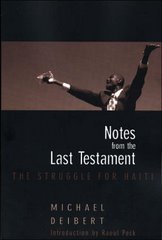
Michael Deibert is the author of Notes from the Last Testament: The Struggle for Haiti.

Sunday, July 22, 2007

A Russian Diary

I am currently reading Russian journalist Anna Politkovskaya’s A Russian Diary: A Journalist's Final Account of Life, Corruption, and Death in Putin's Russia. The book is Politkovskaya’s final offering, because she was murdered at her Moscow apartment in October of last year.

Politkovskaya was a great, courageous journalist and a writer of tremendous emotional impact and analytical acuity. An earlier Politkovskaya book, A Small Corner of Hell, was one of the definitive portraits of the agony inflicted on the Chechens, and how actors on both sides of the conflict cynically profited from it. When she was killed in 2006, Politkovskaya had been working on an article regarding the use of torture in the regime of Chechnya’s pro-Moscow premier Ramzan A. Kadyrov, which, she told The New York Times in April, would likely include evidence of torture by Kadyrov’s police and paramilitaries, and perhaps even testimony from at least one witness who had been tortured by Mr. Kadyrov himself.

One of the most striking things about A Russian Diary thus far, is the appearance in it (it covers the years 2003 until 2006) of so many of those now-departed. There is Nikolai Girenko, the founder of the Group for the Rights of Ethnic Minorities (GPEM) and a respected professor of ethnology slain by extreme nationalists in St. Petersburg in June 2004. There is Paul Klebnikov, the Moscow editor of Forbes magazine, gunned down outside of his office barely a month later. And there is Alexander Litvinenko,the former lieutenant-colonel in the Federal Security Service (FSB) of the Russian Federation who went into exile in London and became one of the most bitter and vocal critics of the government of Russian president Vladimir Putin. Following Politkovskaya’s murder, Litvinenko spoke out strongly, accusing Putin of involvement in the killing. A month later he followed her to the grave, poisoned after meeting with another former Russian spy.

I came across a moving and eloquent interview conducted with Litvinenko a few years before his death, which speaks, I believe, not only of the state of modern Russia under Putin, but also of the bravery and courage of people like Politkovskaya and Litvinenko, fragile individuals standing up against awesome political and financial power, and organized campaigns against their integrity and reputations by those in a position to benefit from chaos and banditry.

You did the best your could, Anna Politkovskaya and Alexander Litvinenko. That’s all your countrymen or the rest of us could have ever asked for.