Despite what at times seemed like an endless schedule of travel (a situation to be remedied by settling down to write my third book in 2011), I still found time over the past year to get quite a bit of reading done. Some of the more notable examples appear below.
Feliz Año Nuevo,
MD
The Country Without a Post Office by Agha Shadid Ali
I was first made aware of the writing of Kashmiri poet Agha Shadid Ali by the Indian journalist Dilip D’Souza when I was living in Mumbai (née Bombay) in early 2007. This was the same era I paid my first visit to the disputed yet achingly beautiful swathe of Kashmir currently administered by India. It was a trip that left of deep impression on me, as I was welcomed with great hospitality by the Kashmiris whom I met and saw first-hand how, in the words of the Jammu Kashmir Liberation Front’s Yasin Malik “the government of India in Kashmir is existing in bunkers, and running their democracy through the barrel of a gun." When protests swirled throughout Kashmir this past year, I purchased this 1997 collection of poems by Ali, who passed away prematurely in 2001. The book is a moving meditation on the costs of Kashmir’s ongoing conflict and the pain of dislocation and exile, musing on “blood sheer rubies in Himalayan snow.” In doing so, it rises to the level of Irish Civil War-era Yeats in its blending of the personal and political.
Alice Lakwena & Holy Spirits: War In Northern Uganda 1986-97 by Heike Behrend
A fascinating and disturbing book that looks at the roots of one of Africa’s most destructive and frightening rebel groups, Uganda’s Lord’s Resistance Army (LRA), and the strange milieu, part military organization, part ethno-regional cult, from which it sprang. Details definitively how the LRA’s leader, Joseph Kony, emerged as a rival to, rather than a disciple of, the mystic Alice Lakwena and her Holy Spirit Mobile Forces movement.
Murder City: Ciudad Juárez and the Global Economy’s New Killing Fields by Charles Bowden
An unflinching account of the violence currently ravaging the eponymous Mexican city across the border from El Paso (which I myself wrote about here), Murder City is written in impressionistic, minimalist vignettes. Bowden writes that he wants “to explain the violence as if it were a flat tire and I am searching the surface for a nail. But what if the violence is not a kind of breakdown, but more like a flower springing from the rot of the forest floor?” A sobering subtext to the war on drugs.
When a Crocodile Eats the Sun: A Memoir of Africa by Peter Godwin
Not the world’s most effective writer or perceptive analyst, but still has a relatively interesting story to tell of the disintegration of what was one of Africa’s post-colonial success stories: Zimbabwe, under the delusional, tyrannical grip of Robert Mugabe and a small cadre of corrupt party loyalists. Godwin’s memoir would have been better served by a greater willingness to actually spend more time in Zimbabwe during the period in question, and to expand his view beyond the relatively insular world of white Zimbabweans that serves as his focus, but the brief, strobe-light flashes of a country imploding are useful case-studies nevertheless.
Another Day of Life by Ryszard Kapuscinski
Set amidst the chaotic, violent scramble for post-colonial Angola, Kapuscinski, taking a different tack from his elegantly restrained portrait of Ethiopia’s Haile Selassie in The Emperor, brings about in this book the feeling of what it is to be a journalist covering armed conflict in one of the forgotten corners of the world as well as any writer I have ever read.
Parentheses of Blood by Sony Labou Tansi
This scathingly brilliant dramatic satire of tyranny follows a group of soldiers searching for a rebel leader who is already dead, and was penned by perhaps Africa’s most under-appreciated writer. Favorite passage:
Rama: What’s a deserter?
Mark: A deserter is a uniformed soldier who says Libertashio is dead.
Rama: But it’s true. Papa is dead.
Mark: That’s merely civilian truth.
Between Terror and Democracy: Algeria Since 1989 by James D. Le Sueur
An important chronology of events before, during and beyond what the author at one point calls “an endless season of hell on earth,” this book by University of Nebraska history professor Le Sueur examines the political, cultural and religious elements that sent Algeria spiraling into civil war in the 1990s, a conflict from which it has not yet fully extracted itself. Though relying heavily on an authoritative and even-handed marshaling of secondary source material more than original first-hand interviews, the book nevertheless should prove to be an important work for those seeking to understand the internal politics of North Africa’s most tumultuous country.
Homage to Catalonia by George Orwell
One of the best and least-romanticizing chronicles every written about war, examining in minute detail the mud, blood, propagandizing and naked political chicanery that accompanies armed conflict, this book chronicles the ideological disillusionment of its author into the liberal humanist who would later write Animal Farm and 1984.
Red and Black in Haiti: Radicalism, Conflict, and Political Change, 1934-1957 by Matthew J. Smith
In this book by a young Jamaican historian, Haiti, which has often been the literary and intellectual playground of a host of pampered foreign arrivistes, poseurs and pseudo-radicals, receives what it deserves: Genuine scholarship. Covering the period between the departure of the U.S. Marines after a 20-year military occupation of the country and the coming to power of François Duvalier, Smith’s book demonstrates how the dysfunctional nature of Haiti’s politics cannot be blamed on a single source, but is rather the product of decades of political and economic miscalculation and ill-intention on the part of both Haiti’s leaders and the international community.
Between Two Armies in the Ixil Towns of Guatemala by David Stoll
In this revelatory book about the experiences of indigenous Guatemalans during the height of that country’s civil war, noted anthropologist David Stoll examines in detail the effects of insurgency and counter-insurgency in the pueblos in and around the Triángulo Ixil of the department of Quiché. We see a population defenseless against a brutal government but also against rebel pressure, and watch as a power struggle between Catholicism and evangelical Protestantism underscores the military struggle on the ground. A must read for anyone who wants to understand Guatemala’s present-day situation.
Children of Heroes by Lyonel Trouillot
First published in French as Les enfants des héros, this 2002 book by the man who is probably Haiti’s greatest living author traces the paths of two children fleeing a Port-au-Prince slum after murdering their abusive father. Unflinching and stunning.
Showing posts with label Ciudad Juárez. Show all posts
Showing posts with label Ciudad Juárez. Show all posts
Friday, December 24, 2010


Wednesday, December 22, 2010
U.S. must act to curb violence in Mexico
Posted on Wednesday, 12.22.10
U.S. must act to curb violence in Mexico
BY MICHAEL DEIBERT
The Miami Herald
(Read the original article here)
There are few places where the failure of America's drug policy is more visible than in Ciudad Juárez, a Mexican city of 1.3 million people across the Rio Grande from El Paso, Texas.
This month passing the grim milestone of having had 3,000 people murdered within the municipality over the last year -- 10 times the figure of only three years ago -- Ciudad Juárez is the scene of a brutal struggle for control of lucrative drug transportation routes between the local Cartel de Juárez and the Cartel de Sinaloa, a group with its roots in the city of Culiacán.
Visitors to Juárez, previously best known for its maquiladoras, are now greeted by an altogether different picture. Masked gunmen, some federal police and Mexican army, some affiliated with the cartels, set up roadblocks seemingly at will as impoverished neighborhoods stretching out into the Chihuahuan desert have largely been depopulated by drug violence. A micro-industry of contract killing -- doled out to street gangs such as the Aztecas, Mexicles and Artistas Asesinos (Murder Artists) -- has resulted in once-unthinkable acts of violence becoming commonplace.
During my recent visit to Juárez, three federal policemen were killed. The same month, 14 people died when gunmen attacked a party for young people in the city, a grim echo of a similar massacre in January, during which 15 young people died. A casual drive through the city reveals cartel graffiti with the name of Mexico's President, Felipe Calderón, inside a rifle sight along with the words ``in the line of fire.''
Shortly after taking office in December 2006, after one of the most closely-contested elections in Mexico's history, Calderón declared war on Mexico's ever-more powerful drug cartels, which in addition to those operating in Juárez include the Cartel del Golfo and Los Zetas, the latter originally spawned by defectors from an elite U.S.-trained military unit designed to combat drug traffickers.
Calderón's decision to bring in the Mexican military to Juárez and other areas of the country to buttress poorly paid and trained local and federal police helped set in motion a violent clash with cartels that has claimed more than 30,000 lives in the last four years. The decision was not without controversy, as a recently released report from the Washington Office on Latin America concluded that ``the Mexican government's reliance on the Mexican military . . . has subjected the civilian population to numerous human rights abuses.''
However, far from being a uniquely Mexican problem, the violence currently tearing apart cities such as Ciudad Juárez comes in no small part from Mexico's tangled relationship with its neighbor to the north, the United States.
According to a recent report by the United Nations Office on Drugs and Crime, the United States, with a population of 310 million, consumed $37 billion of cocaine in 2008, while Europe as a whole, with a population of 830 million, consumed $34 billion. Over the past four years, as The Washington Post has reported, more than 60,000 U.S. guns have been found in Mexico, largely coming for gun dealers in states with conspicuously liberal gun laws such as Texas and Arizona.
The dual failure of prohibition -- which despite its stated aims in no way curtails one's ability to get any drug they want in any major U.S. city after about 30 minutes of looking -- and the hypocrisy of the United States flooding Mexico with cheap firearms combined to make Mexico, and by extension, the entire border region, less, rather than more, secure.
The price being paid by the citizens of the border regions of Mexico and now, increasingly, to the south in Guatemala, where an even-more fragile state has been overrun by Mexican cartels and their affiliates, calls for a renewed look at the broken policy of drug prohibition and a search for reasonable, responsible alternatives.
During the 1919-33 U.S. prohibition of alcohol, criminal monarchies whose wealth was largely based on supplying the forbidden substance to interested consumers tore a violent swath through the country, with the misplaced puritanism of federal officials providing the atmosphere in which their activities could flourish.
As the largest consumer of narcotics coming from and largest provider of firearms going to Mexico, it is time, in the name of sanity and practicality, that the United States revisit both its drug control and firearms policies to guarantee that the violence ravaging Ciudad Juárez will not be repeated throughout the region and, eventually, in the United States itself.
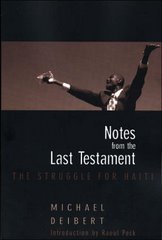
Michael Deibert is a Visiting Fellow at the Centre for Peace and Reconciliation Studies at Coventry University and the author of Notes from the Last Testament: The Struggle for Haiti.
U.S. must act to curb violence in Mexico
BY MICHAEL DEIBERT
The Miami Herald
(Read the original article here)
There are few places where the failure of America's drug policy is more visible than in Ciudad Juárez, a Mexican city of 1.3 million people across the Rio Grande from El Paso, Texas.
This month passing the grim milestone of having had 3,000 people murdered within the municipality over the last year -- 10 times the figure of only three years ago -- Ciudad Juárez is the scene of a brutal struggle for control of lucrative drug transportation routes between the local Cartel de Juárez and the Cartel de Sinaloa, a group with its roots in the city of Culiacán.
Visitors to Juárez, previously best known for its maquiladoras, are now greeted by an altogether different picture. Masked gunmen, some federal police and Mexican army, some affiliated with the cartels, set up roadblocks seemingly at will as impoverished neighborhoods stretching out into the Chihuahuan desert have largely been depopulated by drug violence. A micro-industry of contract killing -- doled out to street gangs such as the Aztecas, Mexicles and Artistas Asesinos (Murder Artists) -- has resulted in once-unthinkable acts of violence becoming commonplace.
During my recent visit to Juárez, three federal policemen were killed. The same month, 14 people died when gunmen attacked a party for young people in the city, a grim echo of a similar massacre in January, during which 15 young people died. A casual drive through the city reveals cartel graffiti with the name of Mexico's President, Felipe Calderón, inside a rifle sight along with the words ``in the line of fire.''
Shortly after taking office in December 2006, after one of the most closely-contested elections in Mexico's history, Calderón declared war on Mexico's ever-more powerful drug cartels, which in addition to those operating in Juárez include the Cartel del Golfo and Los Zetas, the latter originally spawned by defectors from an elite U.S.-trained military unit designed to combat drug traffickers.
Calderón's decision to bring in the Mexican military to Juárez and other areas of the country to buttress poorly paid and trained local and federal police helped set in motion a violent clash with cartels that has claimed more than 30,000 lives in the last four years. The decision was not without controversy, as a recently released report from the Washington Office on Latin America concluded that ``the Mexican government's reliance on the Mexican military . . . has subjected the civilian population to numerous human rights abuses.''
However, far from being a uniquely Mexican problem, the violence currently tearing apart cities such as Ciudad Juárez comes in no small part from Mexico's tangled relationship with its neighbor to the north, the United States.
According to a recent report by the United Nations Office on Drugs and Crime, the United States, with a population of 310 million, consumed $37 billion of cocaine in 2008, while Europe as a whole, with a population of 830 million, consumed $34 billion. Over the past four years, as The Washington Post has reported, more than 60,000 U.S. guns have been found in Mexico, largely coming for gun dealers in states with conspicuously liberal gun laws such as Texas and Arizona.
The dual failure of prohibition -- which despite its stated aims in no way curtails one's ability to get any drug they want in any major U.S. city after about 30 minutes of looking -- and the hypocrisy of the United States flooding Mexico with cheap firearms combined to make Mexico, and by extension, the entire border region, less, rather than more, secure.
The price being paid by the citizens of the border regions of Mexico and now, increasingly, to the south in Guatemala, where an even-more fragile state has been overrun by Mexican cartels and their affiliates, calls for a renewed look at the broken policy of drug prohibition and a search for reasonable, responsible alternatives.
During the 1919-33 U.S. prohibition of alcohol, criminal monarchies whose wealth was largely based on supplying the forbidden substance to interested consumers tore a violent swath through the country, with the misplaced puritanism of federal officials providing the atmosphere in which their activities could flourish.
As the largest consumer of narcotics coming from and largest provider of firearms going to Mexico, it is time, in the name of sanity and practicality, that the United States revisit both its drug control and firearms policies to guarantee that the violence ravaging Ciudad Juárez will not be repeated throughout the region and, eventually, in the United States itself.
Michael Deibert is a Visiting Fellow at the Centre for Peace and Reconciliation Studies at Coventry University and the author of Notes from the Last Testament: The Struggle for Haiti.
Saturday, November 13, 2010
El Choco, dos años después

This journalist, Armando Rodríguez aka El Choco, from the newspaper El Diario, was slain in Ciudad Juárez two years ago today. I took this photo oustide of El Diario's offices in Juárez last month.
Photo © Michael Deibert
Photo © Michael Deibert
Wednesday, October 27, 2010


Subscribe to:
Posts (Atom)