Showing posts with label Álvaro Colom. Show all posts

Tuesday, April 24, 2018

Notes on the Comisión Internacional contra la Impunidad en Guatemala


The Comisión Internacional contra la Impunidad en Guatemala (CICIG) was formed as an outgrowth of the peace accords that ended Guatemala's 36 year civil war. It was tasked with supporting the country's Ministerio Público & Policía Nacional Civil (PNC) in their investigations of illegal security groups and clandestine security structures with direct or indirect links to the state or ability to block judicial actions related to their illegal activities.

Since its inception, CICIG has had some stunning successes, incl arrests of a sitting president (Otto Pérez Molina), a former president (Álvaro Colom) a fmr VP (Roxana Baldetti) and targeting a former president (Álvaro Arzú) and a sitting president (Jimmy Morales) for their alleged roles in corruption.

I have been reporting on Guatemala for 15 years and I have been scathingly critical in my writing of parties of both the right (Partido Patriota, Frente Republicano Guatemalteco, Frente de Convergencia Nacional) and the left (Unidad Nacional de la Esperanza) and their roles in maintaining this system that is strangling the country. To anyone who has spent any time in Guatemala, it is clear that the cancer of corruption and impunity in not an ideological struggle but a phenomenon from which all political currents benefit and seek to maintain.

As the net closes in on Guatemala's political elite - especially sitting president Jimmy Morales, his family and his supporters - troll armies, many with links to online marketing businesses based in Guatemala City, have emerged.

The politicos and their troll farms are feverishly working around the clock to muddy the waters and drum up support for the expulsion of CICIG before their backers have to face justice for their crimes. The troll army follows a particular pattern including variations of the following:

1) Claim that they are "true" or "pure" Guatemalans (the language of the genocide that marked Guatemala's 1960-1996 civil war)

2) Claim that CICIG chief Iván Velásquez is linked to Colombia's FARC or the government of Venezuela's Nicolás Maduro, even though no evidence exists for this and CICIG arrested the country's first leftist president (Álvaro Colom) since Jacobo Árbenz was in office from 1951 to 1954, only to be overthrown by CIA-engineered coup.

3) The troll armies then seek to defame and slander members of Guatemala's civil society who have long battled against impunity & corruption, people like human rights activist Helen Mack Chang and  El Periódico publisher José Rubén Zamora

4)  The troll army then, usually fairly quickly, curdles into anti-semitic dog-whistles by blaming George Soros etc for the temerity of CICIG & the Ministerio Público to prosecute corrupt Guatemalan officials for their crimes.

Unfortunately, they have been so effective that some people I respect and other people of influence - Mary Anastasia O'Grady, Bill Browder, Mississippi Senator Roger Wicker, Florida Senator Marco Rubio, New Jesery Representative, Chris Smith & others - have (with the best intentions, I think) been swept up in the desperate fight for survival of Guatemala's corrupt political actors.

A closer look at recent events in Guatemala - such as the revelation of illicit campaign financing by the FCN of president Jimmy Morales - reveals a truer picture, that those who have feasted on the prostrate body of the Guatemalan nation and state for decades feel they are fighting for their very lives.

My advice to those seeking to weigh in on role of CICIG in Guatelama would be to look at the totality of CICIG's work there over the last decade and weigh it against the forces arrayed against it & what their motivations may be. The lives of 17 million Guatemalans, and their struggle to build a decent country depend on it.

Tuesday, March 22, 2011

Illegality and immorality of Guatemala´s election process

(This is an important commentary on an upcoming election in a country that has virtually been forgotten by the international media, but where I have watched a fragile civil society struggle against organized crime and drug traffickers since my first visit there in 2003. Some of my own articles on Guatemala can be read here, here and here. MD)

Illegality and immorality of Guatemala´s election process

By Barbara Schieber in the Guatemala Times

March 2011

(Read the original article here)

The long expected and for some dreaded announcement of the divorce proceedings of the Guatemalan Presidential couple came today. The divorce is a strategy to legalize the candidacy of First Lady Sandra Torres de Colom according to the Guatemalan constitution. For many months now, there have been constant violations of the constitutional laws of Guatemalan by the political parties. All parties have violated the law in one way or another; there are no innocent politicians in this election year. Our question is what is illegal and what is immoral or is it all the same in politics?

Today in Guatemala, the most frequently used description for the divorce strategy is that it is immoral. The churches, catholic and evangelical mega-churches (both a very powerful influences in Guatemalan politics) have already declared that the divorce is to be condemned and immoral. It is unacceptable before the Catholic Church.

Since last year there have been constant violations of the constitutional laws of Guatemalan by the political parties. All parties have violated the law in several ways, illegalities and disrespect for the law has been the main signature of the election year so far. It is feared it will only get worse. There are no “innocent” politicians in this election year.

The gravest violation of the laws have been:

1. Promoting anti- constitutional candidates, or promoting changes to the constitution to change the laws stipulating the presidential candidate’s requirements, which is a crime according to the Guatemalan constitution.

2. Election propaganda before the commencement of the legally established election period (May 2011).

3. Refusal of political parties to disclose their financial records.

There are and have been several “illegal” candidates this election year

1. Mayor of Guatemala City, Alvaro Arzu, ex-president of Guatemala. Article 186 of the Guatemalan Constitution states that the person who has been president by democratic elections or coup d'état, can not be eligible as presidential candidate. His decision to run for the presidency caused alarm in the right wing sectors of Guatemala. After a “no” answer to his inquiries at the Guatemalan Congress to legitimize his candidacy, Alvaro Arzu has now decided to promote his wife Patricia de Arzu as the presidential candidate of his party. The PR campaign is up and running, the picture shows Patricia de Arzu alone now (a week before it was the couple) with a slogan of kindness and order.

She is still the wife of Alvaro Arzu, meaning a relative of a Guatemalan ex-president, maybe they will decide to get a divorce too? Patricia de Arzu is a prominent member of Opus Dei (Catholic Church sect); they have a very powerful and rich constituency.

2. Parliamentarian, Zury Mayté Ríos Montt Sosa de Weller is the daughter of ex- military dictator Efrain Rios Montt. Se was proclaimed the official candidate for president of the FRG party in October 2010. She is legally barred as a candidate according to the Guatemalan Constitution that bars presidential family members from running. Her brother, ex-military Enrique Rios Sosa has been found guilty of serious crimes and is currently in jail. She has very powerful friends in AIPAC, Washington. D.C.

The decision to determine the legality of a candidate rests in the hands of Guatemala’s Constitutional Court, a court that once ruled that Efrain Rios Mont had no legal impediment to run for presidency. A decision that later was overturned. General Efraín Ríos Montt seized power in a coup d'état in 1982.

Illegal Propaganda Activities

Basically all the legally registered political parties are guilty of early promotion of their political parties and presidential candidates. The official date to start election propaganda by law, according to the Supreme Electoral Court of Guatemala, is in May 2011. Several parties have been fined because they infringed the law. Some candidates publish paid pages of informative messages in the printed press and spots on national TV, cable and radio stations. The printed press, Cable, TV and radio stations accept these payments. The Guatemalan Supreme Electoral Court claims that their budget is far too small to monitor and detect all the illegal political propaganda activities.

The political propaganda issue shows that none of the political parties or candidates have respect for the law. It is a mayor issue of show of character and probable future attitudes towards respecting any law of the country. Every party accuses the others of infringing the law that includes the official party UNE.

Is this illegal or immoral?

Lack of transparency in the financing of the political parties

The law of political parties in Guatemala is obsolete; it has a series of flaws that impede the possibility to seriously audit the parties’ sources of income. Since large amounts of cash transactions are possible, the books that the parties keep to comply with the law of political parties can in theory exclude the cash transactions and therefore may not be a reflection of the reality of financing. The date to present the most recent financial statement of the political parties came and went without any of them presenting the required information, including the ruling party UNE.

In our perspective, this is the most serious and ominous infringement of the law. Money is the determining factor in this election as in most elections. The persistent lack of disclosure of the origins of the financial support to the political parties is the greatest danger to Guatemalan democracy.

Is this illegal or immoral?

The Narco scenario

It is no secret that 60 % or more of Guatemalan territory is in the hands of the narco business. Guatemala has been invaded by narco - gangs and drug lords, also drug money, a consequence of the drug war strategy of the US, not noticing that Guatemala and Central America have to exist between Colombia’s and Mexico’s war on drugs. As an exact replica of the cold war period, now the superpowers realize that if Guatemala goes, all Central America goes as a narco - region. Such was the saying during the cold war such is the saying now in the “war on drugs”.

From our perspective all political parties in Guatemala have committed numerous, repeated illegal and immoral acts. There is no “better” political party, there is only “worse”. The political parties have no ideology except power. Left and right does not exist anymore, it is power for power sake. This is a struggle for the economic resources of the country. The elections are a pretext to see who will keep what is left over from Guatemala, which is not much. Democratic principles have nothing to do with it.

Tuesday, November 16, 2010

Why we defend CICIG

Barbara Schieber, editor of the Guatemala Times, sent me the following editorial that she authored for that publication. Given its description of the value of the Comisión Internacional Contra la Impunidad en Guatemala (CICIG) from a Guatemalan perspective, I thought it was worth re-printing it here on my blog. I do so with the permission of Barbara and the Guatemala Times. MD

Why we defend CICIG

(Read the original article here)


Reading our most frequent critical messages from readers, we are surprised to see that most people interpret that recognizing the work of the Comisión Internacional Contra la Impunidad en Guatemala (CICIG) is equal to defending and supporting the government of Álvaro Colom. For some critics of CICIG, CICIG is the same as the current government, for these critics, there seems to be no distinction between the two institutions. That is not only ridiculous, it is also very scary. It denotes a severe degree of ignorance or an intentional disinformation strategy.

The most hate mail we receive is related to our reporting on CICIG. The readers who write to us are convinced that we must be a government owned news site because we are not attacking CICIG. We want to inform that we are one of the few news sources in Guatemala that does not have any government advertising, nor do we receive funding from any other institution. We are independent.

Having cleared up this misconception we have the following opinion about CICIG:

We applaud, support and believe in CICIG´s work, both under Carlos Castresana and under the new commissioner Francisco Dall´Anese.

CICIG is the only hope for justice that Guatemala has had and will have for the future. Is CICIG 100% perfect? No. But there is nothing 100% perfect in Guatemala or in the world. And for anyone to pretend that an institution has to be 100% perfect in order to be useful and constructive is plain idiocy.

The concept of justice managed by Guatemalans who benefits from an ineffective justice system is self-serving: They only want justice tailored to their benefit. And that is not justice, that is prostitution of justice.

Well, that is what we had before CICIG came to Guatemala, Justice was a prostitute, and it still is in many instances.

In ex-president Alfonso Portillo's case, his friends, allies, ex-members of his government and business associates were attacking CICIG and they keep at it.

In ex- minister Carlos Vielman's case, his friends, allies, business associates, and ex-members of the Berger government are attacking CICIG and they will not stop. The best example is ex-vice president Eduardo Stein, who was an active promoter and supporter of CICIG until it touched some of his friends and ex-members of the government he was part of.

In the Rosenberg case, where CICIG actually saved Guatemala’s democracy, the anti government sectors attacked CICIG because the findings of CICIG prevented President Colom from going down.

Critics of CICIG are people who consider themselves to be from the right wing, from the left wing and whatever else they call themselves (including the dark forces).

By logical deduction, the sectors that have the most to lose by a functional, independent justice system are by default the sectors who want to destroy CICIG. That includes all the sectors that now make more money and have more power - be it economic or political - because justice has not reached them (yet). The current government of President Álvaro Colom has to be included in the list of sectors that are actively obstructing CICIG´s work.

By the way, resistance to functioning judicial systems is not just a Guatemalan phenomenon, or a Guatemalan problem. What makes Guatemala somewhat different is that there are always several Guatemalas, never a nation.

The best example I can give of another very notorious place where the enforcement and strengthening of “Lady Justice”” is very unpopular, is on Wall Street.

Guess why?

Friday, November 12, 2010

Guatemala's lonely battle against corruption

Guatemala's lonely battle against corruption

While Mexico's war on drugs cartels makes headlines, its bloody consequences for its southern neighbour are all but overlooked

o Michael Deibert
o guardian.co.uk, Friday 12 November 2010 13.30 GMT

(Read the original article here)

Fourteen years after Guatemala's government signed a peace agreement with a coalition of guerrilla groups ending a 30-year civil war, the country finds itself once again in the grip of armed conflict, though one in which the battle lines are even murkier than before. While drug-related violence plaguing the border regions of Mexico has achieved a kind of grisly global renown in recent years, the even deadlier battle directly to the south has generated little comment on the international stage.

Central America's most populous country, Guatemala has become the scene of a brutal power struggle involving Mexican cartels who have been pushed south by President Felipe Calderón's militarised campaign against drug traffickers there, and Guatemala's indigenous criminal groups, many of whom have their roots in a military intelligence apparatus set up with US aid during the country's internal armed conflict.

After the peace accords, many Guatemalans hoped that their country was embarking on a brighter future. The preceding conflict had claimed the lives of over 200,000 people, mostly poor, indigenous campesinos caught in the struggle between a militarily-weak leftist insurgency and the ruthless scorched-earth tactics of a national army, whose only military manoeuvre appeared to be the massacre.

But now, nearly 15 years later, more people die in Guatemala every year than did at the height of the civil war. While Mexico's homicide rate has been estimated at 26 per 100,000 by the Latin American academic body Flacso Guatemala's numbers a staggering 53 per 100,000.

What went so wrong? How did the promise of peace become transmuted into the rule of Guatemala by criminal monarchies whose brazen shootouts have become a fact of daily life?

Following the peace accords, President Álvaro Arzú of the Partido de Avanzada Nacional and his successor, Alfonso Portillo of the Frente Republicano Guatemalteco (of former dictator Efraín Ríos Montt, who presided over some of the country's worst human rights abuses), implemented many key provisions of the peace accords half-heartedly, if at all. A civilian intelligence office mandated to combat organised crime was not established until 2007. By then, Guatemala's clandestine criminal networks had spent a decade successfully inserting themselves into virtually every manifestation of the state. The national police force remains ineffectual and numerically small, currently numbering around 26,000 officers, while Guatemala's private security sector has swelled to 120,000.

Meanwhile, the driving forces behind the syndicates that solidified in Guatemala during the civil war years as the country's military elite were left to flourish more or less untouched. Indeed, during Portillo's 2000-04 tenure as president, they became virtual contractors of the state.

In recent years, the situation has grown graver still. Guatemala's 2007 electoral contest saw current President Álvaro Colom of the Unidad Nacional de la Esperanza (UNE) party join battle against Otto Pérez Molina, a former general and leader of the Partido Patriota (PP), in one of the bloodiest ballots in the nation's history. More than 50 candidates and party activists were slain.

Mexican drug cartels such as the Cartel de Sinaloa and Los Zetas have ,meanwhile, expanded their operations throughout vast swathes of the country, ranging from San Marcos along the western border with Mexico, to the northern jungles of El Petén, to the sweltering department of Zacapa in the nation's east.

One ray of hope in this very bleak landscape has been the creation in 2007 of the Comisión Internacional Contra la Impunidad en Guatemala (CICIG), a United Nations-mandated body charged with investigation of clandestine organisations and exposing their relation to the Guatemalan state. Until June of this year, CICIG was under the direction of Carlos Castresana, a magistrate experienced at prosecuting drug-related cases in Mexico and investigating corruption in his native Spain.

Under Castresana's leadership, CICIG was, for the first time, able to force a discussion about impunity and corruption at the highest levels of Guatemala's political system into the public realm. In another first, a former president, Alfonso Portillo, was arrested and has been held in prison since January on charges of embezzling some $15m in state funds. He also faces extradition to the United States on money-laundering charges, after his trial in Guatemala concludes.

When Castresana resigned earlier this year, charging that the Colom government was undermining CICIG's work, he was replaced by Francisco Dall'Anese Ruiz, the former attorney general of Costa Rica. Dall'Anese took the reins of an investigative body facing enormous pressures, where death threats against its staff, the murder of its witnesses and rocky relations with its nominal bosses at the UN's department of political affairs have become occupational hazards.

But CICIG remains, however imperfect, the best hope that Guatemalans have in the fight against the corruption that is causing the future of their country – blessed with plentiful natural resources and an inventive, industrious population – to vanish amid the din of automatic weapons fire. It is vital that CICIG's mandate, set to expire just as new presidential elections are held next fall, should be renewed if it is to succeed in this challenging mission. Ideally, its powers would be expanded to give it the ability to subpoena and indict suspects, as well as protect the lives of those Guatemalans who chose to cooperate.

Guatemala's fragile civil society of honest officials, human rights groups and indigenous organisations desperately needs support. As the international community – and especially the United States – saw fit to pour money into the Guatemalan military machine that helped create the criminal oligarchy that now wields such power in the country, it is only just that they should now back the efforts of CICIG and honest Guatemalans in their struggle to bring this monster down.


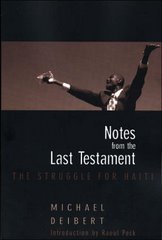
Michael Deibert is a Visiting Fellow at the Centre for Peace and Reconciliation Studies at Coventry University and the author of Notes from the Last Testament: The Struggle for Haiti. His blog can be read here.

Saturday, May 16, 2009

The Final Testament of Rodrigo Rosenberg

(This article originally appeared on the blog of the World Policy Journal)

“Good afternoon,” the video begins, featuring a man in a drab suit directly addressing the camera. “My name is Rodrigo Rosenberg Marzano, and unfortunately, if you are watching the message, it is because I was assassinated by President Álvaro Colom.”

So begins the final testimony of Guatemalan attorney Rodrigo Rosenberg, who was shot and killed on Sunday in the country’s capital, Guatemala City.

In the video, which was recorded only days before his slaying, Rosenberg goes on to accuse not only the Guatemalan president of complicity in his yet-to-come demise, but also the president’s wife, Sandra Colom; the president’s private secretary, Gustavo Alejos; and a businessman, Gregorio Valdez.

Rosenberg, a respected lawyer, states in the video that he will be killed because of his professional work on behalf of Guatemalan businessman Khalil Musa and his daughter, Marjorie Musa, both of whom were gunned down in Guatemala in March.

Rosenberg states that the elder Musa was unaware, when named by Colom to the board of directors of Guatemala’s Banco de Desarrollo Rural S.A. (Rural Development Bank, popularly known as Banrural), that the body was being used as a center for the laundering of drug profits, the deviation of public funds, the siphoning off of state coffers on behalf of the president’s wife, and other nefarious activities.

Banrural, Rosenberg charges, is a “den of robbers, drug traffickers, and murderers,” and then lays the deaths of the Musas at the feet of the Colom administration, as well.

In a country where political corruption scandals are unfortunately all too common, the Rosenberg murder and subsequent video have sent seismic tremors through the country’s political establishment.

Colom, the head of the left-wing Unidad Nacional de la Esperanza (UNE) who was elected president in 2007 after one of the bloodiest ballots in Guatemala’s history, addressed the nation this week, saying that the accusations on the videotape were ”totally false” and that “my conscience is clear.”

Though in no place to comment on the veracity of Rosenberg’s allegations, having followed Guatemala’s political history for a number of years, and having reported from the country off and on since 2003 (most recently for the winter 2008/09 issue of World Policy Journal), it unfortunately seemed to me only a matter of time before the violent machinations that often go on in obscurity in Central America’s most populous country burst onto the headlines in such a spectacular fashion.

While the United States government pours $450 million into Mexico via its Merida Initiative, an anti-drug trafficking program, the rest of the Central America (including Guatemala) is allotted only $100 million during fiscal year 2009. More than that, Guatemala’s current agony, though of a diverse and disparate nature, has its roots in U.S. policy in the region for much of the last 40 years.

During Guatemala’s 1960-96 civil war, successive governments battled to defeat a leftist insurgency, often with the most brutal of methods and often with the complicity of the United States, which aided a series of military dictators in setting up a sophisticated intelligence-gathering and surveillance capability throughout the late 1970s and 1980s. The war would eventually claim an estimated 200,000 lives.

Through skills learned from counterinsurgency campaigns, and particularly during the regimes of dictators General Romeo Lucas García (1978–82) and his successor General Efraín Ríos Montt (1982–83), elements of Guatemala’s military intelligence services were able to create complex criminal networks that exist more or less intact to this day. Often referred to as the grupos clandestinos, or hidden powers, these groups engage in activities such as skimming customs duties, illicitly acquiring government contracts, human trafficking, and drug trafficking.

Following the formal end of the civil war, Guatemala’s already fragile state was further weakened after Ríos Montt formed the Frente Republicano Guatemalteco (FRG) party in 1989. The FRG’s candidate, Alfonso Portillo, won presidential elections in the country a decade later. As the FRG successfully melded militarism with a virulent hatred of Guatemala’s traditional economic elite, during the Portillo years the grupos clandestinos became virtual contractors of the state. Their links with Guatemala’s various political parties of the left and the right continue to in the present era.

Two of the biggest crime syndicates in the country, La Cofradía (The Brotherhood) and El Sindicato (The Syndicate), are both made up of current and former military officers, according to Guatemalan and U.S. government officials.

La Cofradía is said to be chiefly directed by two former generals, Manuel Callejas y Callejas and Luis Francisco Ortega Menaldo, while the dominant force in El Sindicato is alleged to be Otto Pérez Molina, a former army officer and head of the Partido Patriota. Pérez Molina came in second to Colom in the 2007 presidential ballot.

Animosity between the two groups is said to be extreme and has often spilled over into the political arena.

During a visit to Guatemala City last September, a Guatemalan government official with close links to Colom told me matter-of-factly that, in terms of the state security apparatus, “Colom’s guys are Ortega Menaldo’s guys. He needed them as protection against Pérez Molina.”

As is the case in other nascent democracies in the region, such as Haiti, drug-related corruption and organized crime in Guatemala know no political ideology. As is the case in Haiti, an unarmed civil society is standing up to powerful criminal interests, an entrenched oligarchy, and populist demagogues, attempting to build a decent country at great personal risk. Meanwhile, the international community is greeting wave after wave of drug and corruption-related violence with a disinterested shrug now that Guatemala is no longer part of Cold War power politics.

Towards the end of his video testimonial, Rodrigo Rosenberg faces the camera and laments Guatemala’s present as the “worst period” in the country’s history. He then goes on to issue a challenge, both to his countrymen and to the international community as a whole.

“It is our country,” Rosenberg proclaims. “It belongs to us, not to the thieves, the assassins, and the drug dealers. Guatemala is not theirs. We won’t give it to them.”

Michael Deibert is a senior fellow at the World Policy Institute.

Thursday, January 08, 2009

Drugs vs. Democracy in Guatemala

Drugs vs. Democracy in Guatemala

By Michael Deibert

World Policy Journal
Winter 2008/09, Vol. 25, No. 4, Pages 167-175

MORALES, GUATEMALA—With shops selling expensive leather saddles and men in cowboy hats strutting through its lanes, this town of 50,000 in Guatemala's eastern department of Izabal has long been the heartland of the country's cattle-raising and farming industries. Situated on a flat plain emptying out into the Caribbean Sea and crisscrossed by the meandering Rio Dulce, Morales has in recent years been the epicenter of a far more lethal trade. It has become ground zero for the country's increasingly violent role as a way station for cocaine bound from South America to feed ravenous appetites in the United States.

There are hints of this in aspects of daily life in Morales—from the visible Glock pistols and Uzi submachine guns sported by men descending from pick-up trucks and sport-utility vehicles with blacked-out windows, to the sprawling and curiously empty new luxury hotels, as well as a body count that usually numbers well over a dozen in the course of a single week.

"There has been a great increase in violence in the area in the last several months, which would suggest that a turf war was going on," says a priest who has been working in the region since the late 1980s but declined to be named for this article out of fear for his safety. "Weekends here are dangerous."

In March, Juan "Juancho" José León Ardón, a local man said to be a drug lord, was killed along with ten other men in a wild shootout in neighboring Zacapa state, where Guatemalan police later recovered 16 semi-automatic AR-15 assault rifles and an M-16. Along with the body of Juancho— who'd fled a Mexican prison in 2001—and several of his bodyguards, were found the bodies of two Mexican nationals, believed to member of Los Zetas, the brutal rogue soldiers who act as enforcers for the Gulf Cartel, the Mexican crime syndicate. ("Zeta" comes from the Mexican federal police radio code for high-ranking officers.) Jauncho was believed by local law enforcement officials to have been working as a middle man, helping to bring cocaine from Colombia to Mexico in the service of the Gulf Cartel's arch-rivals, the Sinaloa Cartel of Joaquín "El Chapo" (Shorty) Guzmán. Fighting between the two groups has killed hundreds of people in Mexico in recent years.

The level of insecurity in Guatemala has reached such a level that, in impoverished neighborhoods such as the capital's gritty Villa Nueva slum, often the scene of inter-gang warfare, heavily-armed masked men (thought to be off-duty police officers) scoop suspected gang members from the streets, never to be seen again except in city morgues or dumped by the side of the road. For those of more substantial means, there is the world of gates, guards, and highly disciplined movements, an existence that condemns those who live it to dwelling in their own kind of ghetto, and brings no great peace of mind. The links between private security contractors and organized crime are substantial and continuing.

The gun battle that killed Juancho, his men, and the Mexicans was not an isolated incident, nor was it by any stretch the most shocking crime to take place in Guatemala in recent years. According to figures released by the United Nations Development Program (UNDP), from 1999 to 2006, Guatemala's homicide rate increased more than 120 percent, from 2,655 homicides in 1999 to 6,033 in 2006, a national homicide rate of 47 per 100,000 inhabitants—though still trailing the murder rates of its neighbors to the south, El Salvador and Honduras. Even given these grim statistics, the UNDP numbers noted that only a fraction of all victims of violence were taken into account by Guatemalan police and justice statistics.

The Zacapa massacre, however, was indicative of a larger pattern. The ability of the Mexican gunmen—who witnesses said numbered at least 30—to pass fully-armed and unhindered across the length of Guatemala, engage in a prolonged and fatal firefight and then simply vanish into thin air made perfectly clear one other central fact of Guatemala's current agony. Official complicity has abetted at every turn the wave of drug-related violence that has cleaved Guatemalan society like a bloody scythe in recent years—ensnaring in the drug war vast numbers of public officials, drug traffickers, gang members, and ordinary civilians. The next casualty, many fear, will be Guatemala's nascent democracy itself.

Roots of War

The roots of the country's current crisis lay in Guatemala's three decade-long civil war, which lasted from 1960 until 1996. Successive Guatemalan governments—often with the complicity of the United States—battled to defeat a leftist insurgency centered in the country's mountainous and jungle-covered recesses. As a series of military dictators built up a sophisticated intelligence-gathering and surveillance capability in the late 1970s and 1980s, members of Guatemala's armed forces, with little regard for human rights, were given free rein to battle rebels in a conflict that eventually claimed an estimated 200,000 lives.

During the regimes of dictators General Romeo Lucas García (1978–82) and his successor General Efraín Ríos Montt (1982–83), in particular, elements of Guatemala's military intelligence services were able to create complex criminal networks that exist more or less intact to this day. Lucas García fled to exile in Venezuela, where he died in 2006. Ríos Montt went on to found the Frente Republicano Guatemalteco (Guatemalan Republican Front, or FRG), one of Guatemala's main political parties. In 2003, he even ran, though unsuccessfully, for the country's presidency. He currently serves as the FRG's secretary general and as a deputy in Guatemala's congress.

Often referred to as the grupos clandestinos, or hidden powers, these criminal-military groups represent perhaps the biggest challenge to the government of Álvaro Colom, Guatemala's current president, who also serves as the head of the left-wing Unidad Nacional de la Esperanza (UNE) party. The activities of the hidden powers are varied and include skimming customs duties, illicitly acquiring government contracts, human trafficking, and increasingly, drug trafficking. A weak Guatemalan state together with broad, and largely unpatrolled, Pacific and Caribbean coastlines combine to provide an alluring middle passage for drugs flowing to North America from points south. A 2003 study by the Washington Office on Latin America titled "Hidden Powers in Post-Conflict Guatemala," asserted that the groups "do not act on their own, but at the behest of members of an interconnected set of powerful Guatemalans...[who] oversee and profit from a variety of illegal activities that they carry out with little fear of arrest or prosecution."

Once used as a tool by Guatemala's tiny economic and political elite to bludgeon leftist opposition in the country, the grupos clandestinos have now taken on a nefarious and powerful life of their own.

"When the oligarchy made the military such a crucial factor during the internal armed conflict, the only presence of the state nationwide was the military," says Frank LaRue, a veteran human rights advocate who currently heads the Instituto Demos, a Guatemala civil society organization.

"The military gained a lot of political power and began making their own economic base, and, obviously, those who were leaving the military, or some of them, began getting connected with drugs, exactly as is happening in Mexico," says LaRue, who served as head of the Presidential Commission on Human Rights in the government of Colom's predecessor, Óscar Berger.

The Brotherhood

Perhaps the best-known and most-feared criminal syndicates in the country are La Cofradía (The Brotherhood) and El Sindicato (The Syndicate), both made up of current and former military officers, according to Guatemalan and U.S. government officials.

La Cofradía is believed to have its roots in the military intelligence wing of the government of former dictator Lucas García, and to be comprised chiefly of those who advocated a scorched-earth, take-no-prisoners approach to prosecuting Guatemala's civil war, making little distinction between military and civilian targets. Known at the time as los estratégicos (the strategic ones), the group is said to be chiefly directed by two former generals, Manuel Callejas y Callejas and Luis Francisco Ortega Menaldo.

During Ortega Menaldo's time in the armed forces, he served as head of army intelligence when the Guatemalan army was coordinating interdiction efforts with the United States Drug Enforcement Agency (DEA), and so became privy to the organization's methods and modus operandi. At the same time, the American government was financing complex surveillance equipment which enabled Guatemalan military intelligence—not to mention whoever else might be working in the sector—to engage in sophisticated intelligence gathering in the name of combating the country's leftist guerillas and nascent drug traffickers.

Previously a military intelligence official in various capacities during the Lucas García administration and in the 1991–93 civilian government of President Jorge Serrano Elías, Ortega Menaldo became head of the Estado Mayor Presidencial (EMP), a controversial military unit disbanded in 2003 which had been tied to appalling human rights abuses both before and after the 1996 peace accords brought an end to Guatemala's internal armed conflict. The EMP has been linked to a series of high-profile assassinations over the years, including the 1990 murder of anthropologist Myrna Mack, the 1994 killing of Constitutional Court President Eduardo Epaminondas González Dubón and the 1998 beating death of Guatemalan Bishop Juan Gerardi.

In his position with the EMP, Ortega Menaldo continued to work closely with military intelligence until Elías attempted to seize dictatorial powers in May 1993. Though this auto-golpe (self-coup), as it became known, was quickly defeated, Ortega Menaldo was among the military officers supportive of Elías' move, and was heavily marginalized in the government of Ramiro de León Carpio that came after. Ortega Menaldo was dismissed from active duty for corruption in 1996 under the government of President Álvaro Arzú. In March 2002, the government of the United States revoked Ortega Menaldo's travel visa under a section of the Immigration and Nationality Act authorizing such action against people who have allowed or conspired in drug trafficking.

According to a report by the Recuperación de Memoria Histórica (Recovery of Historical Memory) project—an undertaking that Bishop Gerardi oversaw shortly before his murder—the members of La Cofradía are linked by human rights abuses committed during the civil war and the "competition and loyalty between men from the same graduating class intermingled and changed according to opportunities of the moment." Similar to the Italian mafia, La Cofradía is said to have an elaborate initiation ritual, which includes placing a medallion engraved with the inductee's name, class promotion, and a magic lamp— the organization's symbol—at the bottom of a glass of whiskey, which the new member must then drink in order to claim.

The Rise of Pérez Molina

The soldiers who graduated from Guatemala's military academy in 1969— "Promotion 73," as the group became known—were thrown into a world of bloody conflict throughout the Americas, but especially in their native country. As happens sometimes among military officers of the same graduating class, loyalties among these men continued throughout their careers. Advocating a strategy of pacification and stabilization during the war, which preferred combining development projects and military objectives as opposed to all-out warfare against the rebels, this group as such often found itself at odds with los estratégicos.

The group's most visible member, Otto Pérez Molina, led the group of military officers that opposed Elías' 1993 self-coup, a position that created a climate of lasting enmity between himself and Ortega Menaldo, who had supported the move. While Ortega Menaldo was sent into the wilderness after the failed 1993 coup, Pérez Molina saw his own star rise with his appointment as inspector general of the army in 1996, a high-profile role as the Guatemalan military's representative at negotiations with rebel forces that eventually led to peace accords and, in 1998, his appointment as head the of the Guatemalan delegation before the Inter-American Defense Board in Washington, DC. But with the rise to prominence of Rios Montt's FRG and the presidency of Alfonso Portillo—an Ortega Menaldo confidant—Pérez Molina retired from military service.

In February 2001, Pérez Molina formed the Partido Patriota (Patriot Party, or PP). Briefly, and perhaps a touch ironically given subsequent events, he also found common cause with Colom's UNE as they jointly denounced Portillo's alleged abuse of power. Later, however, the PP was incorporated into the Gran Alianza Nacional (Great National Alliance, or GANA) coalition of the eventual winner (and Colom opponent) in the 2003 presidential elections, Óscar Berger. In those same elections, Pérez Molina was elected as a deputy to Guatemala's congress for the coalition.

In the 2007 general elections, one of the bloodiest ballots in Guatemala's history with over 50 candidates and activists slain, Pérez Molina ran against Álvaro Colom for the presidency, a ballot that he lost despite his advocacy of a mano dura (strong hand) policy against the country's criminals. During the trajectory of Pérez Molina's political life, both his son and daughter have been the victims of non-fatal attacks by gunmen, and at least eight members of the PP have been slain.

Over the years, however, security analysts and Guatemalan government officials say that Promotion 73 took on another, shadowy, but far more violent, role—that of El Sindicato. The syndicate immediately took its place as one of Guatemala's most powerful clandestine groups, and one whose struggle against La Cofradía must be understood in order to grasp the nature of the country's current demons.

Politics by Other Means

One of the most destructive influences on Guatemala's fragile state appears to have been the rise of the FRG party throughout the 1990s. Founded by former dictator Efraín Rios Montt in 1989, the FRG melded a virulent hatred of Guatemala's traditional economic elite with populist economic and social rhetoric that attempted to cast it as the voice of Guatemala's disenfranchised. This stance was especially ironic given the ghastly human rights abuses against Guatemala's indigenous population that were the hallmark of Rios Montt's tenure as president and the strong element of current and former military officials in the party's ranks.

In 1999, Alfonso Portillo, a former university professor who had killed two men during an altercation in Mexico while teaching there in 1982 (a fact he has never disputed), ran for the presidency under the FRG banner and won, ascending to the office the following year. Though Portillo's rhetoric adhered to progressive social-democratic goals, his tenure was marked by a high degree of corruption and political violence.

In 1996, shortly before Portillo attained the presidency, both he and Ortega Menaldo were implicated in a corruption scandal centering around Salvadoran-born Alfredo Moreno Molina. Originally working on counter-insurgency efforts within the Guatemalan military, Molina later was prosecuted for having set up a sophisticated corruption ring known as the Grupo Salvavidas or Lifesaver Group. Ortega Menaldo was subsequently dismissed from the military for his involvement in the affair, and Portillo admitted taking campaign contributions from Moreno. During Portillo's subsequent tenure as president, Ortega Menaldo served as one of his closest advisors. The power of Guatemala's already weak state, which has only 26,000 national police to control a country of some 13 million, eroded still further as the private security sector swelled to 120,000 individuals. A substantial number maintained links to organized crime.

"Before Portillo, these bodies were just giving security to some organized crime groups, but during Portillo they became contractors of the state," says José Carlos Marroquín, who served as chief strategist for Álvaro Colom during his presidential campaign. Eventually, Marroquín resigned, following threats from organized crime. For his efforts at cleaning up Guatemala's political system, Marroquín's Guatemala City home, where he lives with his wife and children, was raked with automatic weapons fire and set ablaze during a 10-minute assault last year.

"I don't measure the state by its size, I measure the state by its strength," continues Marroquín, who also says that clandestine armed groups have an interest in undermining the state. Waves of what would appear to be carefully organized violence would seem to support this. In February 2008, a dozen bus drivers in the capital were slain, while in November of the same year 15 people on a charter bus from Nicaragua were killed execution-style and their bodies set alight after passing into Guatemala.

Only days after turning over power to his elected successor, Óscar Berger, in 2004, Portillo fled to Mexico, where he remained until October 2008 despite a Mexican government order to extradite him back to Guatemala to face corruption charges. That month, Portillo announced that he would no longer fight extradition as he "trusted" the Guatemalan courts under Colom more than he did under Berger. Though rumors swirled that Portillo had helped fund part of Colom's election campaign from exile, none of these charges have been proven.

Though the FRG suffered badly in the 2007 elections, and its influence in Guatemala's congress has significantly diminished, its activities while controlling the presidency and the congress included extending state largess to former members of civil defense patrols formed as a counter-insurgency tool by Rios Montt a quarter century ago. These patrols have been implicated in gross human rights abuses. In today's Guatemala, some of the same regions where those patrols were the strongest, such as the jungle-covered department of El Petén, have now also become centers of illegal drug activity, with some of the same campesinos who once worked for the civil patrols now seizing land and clearing clandestine runways where drug planes can land. On one government map seen by this reporter, there were 31 such runways listed as existing in El Petén alone.

Add to this mix Central America's indigenous street gangs—particularly the MS-18 and MS-13 in Guatemala—and the terrible strains placed on Guatemala's fragile justice system become quite clear. This toxic brew of politicians, organized crime syndicates, street gangs, and foreign cartels, and the seeming inability of the justice system in Guatemala to address it, has led some observers to point to the Guatemalan state itself as part of the problem.

"There have been a number of cases where [the hidden powers] use the gangs as muscle," says a U.S. law enforcement official who has worked on drug trafficking and organized crime in Guatemala for over a decade, speaking on the condition of anonymity. "[But] there is a lack of in-depth investigations by the judicial sector....The Guatemalans have been slow in reacting to the real threat that exists."

Death in the Afternoon

One midday in June 2008, Vinicio Gomez, Álvaro Colom's Minister of Interior and widely regarded as an honest public official, boarded a helicopter piloted by a veteran of DEA missions in Colombia and Panama. Flying through a light rain over the department of Alta Verapaz, Gomez' helicopter crashed, killing him, the pilot, deputy minister Edgar Hernandez, and one other person. Though there was no major storm in the area, the official cause of the crash was attributed to bad weather.

According to a high-ranking official in the Colom government, who spoke on the condition of anonymity, in the months before the crash, Gomez had quarreled violently with Carlos Quintanilla, an associate of Ortega Menaldo who was at the time the head of the Secretaría de Asuntos Administrativos y de Seguridad (Secretariat for Administrative Matters and Security, or SAAS), the successor to the EMP responsible for the president's personal security. Those familiar with the conversation say that Quintanilla was vexed at Gomez's plan to deploy hundreds of troops and anti-drug agents along Guatemala's long border with Mexico, where cartel boss Juan Alberto "Chamalé" Ortiz López is thought to have been the first to use the Mexican Zetas in and around the city of Huehuetenango.

With the death of Gomez—a death that not a single government or civilian official I spoke with in Guatemala believes was an accident—an administration already handicapped in asserting its authority was further weakened. Subsequently, an arrest warrant was issued for Quintanilla, after Colom concluded that the security chief had planted surveillance devices in his home and offices at the behest of organized criminal gangs. Quintanilla has since gone to ground.

"Colom's guys are Ortega Menaldo's guys," says one Guatemalan government official, speaking on the condition of anonymity, attempting to explain the Faustian bargain that Colom is said to have made for his own security. "He needed them as protection against Pérez Molina."

Such are the implications of political activity in Guatemala—that a long-time social democrat such as Colom might be forced to form an alliance, however temporary, with figures long rumored to be deeply enmeshed in organized crime. As if the suspicious death of Gomez was not enough, barely two months earlier, Victor Rivera, a Venezuelan citizen who had served as a long-time security advisor to several Guatemalan governments, was slain in a shooting in the capital. Dismissed by Colom only a week before for being "too independent," Rivera, though he denied any wrongdoing, was thought also to have been behind summary executions of suspected gang members throughout his tenure, a reputation that gained him as many admirers as critics in crime-weary Guatemala. This past August, the killing continued with the murder of Rigoberto Cucul, the former FRG-affiliated mayor of El Estor, a city near Morales, who perished in a hail of automatic weapons fire. Police had previously raided his home in search of narcotics but said they found only ammunition.

But perhaps no crime has shaken the foundations of Guatemala and its neighbors in recent years as much as the slaying of three Salvadoran representatives to the Central American Parliament, kidnapped and killed along with their driver, while traveling to Guatemala for a parliamentary meeting in February 2007. The victims included Eduardo Jose d'Aubuisson, the 32-year-old son of Roberto d'Aubuisson, an extreme rightist and founder of El Salvador's ruling ARENA party who died of cancer in 1991. The four bodies were found burned almost beyond recognition on a rural roadside after becoming separated from a larger convoy. It appears that the killings were linked to a power struggle for drug trafficking inside ARENA, though the motive is still murky.

The same month, four policemen being held in connection with the slayings were also murdered when gunmen entered the prison east of Guatemala City, where they were being held. The assassins were able somehow to reach their victims despite having to pass through eight sets of locked doors to get to their cells. And this past July, the judge in charge of investigating the murders was also slain. In September 2008, Guatemalan security forces arrested a former congressman and mayor, Manuel de Jesus Castillo, who is suspected of being one of the masterminds of the crime. Castillo had apparently been hiding in plain sight, living for months in his hometown of Jutiapa despite a January 2008 warrant for his arrest.

Added to the mix has been the curious behavior of the Salvadoran government itself. Despite strong statements from El Salvador's President Tony Saca and his public security minister, Rene Figueroa, that the culprits of the slayings of the parliamentarians must be found and punished, as of yet no investigation into the crime has been opened in El Salvador itself
.
Steps Toward Reform?

One hopeful development in Guatemala's struggle against organized crime has been the creation of the Comisión Internacional Contra la Impunidad en Guatemala (International Commission Against Impunity in Guatemala, or CICIG), a United Nations-affiliated body charged with investigating organized crime's links to the state. Operational since the beginning of 2008, under its current mandate, the CICIG has the power to investigate a wide array of violent and organized crime and submit the evidence to Guatemala officials, but not the power to subpoena or indict. Carlos Castresana Fernández, a Spanish magistrate who previously worked for the United Nations Office on Drugs and Crime in the drug-ravaged Mexican state of Nuevo León, and who has a long history of anti-corruption prosecutions in his native country, was appointed to head the body.

"A great problem of impunity exists in this country," Castresana told me in an interview in Guatemala City. "One of the biggest justifications for the creation of this commission is the existence of clandestine security apparatuses [in Guatemala] that have inserted themselves within the state institutions."

While policy makers and law enforcement officials in the United States are largely concentrating their energies on the war going on between narco-traffickers and the government of Mexican President Felipe Calderón, or lauding Colombian President Álvaro Uribe's strides against that country's 40-year-old, drug-financed insurgency, democracy in Guatemala—the most populous country in Central America—is fighting for its life against a rising tide of drug-related violence that has become inextricably linked with the country's political landscape.

The Merida Initiative, a multi-year U.S. proposal aiming to provide equipment, training, reform, and oversight to law enforcement agencies in the region, last year requested an initial $500 million for Mexico and $50 million for all of Central America. During fiscal year 2009, the U.S. government's budget proposal includes $450 million for Mexico and $100 million for Central America.

It is a paltry sum, many Guatemalans feel, given the challenges their nation will confront as it faces down the hidden powers.

"Guatemala is already a weak, almost non-existent, state that does not guarantee security or justice or health or education," says the human rights advocate Frank LaRue. "If the cartels from Mexico begin to move down and Guatemala completely collapses into their hands, then you will have a real problem."


Michael Deibert is the author of Notes from the Last Testament: The Struggle for Haiti (Seven Stories Press). He last reported for World Policy Journal from the Democratic Republic of the Congo.