Monday, July 29, 2013

Wednesday, July 17, 2013

Why Arrest of Zetas Leader Does Not Mean End to Mexico's Drug War

Posted: 07/16/2013 8:34 pm
Why Arrest of Zetas Leader Does Not Mean End to Mexico's Drug War
By Michael Deibert
The Huffington Post
(Read the original article here

In the violence that has claimed more than 60,000 lives in Mexico since 2006, the criminal organization know as Los Zetas have been the perpetrators of some sickening crimes.

Originally made up of largely of deserters from a special forces unit of the Mexican army and since buffeted by rogue elements of the Guatemalan military and common thugs, Los Zetas (named after a Mexican radio code for high-ranking officers) were originally recruited in the 1990s by the Gulf Cartel, based in Matamoros, Mexico, just across the Rio Grande from Brownsville, Texas.

With its roots stretching all the way back to Prohibition, the Gulf Cartel at the time was battling the Sinaloa Cartel from Mexico's Pacific Coast for control of its slice of the country's border with the United States. The battle ended with a Gulf Cartel victory, but shortly thereafter the alliance splintered when Gulf gunmen killed a deputy of one of the leaders of Los Zetas, a smuggler born in Mexico but raised largely in Texas named Miguel Ángel Treviño Morales, aka Z-40.

What followed was a war between the Gulf Cartel and Los Zetas for control of the states of
Tamaulipas and Nuevo León that, in its savagery, surpassed nearly anything the country had seen before.

In these states Mexico's Partido Revolucionario Institucional (PRI) -- which ruled the country for 71 years until 2000 and to which Mexico's current president, Enrique Peña Nieto, belongs -- was often viewed as little more than a Gulf Cartel vassal, and a series of governors were later indicted for links to organized crime. Los Zetas, for their part, expanded their influence to the nearby states of Coahuila, Hidalgo and Veracruz. The two cartels appeared to try and outdo one another, with gruesome public displays and videotaped executions becoming commonplace. Ironically, the Gulf Cartel was forced to form an alliance of convenience with its former enemies in the Sinaloa Cartel to fend off their one-time employees.

Los Zetas' actions often seemed demonic in their ferocity. The organization committed a series of massacres in the San Fernando Valley region of Tamaulipas between August 2010 and April 2010 that left over 260 people dead, many of them immigrants en route to the United States from Mexico and elsewhere in the Americas, or otherwise-uninvolved civilians. In August 2011, Zetas hitmen set fire to a casino in the city of Monterrey in a dispute of extortion money, killing 53 people.

Through it all, cartel bosses and henchmen were falling like flies. The Gulf Cartel's former boss of bosses, Osiel Cárdenas Guillén, was extradited to the United States in 2007. His brother Antonio Ezequiel Cárdenas Guillén, better known by his nickname Tony Tormenta (Tony the Storm) was killed by the Mexican military in Matamoros in November 2010. Jorge Eduardo Costilla Sánchez aka El Coss, a former Matamoros municipal police officer with whom Tony Tormenta had shared co-governing duties, was arrested in Tamaulipas in September 2012, as was anther Cárdenas brother, Mario Alberto. The Gulf Cartel had fallen into a vicious bout of infighting.

As for Los Zetas, their original founder, Arturo Guzmán Decena, was long dead, slain in 2002, and his subsequent replacement, Heriberto Lazcano, aka El Verdugo (The Executioner), was killed by the Mexican Navy in October 2012. Displaying the esprit de corps for which they were known, Los Zetas stole both corpses rather than allow them to remain in government hands. Leadership of the group fell to Miguel Treviño -- Z-40 -- a man who seemed determined to compensate for his lack of military background by being the most brutal leader of all. When Treviño was arrested in Tamaulipas on Monday, many there and beyond breathed a sigh of relief.

But there is little reason to think that Treviño's arrest will mean an immediate decrease in violence in Mexico, violence that is inextricably linked to U.S. policy both on narcotics and firearms.

The violence that has torn Mexico apart for the last several years is often misunderstood, even down to the fact that it was President Vicente Fox, in office from 2000 to 2006, and not his successor Felipe Calderón, who began the war against Mexico's narcos, declaring upon taking office that he was "going to give the mother of all battles against organized crime in Mexico." But Calderón, in office until last year and like Fox a member of the Partido Acción Nacional (PAN), expanded and deepened the policy with the enthusiastic support of both the administrations of George W. Bush and Barack Obama.

The amount of money the cartels make from the ravenous appetite for drugs in the United States -- and the perfect market conditions created for criminals by their very illegality -- beggars belief. The Mexican newspaper La Reforma recently reported that Los Zetas were making $350 million a year from importing cocaine to the U.S. alone, but that they were having to spend all of that money trying to fight off the Gulf Cartel. The very lowest figures given for the revenues derived by the Mexican cartels exporting drugs to the United States are in the neighborhood of $6.6 billion a year, with some estimates suggesting five times that.

Easy access to firearms in U.S. states that border Mexico has also helped fuel the violence there.
In 2009, a 26 year-old Houston man, was sentenced to eight years for purchasing or helping to purchase more than 100 military-style firearms which ended up in the hands of Mexico's cartels, including one that was used during a February 2007 assault on the attorney general's office in Acapulco, an attack that left seven people dead. His case was not unique. A pair of poorly thought-out policies under both Bush and Obama -- Operation Wide Receiver and Operation Fast and Furious, respectively -- allowed weapons to flow into cartel hands under the (often erroneous) supposition that the U.S. government could then track them. One such weapon was used when U.S. Border Patrol Agent Brian A. Terry was shot to death in a December 2010 gunbattle in Arizona.

Some of the largest banks operating in the U.S. -- including Bank of America and HSBC -- have shown little appetite for monitoring hundreds of billions of dollars of drug profits laundered through their channels.

And finally, like Treviño, a number of the grandees of the Mexican drug world responsible for so much violence have roots in the United States. Martín Omar Estrada Luna, alias El Kilo, who had been in command of the Los Zetas cell in San Fernando during the massacres there, grew up largely in central Washington State in the farm town of Tieton. More famously, Edgar Valdez Villarreal, a former high-school football star from Laredo, Texas know as La Barbie, went on to became one of the chief lieutenants of the the Beltrán-Leyva Cartel. Both men have since been arrested

Thus, the violence afflicting Mexico is not only Mexico's violence. It is our violence, as well. Try as it might, the United States cannot, and by proxy cannot ask Mexico, to shoot and jail its way out of this problem.

Waiting in the wings in Mexico, Miguel Treviño's brother, Omar Treviño Morales, is believed to be poised to step into the leadership of Los Zetas. A former Gulf Cartel lieutenant, Mario Ramírez Treviño aka El Pelón, is believed to have assumed command of what is left of that organization. The Gulf Cartel's connections among the state police in Tamaulipas remain strong.

And so the battle for Mexico goes on.

Tuesday, July 16, 2013

Letter to Miami-Dade County Commission on plans to close nearly all public libraries

13 July 2013

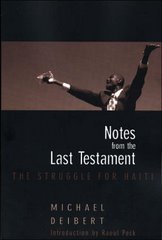
Greetings, Commissioner Sally A. Heyman. My name is Michael Deibert, and I am a journalist and author who currently resides in your district - Distirct 4 - in Miami Beach. I am the author of three books, In the Shadow of Saint Death: The Rise and Fall of the Gulf Cartel (Lyons Press, 2014), The Democratic Republic of Congo: Between Hope and Despair (Zed Books, 2013) and Notes from the Last Testament: The Struggle for Haiti (Seven Stories Press, 2005), and my writing has appeared in the Washington Post, the Wall Street Journal, the Guardian, the Miami Herald, Le Monde diplomatique, Folha de Sao Paulo and the World Policy Journal, among other venues.

I have just become aware via an article in the Miami Herald of the county's plans to close nearly all of its public libraries, potentially shuttering 42 locations and laying off 260 employees. It is hard for me to envision, after the millions of dollars that the county was willing to advance towards the new Marlins Stadium, a more short-sighted or destructive move than for the Commission to deprive the citizens of Miami-Dade of one of the few free sources of information and education left in the city today.

The library remains among our most precious democratic institutions. When I first moved to Miami in 1997 I was quite poor indeed, and access to the books at the Miami-Dade Public Library branch on Washington Avenue in South Beach was an essential part of my being able to make through those difficult months, with the free access to books providing me with important spiritual and intellectual sustenance. I honestly don't know what I would have done without it. As the American author Kurt Vonnegut once wrote "the America I loved still exists, if not in the White House or the Supreme Court or the Senate or the House of Representatives or the media. The America I love still exists at the front desks of our public libraries."

I couldn't agree with that sentiment more. I know that many of my fellow Miamians involved in the arts and simply ordinary citizens are just as outraged as I am at the thought of depriving our city of this essential facet of our democracy. I am urging them to contact you, as well, and I urge you to reconsider a move that would be so disempowering and wantonly harmful to the city that we all call home.

I have cc'd Miami-Dade County Commission Chairwoman Rebeca Sosa and Miami-Dade Mayor Carlos A. Giménez on this email, as well.

Best regards from Miami Beach,

MD

**********************************************

Note: Commissioner Sally Heyman was the only person to respond to this email. Her response was as follows.

---------- Forwarded message ----------
From: District4
Date: Thu, Jul 25, 2013 at 10:37 AM
Subject: RE: Hello Commissioner Heyman regarding potential library closures in Miami-Dade County


Sent on behalf of Commissioner Sally Heyman:

Thank you for your email RE: shutting fire stations and libraries. 

I voted NO to keeping mileage "flat," as it meant limiting negotiations regarding the budget, AND cuts in services as we started the budget discussions.  UNACCEPTABLE!

OUR FIRE STATIONS are essential to public safety, both person and property.  Restoring FIRE SERVICES to the current level in the budget does NOT mean raising taxes; it means we need to reduce costs, frills, duplicity and waste in our budget.   

I am also committed to keeping more of our libraries open, for the value it has to our communities.   Closing 22 of our 49 libraries is way too many, especially for our children and seniors.

Please continue to reach out to our MAYOR and County Commissioners; especially those that voted to accept this terrible proposal: Commissioners Barreiro, Bell, Bovo, Diaz, Suarez, Sosa, Soto, Zapata.  They all need to hear we need to keep valued services in place.... That does not mean raising taxes.

Thank you,

Commissioner Sally Heyman

Brief note on the capture of Miguel Angel Treviño Morales

Among the most difficult passages to write in my new Mexico book have been those on the atrocities Los Zetas have committed during their long war against their rivals, the Mexican state and ordinary Mexicans. The Sinaloa Cartel and Mario "El Pelón" Ramírez Treviño and what's left of the Gulf Cartel will undoubtedly view the capture of Los Zetas leader Miguel Angel Treviño Morales in Tamaulipas as an opportunity for expansion and reconquest, but this does mark an important moment in Mexico's long national nightmare.


Sunday, June 30, 2013

Happy 53rd Birthday, Democratic Republic of Congo

From your serpentine, churning namesake river to your beautiful mist-shrouded mountains to your inscrutable steaming jungles and your rolling savannas, in appreciation for your incredible sinuous soukous music, the beautiful artistry of your carved masks and the power of the literature of writers like Sony Lab'ou Tansi and also in appreciation of delicious cosa-cosa served with pili-pili, the view from Chez Tintin at sunset and, most of all, your indomitable, courageous people, Happy 53rd Birthday, Democratic Republic of Congo. May we all work to give you a brighter future.


Thursday, June 27, 2013

A melancholy anniversary

It was 59 years ago today that Guatemala's democratically-elected president Jacobo Árbenz was overthrown in a CIA-engineered coup. Among those caught up in the upheaval in Guatemala at the time - and the mass repression against Árbenz's partisans and the left in general - was an Argentine physician named Ernesto "Che" Guevara. Guevara subsequently fled to Mexico where he met a Cuban exile there named Fidel Castro...The complicating ironies of history...


Wednesday, June 26, 2013

Tuesday, June 18, 2013

"The only thing they gave us was a stadium"

Some São Paulo protesters explain why they took to the streets.


Monday, June 17, 2013

CAR rebel victory throws resource deals into doubt

12/06/2013 9:02 am

CAR rebel victory throws resource deals into doubt
 

By Michael Deibert

FDI Magazine


(This article first appeared in FDI Magazine. Please read the original article here.)

As the Central African Republic reels from the instability brought about by the overthrow of its government, observers are questioning South Africa’s role in the country, resource deals signed by the previous regime could be undone.

When François Bozizé, the president of the Central African Republic (CAR), was overthrown in March 2013 by a ragtag band of militiamen and child soldiers, few observers thought it heralded a brighter chapter in the history of one of Africa’s more tragic countries.

The Central African Republic, or Centrafrique, as it is known in French, is a former French colonial territory whose colonial history was marked by widespread forced labour and often outright slavery. The country's first prime minister died in a mysterious plane explosion in 1959, and independence eventually saw a coup by French-trained general Jean-Bédel Bokassa, a recipient of the Croix de Guerre who went on to become one of the continent’s most garish tyrants, crowning himself emperor in 1977 as his countrymen starved. Coups and counter-coups continued before elections in 1993 saw Ange-Félix Patassé ascend to the presidency, only to be overthrown by his former chief of staff, François Bozizé, a decade later.

Rise to power

Mr Bozizé had been orbiting around circles of power for years before his victory. The background of the man who has replaced him, however, is more obscure. Michel Djotodia is a former low-level government official who lived and studied for many years in the former Soviet Union, and who was only one of many leaders of the Union des Forces Démocratiques pour le Rassemblement, a rebel group that preceded the Séléka rebel coalition he led to power. Mr Djotodia was unanimously elected CAR’s president in mid-April by a transition council after a ballot in which he was the only candidate.

By the time the Bozizé government fell in March, nearly 300 South African soldiers were in the CAR defending his regime. As rebels stormed the capital Bangui in March, 13 South African soldiers were killed and 27 wounded. South African soldiers later expressed anguish when they realised that many of those they were fighting were mere children (the recruitment of children under the age of 15 to fight in combat is a war crime prosecutable by the International Criminal Court).

South African presence

South Africa’s involvement in the CAR has as much to do with business deals linked to the former's ruling African National Congress (ANC) party as it does with regional solidarity. A report by South Africa’s Mail & Guardian newspaper concluded that the country’s “military involvement in the Central African Republic has from the start been entwined with ANC-linked deals”.

The South African oil exploration company DIG Oil, which is closely linked to the ANC, boasted a Bozizé-era oil concession in CAR’s south-west, near the town of Carnot.

A public-private partnership company, Inala Centrafrique, was registered in 2006, with ownership divided between the South African entity Serengeti Group Holdings (65%) and the CAR government (35%). The former company was majority owned by ANC grandee Joshua Nxumalo. The venture appeared chiefly designed to gain access to diamond mines in CAR. The DIG Oil and Inala Centrafrique deals appear to be only two of many.

Shortly after Mr Bozizé was overthrown, Mr Djotodia announced that the new government would be reviewing all resource deals signed by the previous regime, including DIG Oil’s and the contract awarded to the China National Petroleum Corporation for rights to explore for oil near CAR’s border with Chad. The move is somewhat reminiscent of a special parliamentary commission chaired by Christophe Lutundula in the Democratic Republic of Congo, whose 271-page June 2005 report found that many contracts signed during that country’s civil wars were either illegal or of little value.

Mr Djotodia’s public comments have also indicated a possible shift toward seeking investment in CAR from the EU. Whether or not the Djotodia government’s review of foreign investment marks a serious attempt to increase transparency in the country’s resource deals remains to be seen, but the signs of good governance are thus far not encouraging.

The UN high commissioner for human rights says that a pattern of violence has continued in the country following Mr Bozizé’s overthrow, including cases of summary executions and sexual violence. Disgruntled members of the Séléka rebel coalition have been demonstrating in the capital over pay they say they were promised, and angry citizens recently killed a 17 year-old Séléka fighter, as resentment of the rebel coalition – now ensconced at the five-star Ledger Plaza Bangui hotel – continues to grow.

Friday, June 14, 2013

Congo Mask


I bought this mask while living in the Democratic Republic of Congo, one of about a dozen that I own. Beautiful, I think, in its craftsmanship and simplicity.

Photo © Michael Deibert

Sunday, June 09, 2013

Los Zetas spend all drug profits fighting off the Cártel del Golfo?

Here's a drug war statistic for you, courtesy of Mexico's Reforma newspaper: Los Zetas earn $350 million annually by importing 40 tonnes (80,000 pounds) of cocaine a year into the United States alone, but since 2010 have had to spend practically all that money trying to fight off their former employers, the Gulf Cartel.

Friday, May 31, 2013

Reinaldo Arenas on Miami


The typical Cuban machismo has attained alarming proportions in Miami...[It] was like a caricature of Cuba, the worst of Cuba: the eternal gossip, the chicanery, the envy. I also hated the flatness of the scenery, which could not compare with the beauty of an island, it was like a ghost of our island, a barren and pestiferous peninsula, trying to become, for a million exiles, the dream of a tropical island, aerial, bathed by the ocean waters and the tropical breeze...I was used to a city with sidewalks and streets, a deteriorated city but where a person could walk and appreciate its mystery, even enjoy it at times. Now I was in a plastic world, lacking all mystery...An exile has no place anywhere, because there is no place, because the place where we started to dream, where we discovered the natural world around us, read our first book, loved for the first time, is always the world of our dreams...The exile is a person who, having lost a loved one, keeps searching for the face he loves in every new face and forever deceiving himself, thinks he has found it.

-Reinaldo Arenas, Antes que anochezca

Monday, May 20, 2013

Monday, May 13, 2013

On Writing


In going where you have to go, and doing what you have to do, and seeing what you have to see, you dull and blunt the instrument you write with. But I would rather have it bent and dulled and know I had to put it on the grindstone again and hammer it into shape and put a whetstone to it, and know that I had something to write about, than to have it bright and shining and nothing to say, or smooth and well oiled in the closet, but unused.

-Ernest Hemingway,  Preface to The First Forty-Nine Stories (1944)

Friday, May 10, 2013

Wednesday, April 03, 2013

Thanks to the International Studies Program...

...At Franklin & Marshall College for hosting my talk on the Democratic Republic of Congo and the most interesting Q&A session that followed it. Cheers!


Photo © Michael Deibert

Monday, March 25, 2013

BOOK REVIEW: What Venezuelan President Hugo Chávez left behind

(Note: The Miami Herald published a somewhat-mangled edit of a review I wrote of the fine new book on Venezuela by Guardian reporter Rory Carroll. I don't know if wires got crossed with the Herald's impending move or what, but the version of the text that was agreed to - and which they somehow forgot about - is below. MD)

BOOK REVIEW: What Venezuelan President Hugo Chávez left behind

By Michael Deibert

Comandante: Hugo Chavez's Venezuela. 
Rory Carroll. 
Penguin. 320 pages. $27.95

Read more here: http://www.miamiherald.com/2013/03/24/3304106/what-venezuelan-president-hugo.html#storylink=cpy

In his new book Comandante: Hugo Chavez’s Venezuela, Irish journalist Rory Carroll delivers an authoritative account of the complicated legacy of Venezuelan President Hugo Chávez, who died earlier this month.

Carroll — who served as The Guardian correspondent in Caracas from 2006 until 2012 — describes in minute detail how Chávez, who ruled Venezuela from 1999 until his death on March 5, created something unique, “an authoritarian democracy . . . . a hybrid system of personality cult and one-man rule.” Here is Chávez not as a one-dimensional symbol but in all his complexity: The utopian socialist, the voracious reader, the vainglorious militarist, the bad husband, the doting father.

Even as he describes how Chávez empowered poor communities in Venezuela by creating communal councils and built homes for thousands of people who had never known decent shelter, Carroll succinctly outlines how the president squandered the great opportunity for durable development afforded to him by record-high oil prices, failing to diversify the country’s economy.

At the heart of this failure proves to be a desire — above all else — for power. Chávez had a digital record of the names of three million people who had voted against him in a 2004 recall referendum which was then used “to purge signatories from the state payroll, to deny jobs, contracts, loans, documents, to harass and punish, to make sectarianism official.” The mastermind behind the list, Luis Tascón, went on to become a strident critic of government corruption and was banished from Chávez’s inner circle before his own untimely death in 2010.

Giving the reader a brief tour of the Venezuela’s tangled and often violent history, Carroll shows how intimately Venezuela’s underclass knew — or thought they knew — the country’s wealthy and how the wealthy understood that underclass not at all and cared still less.

Chávez’s opposition - a diffuse and disorganized group of former military allies, civil libertarians, the country’s besieged middle class and what Chávez would doubtless refer to as the country’s rancid oligarchy - never managed to unseat him through means fair or foul. This is perhaps not surprising as they were faced with the cheerleading omnipotence of state media — its ubiquitousness the result Chávez’s war against Venezuela’s virulently hostile private media — and massive slush funds paid for with money siphoned off from the state oil company.

Chávez did not ascend to and retain power alone, though, and contained in Carroll’s book are revealing snapshots of those who accompanied the president during his time in office: The Machiavellian academic turned government official Jorge Giordani; the gruff bus driver who would become foreign minister (and now President) Nicolás Maduro; the slippery former army officer Diosdado Cabello.

Outside the sphere of officialdom, those in the Chávez camp are a diverse bunch, with some appearing earnest and committed, such as members of an agricultural cooperative Carroll visits in Chávez’s native state of Barnias, Others, such as the Venezuelan-American attorney and government apparatchik Eva Golinger, coming across as slightly mad in their cultish devotion to El Comandante. Those who fall out of favor, such as former Minister of Defense Raúl Baduel, who helped crush a 2002 coup attempt against Chávez but then denounced the president’s 2007 bid for perpetual reelection, are dealt with harshly.

But despite Chávez’s political domination of the country, so many of his grandiose ideas came to naught

After the 2002 coup attempt, Chávez fell ever-more under the spell of Cuban leader Fidel Castro (“The Cubans took us over” states a former ally glumly), who supplied revolutionary manpower in exchange for cheap Venezuelan oil. Cuban doctors poured into Venezuela to provide their services in the slums of Caracas, but soon enough they returned to Cuba, moved on to work in Bolivia or defected to Colombia or the United States, leaving their clinics abandoned. Government officials, meanwhile, sought care from elite private hospitals. Roads, bridges and factories all crumbled due to mismanagement and lack of maintenance.

And as Chávez’s revolution went along, Venezuelans killed one another in ever greater numbers. In 1998. there were 4,500 murders in Venezuela. In 2008, there were more than 17,000, less than 1% of which were ever solved. The prison population tripled to 50,000 in a prison system built for 12,000.

“The revolution inherited grave social problems and made them worse,” Carroll writes. “The maximum leader who liked to micromanage everything lost control of society’s most fundamental requirement, security.”

To compare Chávez’s, as some did, to his allies such as Castro, Mahmoud Ahmadinejad of Iran or Alexander Lukashenko of Belarus was absurd, and Carroll does not fall into this trap. Rather, even before Chávez died after ruling Venezuela for 14 years, Carroll reveals a creaking authoritarian edifice that may or may not outlive its maker. A leader who once filled the television screens of his country non-stop has now fallen silent. And Venezuela is left to wonder what will come and fill the void.


Michael Deibert is the author of Democratic Republic of Congo: Between Hope and Despair (Zed Books).

Tuesday, March 19, 2013

Michael Deibert's Haiti Bookshelf

18 March 2013

Michael Deibert's Haiti Bookshelf

The Huffington Post

(Read the original article here)

Despite its image of relentless poverty and political unrest, Haiti is the most beguiling and charming of destinations for foreign observers, but also one of the most maddeningly complex. From broad brushstrokes outlining the surface of events, outsiders, often devoid of context, are sometimes forced to draw not-always-accurate conclusions. As the place that gave me my start as a foreign correspondent and which was the subject of my first book, Notes from the Last Testament: The Struggle for Haiti (Seven Stories Press, 2005), Haiti has always had a special place in my heart and trying to inject some history into the discussion of the country has become something of a personal mission. Below are several books that I think would add greatly to our general understanding of Haiti. Though I am sure readers would care to add their own to this list (and though I am sure I have forgotten something essential), this strikes me as a good place to start. MD


Nonfiction

Divine Horsemen: The Voodoo Gods of Haiti by Maya Deren
This book, poetic and impressionistic much like the author's more-famous experimental cinema, was the result of years of immersion in Haiti's religious culture, and acts as a worthy companion to the film of the same name.

Papa Doc: Haiti and Its Dictator by Bernard Diederich & Al Burt
This book by two veteran journalists bring to life the tyranny of the dictator François "Papa Doc" Duvalier, who ruled Haiti from 1957 to 1971 and set a bloody benchmark for despots ever since.

Island Possessed by Katherine Dunham
A memoir by the famous African-American choreographer, who lived in Haiti and became the lover of its future president, Dumarsais Estimé, this book is eloquent testimony to the power of Haiti to move and change those who visit her.

The Prophet and Power: Jean-Bertrand Aristide, the International Community, and Haiti by Alex Dupuy

This important book by the Haitian sociologist and Wesleyan University professor looks with an unsentimental lens at the the second mandate of Haiti's twice-ousted president, Jean-Bertrand Aristide.

Never the Hope Itself: Love and Ghosts in Latin America and Haiti by Gerry Hadden
A former National Public Radio correspondent who covered Haiti's chaotic 2000 to 2004 era gives us an eyewitness account of how the government of Jean-Bertrand Aristide came to an end amidst a tidal wave of corruption, violence and dashed dreams.

Written in Blood: The Story of the Haitian People 1492-1995 by Robert Debs Heinl and Nancy Gordon Heinl

The best general history of Haiti available in English comes from perhaps an unlikely source, a former chief of the U.S. naval mission to Haiti who ran afoul of dictator François Duvalier. Nevertheless, over a gripping 889 pages, the military man and his journalist wife sustain a compelling narrative of Haiti's tumultuous history, resurrecting names and events that have been all-but-forgotten in most English-language writing on the subject.

Voodoo in Haiti by Alfred Métraux
The result of travels through the Haitian countryside by the Swiss Métraux along with his friend, the great Haitian author Jacques Roumain, this decades-old work remains the best overview of Haiti's syncretic indigenous religion.

Red and Black in Haiti: Radicalism, Conflict, and Political Change, 1934-1957 by Matthew J. Smith

This book by a young Jamaican historian covers the period between the departure of the U.S. Marines after a 20-year military occupation and the coming to power of François Duvalier. In doing so, it demonstrates how the dysfunctional nature of Haiti's politics cannot be blamed on a single source, but is rather the product of decades of political and economic miscalculation and ill-intention on the part of both Haiti's leaders and the international community.

Bonjour Blanc: A Journey Through Haiti by Ian Thomson
The English author's experiences traveling through Haiti may be 25 years old, but this book reveals the colour, grime exhilaration and despair which foreigners often experience when ranging through Haiti better than almost any book before or since.

The Rainy Season: Haiti Since Duvalier by Amy Wilentz
A beautifully-written account of the years immediately following the fall of the 29-year Duvalier family dictatorship, this book also served to bring to international prominence a young Haitian priest named Jean-Bertrand Aristide, whose depressing legacy once he entered politics gave lie to the man's once-rich promise.

Fiction

General Sun, My Brother by Jacques Stephen Alexis
A timeless novel of poverty, oppression and flight, this enthralling work is the most famous by the author, who died in an unsuccessful 1961 attempt to overthrow François Duvalier.

Brief Encounters with Che Guevara: Stories by Ben Fountain
This PEN Award-winning 2007 collection of short stories contains several set in Haiti that are obviously the work of someone who has experienced the country at great length.

Vale of Tears: A Novel from Haiti by Paulette Poujol Oriol
A vivid depiction of Port-au-Prince and the life of a woman whose existence has been one of endless struggle, this book is one of the key works from one of Haiti's most important novelists.

Masters of the Dew by Jacques Roumain
This 1943 novel by a Haitian author and diplomat eloquently addresses the plight of Haiti's peasantry in terms that sadly are as relevant today as when the book first appeared.

Children of Heroes by Lyonel Trouillot
A short novel by the man who is probably Haiti's greatest living author, sensitively translated by Linda Coverdale, this book tells the bleak story of two children attempting to flee a Port-au-Prince slum after killing their abusive father.

En français

The works of the Haitian scholars Roger Gaillard, Suzy Castor and Laënnec Hurbon, novelists such as Gary Victor, and others such as the French anthropologist Gérard Barthélemy, are indispensable to any serious understanding of Haiti.

Tuesday, February 12, 2013

White Egret


I spied this during an afternoon walk in Miami.


Photo © Michael Deibert