I woke up today to blue skies in Sydney and rolled out of bed with a receive-and-transmit section for my new Australia book already in my head. After a bit of writing, I logged on to the internet to find that unspeakable horror had been visited upon Bombay, known better known as Mumbai, while I slept, with places that I knew intimately targeted in an apparently tightly-coordinated series of terrorist attacks that at this writing have killed at least 80 people.
I lived in Mumbai - which I always preferred to call Bombay - for the first few months of 2007, and became quite fascinated the city, which was at once engaging intellectually and visually even as its pollution was often wretched for the health and the grinding poverty on display often brutal to the soul. Yet I have such fond memories of my walks around my old neighborhood of Colaba, of the chai I would have at a Parsi café in the Fort Area, with it great book stalls, and of strolling through the always-crowded Chhatrapati Shivaji Terminus (formerly Victoria Terminus) as I would head to visit friends out in Bandra, or to the Dharavi slum for reporting work. Despite my keen awareness of the inequalities in India, and the not-infrequent scapegoating of religious and ethnic minorities that the chauvinistic Hindu right often engages in, I was never made to feel anything less than welcome there, and was greeted with great warmth and hospitality by my friends in the city.
And now I read that the Taj Mahal hotel, which I frequently walked by and in whose lobby I paused from time to time, has been turned into a place of slaughter, that, in Chhatrapati Shivaji Terminus, where I remember poor families with their belongings tied together with rags waiting to take a train and beggars asking for alms, people have been mowed down for some sort of obscene motive, for some absurd political or religious end. Could the weathered pages of the Koran or the Ramayana or the Bible or the Talmud ever condone such actions of cowardice? Is their God so feeble that he would approve of leveling an assault rifle at a defenseless person? Would anything that cowardly be worth worshiping?
I think of these questions, having confronted religious and political fanaticism in various forms in various countries throughout my career as a journalist. Though it is still early, I wouldn’t be surpired to find out that the perpetrators of this crime are cut from the same cloth of those who often (though not always) commit extreme acts in this context: impoverished, disenfranchised and poorly educated, heads filled with visions of glory and martyrdom by someone who always remains in the shadows, and does well to protect his own family from either slaughter or martyrdom.
I think of the people in the city - that panoply of faces from Maharashtra, Gujarat, Punjab, Tamil Nadu, Sikkim, Kashmir and elsewhere that I met - as I sit here on this sunny morning in Sydney. I can still smell the channa masala and hear the clink of the glass of cane juice as a vendor scoops it out for a street boy to slake his thirst.
Bombay, meri jaan, I hope that you recover.
Thursday, November 27, 2008


Tuesday, November 18, 2008
A Plea from Local Organizations and Civil Society in North Kivu, Eastern Democratic Republic of Congo
A Plea from Local Organizations and Civil Society in North Kivu, Eastern Democratic Republic of Congo, to the United Nations Security Council and Other International Leaders
Goma, November 18, 2008
Dear Excellencies,
As the representatives of Congolese non-governmental organizations in North Kivu, we come before your authority to request an immediate reinforcement of peacekeeping forces for the Democratic Republic of Congo, reinforcements that would be capable of protecting us. This would help to prevent the atrocities that continue to be committed against civilians on an ever greater scale here in North Kivu, on the border of Rwanda and Uganda.
This letter presents a sad, cynical, tragic and very frustrating situation, which reveals the misery in which the population of North Kivu are immersed. We are anxious, afraid and utterly traumatised by the constant insecurity in which we live. We don’t know which saint to pray to; we are condemned to death by all this violence and displacement. We have been abandoned. Who will protect us? Who will help us? The United Nations says that all human beings are born free and equal in dignity and rights, but our dignity and our rights are violated every day with hardly a cry of protest. Do we not deserve protection? Are we not equal to others?
Since August 28, fighting has intensified in many areas, causing deaths, rapes, lootings, forced recruitment and further displacements of civilian populations. The population has thus been immersed in unspeakable suffering. In the last few days, fighting has drawn closer to large populated areas, such as the town of Goma. Fighting has also invaded and torn apart the region of Rutshuru, particularly in the town of Kiwanja, where hundreds of civilian deaths have now been recorded.
The suffering has gone on too long for the population of North Kivu. It is time for the government and the international community to protect the civilians who have fallen victim to the atrocities of the conflict.
We are aware that during several high-level visits to eastern Congo this year, you and your representatives heard many firsthand testimonies which could not have left you indifferent to the tragedy facing the population of our region of the DRC.
The various diplomatic and political meetings held over the last few weeks have demonstrated your commitment to finding an immediate and sustainable solution that would establish peace in North Kivu and thus bring stability to the Great Lakes region. Among the most remarkable developments, we note Rwanda’s direct involvement in the search for a sustainable solution to the crisis.
While we wish to thank you for these supportive visits and for your concerns about the tragedy here in eastern Congo, we also urge you to move from theory to practice, by transforming your kind speeches and messages into action. Diplomacy always takes time, and we understand this, but unfortunately we do not have time. The population of North Kivu is at risk now; with each day that passes, more and more people die.
For more than three decades, eastern Congo has been at war, and those who suffer most are civilians, especially women and children. There have been many attempts to resolve the crisis in the east, but none have succeeded. The most recent initiative to date was the Goma Peace Agreement (the Act of Engagement], signed by all belligerents in January 2008. But today this is no longer respected. Instead of peace, we are witnessing the continuation and exacerbation of the conflict.
In the past several days, the region of Rutshuru has been in the grip of hostilities. The town of Kiwanja has been taken and re-taken by the CNDP, and the population is paying the price. We are witnessing tragedies on a scale never experienced before in history, in which civilian populations are being summarily executed by bullets or blows from machetes, knives, hoes and spears. Corpses line the streets of the city and the odour of decomposing bodies greets passers-by. Indeed, the number of corpses already found is not conclusive, as searches continue, and, according to the latest reports, even more dead bodies are locked inside houses or thrown down latrines.
As the conquering army of Laurent Nkunda gradually takes new areas, the Congolese army takes flight. As they flee, they end up killing, pillaging, raping and stealing, leaving chaos and total disorder in their wake. This is the case in Goma, where more than 20 civilians were killed, several women were raped, and valuable goods were stolen on October 29. Since last week, the towns of Kanyabayonga, Kirumba and Kayna have been invaded in almost the same way as Goma by FARDC soldiers fleeing the fighting.
Forced recruitment has also intensified. In several areas of Rutshuru and Masisi, armed groups, the CNDP in particular, go from door to door to force young boys and adults – aged between 14 and 40 – to go to the front, without any prior military training. Last week, reports documented the recruitment by force of hundreds of civilians by the CNDP, especially in Kitchanga, Kiwanja, Rutshuru and Rubare.
In all of these cases, we, the civilian population, have been held hostage and caught between many lines of fire.
Women are among the first victims. Sexual violence has become dramatically worse since the end of August, as military forces and armed groups have reduced women to a battlefield.
Faced with a sense of abandonment, the people’s reaction has become one of self-defence. We do not know the limits of this. This has been the case of Mai Mai in Kiwanja and in the Kanyabayonga area.
MONUC has fallen short of fulfilling its mandate to protect civilians, openly and publicly, but no concrete action has been taken. Powerless, MONUC witnesses all the atrocities committed by the armed forces and groups. At times, its interventions are delayed, if not ineffective. We can therefore no longer continue to rely on MONUC to protect us. The case of Kiwanja, where civilians are massacred daily near the MONUC base, is a striking example.
We ask you urgently to assist us at this most difficult time. It is absolutely clear to everyone that we need reinforcements of troops capable of protecting civilians effectively and efficiently, with the means to deal with any kind of attacks. This must be done quickly.
We therefore urge you to:
- Immediately send EU troops which can deploy quickly to provide protection and security for civilians as you did for our brothers and sisters in Bunia, Ituri, in June 2003.
- Increase the number of troops for MONUC and provide them with a mandate that allows them to sufficiently protect civilians and to do so as their top priority.
Your Excellencies, you must save our lives now; otherwise it will be too late.
Yours sincerely,
The representatives of 44 Congolese NGOs in North Kivu:
- Action de Promotion et d'Assistance pour l'Amélioration du Niveau des Vies des Populations (APANIVIP)
- Action Paysanne pour la Reconstruction et le Développement Communautaire Intégral (APREDECI)
- Action pour la Promotion de la Participation Citoyenne – Nord Kivu (APPC/NK)
- Action pour la Promotion et la Défense des Droits des Personnes Défavorisées (APRODEPED)
- Action Sociale pour la Paix et le Développement (ASPD)
- Africa Justice Peace and Development (AJPD)
- Blessed Aid
- Bureau d’Information, Formation, Etude et Recherche en Développement (BIFERD)
- CADRE
- Campagne Pour la Paix (CPP)
- Centre d’Observation des Droits de l’Homme et d’Assistance Sociale (CODHAS)
- Centre de Recherche sur l'Environnement, la Démocratie et les Droits de l'Homme (CADERCO)
- Centre de Recherche sur l'Environnement, la Démocratie et les Droits de l'Homme (CREDDHO)
- Centre pour la Paix et les Droits de l’Homme – Peace and Human Rights Center (CPDH-PHRC)
- CEREBA/RDC
- Change Agents Peace Program (CAPP)
- Coalition pour mettre fin a l'utilisation d'enfants soldats en RDC /Coalition to Stop the Use of Child Soldiers in DRC
- CODHOP
- Collectif des Associations des Femmes Pour le Développement (CAFED)
- Collectif des ONG de Droits de l'Homme (CODHO)
- Collectif des Organisations des Jeunes Solidaires du Congo (COJESKI)/ Nord Kivu
- Conseil Régional des Organisations Non Gouvernementales de Développement (CRONGD)
- COPADI
- Encadrement des Femmes Indigènes et des Ménages Vulnérables (EFIM)
- GAMAC
- Group d'Etudes et d'Actions Pour un Développement Bien Défini (GEAD)
- Human Dignity in the World (HDW)
- Platform des Femmes du Nord Kivu pour un Développement Endogène (PFNDE)
- Programme de Lutte Contre l’Extrême Pauvreté et la Misère (PAMI)
- Promotion de la Démocratie et Protection des Droits Humains (PDH)
- Promotion et Appui aux Initiatives Féminines (PAIF)
- Réseau Congolais d’Action sur les Armes Légères et le Petit Calibre (RECAAL)
- Réseau d’Organisations des Droits Humains, d’Education Civique et de Paix (RODHECIP)
- Réseau Femme et Développement (REFED)
- Réseau Provincial des ONG de Droits de l'Homme (REPRODHOC)/Nord Kivu
- SAMS
- Société civile Territoire de Rutshuru
- Solidarité pour la Promotion sociale et la Paix (SOPROP)
- SOS/Grands-Lacs
- Syndicat des Associations Féminines pour un Développement Intégral (SAFEDI)
- Synergie des femmes pour les victimes des violences sexuelles (SFVS)
- Synergie des ONG locales pour les Urgences Humanitaires dans le territoire de Rutshuru
- UPADERI
- Villages Cobaye (VICO)
Monday, November 10, 2008
Adieu, Miriam Makeba
Miriam Makeba, the great South African singer who chanted in the key of resistance against the apartheid regime in her native land, passed away today while doing what she did best: Lending her luminous musical gifts in defense of liberty and in defiance of tyranny.
The 76 year-old Makeba passed away from an apparent heart attack while performing at a concert in Italy in support of Roberto Saviano, an Italian journalist whose exposé of the Camorra organized crime syndicate in Naples in his book Gomorrah has earned him death threats and worse.
Coming only a year after the murder of South African reggae legend Lucky Dube, it may seem another terrible blow to the music scene in that country, where I first ventured in a very moving visit that brought me face-to-face with Robert Mugabe's brutality and South Africa's own tortured history earlier this year. But like all eternal voices, such as those of Bob Marley, Peter Tosh and Woody Guthrie, the music of Miriam Makeba will continue to give succor and sustenance to oppressed and downtrodden people the world over. Amen, Miriam, and ayibobo.
Saturday, November 08, 2008
Thoughts on Obama from Japan
 The Polish journalist Ryszard Kapuscinski once wrote something to the affect that foreign correspondents who cover the far corners of the earth are a cynical lot used to overcoming obstacles that most people can’t imagine just to do their jobs, and that little can excite them.
That may be so to a large degree, but for my own part I have rarely been as deeply elated or moved as I have been by the election of Barack Hussein Obama as the 44th President of the United States, and the scenes that followed it. Obama’s acceptance speech before a crowd of over 200,000 at Chicago’s Grant Park, the scenes of Americans - young and old, rich and poor, black and white and Latino and Asian and Arab, male and female - embracing, cheering and weeping, and the outpouring of emotion in scenes broadcast from around the globe was as resounding message as any imaginable about the ability of the United States to change and that the eight year nightmare of vainglorious militarism, disastrous economic irresponsibility and plain and simple mean-spiritedness was coming to an end.
Having supported Barack Obama in the primaries in my native state of Pennsylvania and written about his presidential campaign frequently in recent months, and having early-voted for Obama in the general election in Pennsylvania this past October, I found myself in Japan during actual election day. I watched as the returns began to come in with my girlfriend in the exquisite city of Kyoto and then raced to the fishing village of Obama, Japan, where banners bearing a manga-influenced drawing of the new president proclaimed “I love Obama.”
The United States has been through so much in the last eight years, from the attacks of September 11th and the wars in Afghanistan and Iraq to the destruction of Hurricane Katrina and the economic meltdown that occurred this year, which further impoverished a population already beset by often non-existent healthcare, stagnant wages and/or disappearing jobs, and an ever-diminishing international reputation as the windshield cowboy and his cohorts mistook truculence for statesmanship and attempted to set regions of American against one another in a miserable scramble for ever-more power. One of the phrases that most stuck in my mind from Obama’s speech before the throng in Grant Park the other nights ran as follows:
If there is anyone out there who still doubts that America is a place where all things are possible; who still wonders if the dream of our founders is alive in our time; who still questions the power of our democracy, tonight is your answer.
Tonight, as I strolled under a sliver of autumn moon through the old Higashi Chaya quarter here in Kanazawa on the Sea of Japan, my thoughts were with my native land, and a feeling of deep pride for what has come to pass this week, and deep responsibility for all that remains to be done. I have a year ahead of me working and reporting from Asia, but I think that, after that, I just might head home to record how this new chapter is being written in this new day.
Tuesday, October 28, 2008
EU Involvement in DRC Mining Project Draws Protest
ECONOMY:
EU Involvement in DRC Mining Project Draws Protest
By Michael Deibert
Inter Press Service
LONDON, Oct 28, 2008 (IPS) - The involvement of the European Union in a mining project in the Democratic Republic of Congo (DRC) has drawn a chorus of protest from local and international human rights advocates. They say the project is rife with problems relating to transparency and accountability.
Located some 175 km north-west of the DRC city of Lubumbashi in Katanga province, the Tenke Fungurume vein is thought to be one of the largest unexploited seams of copper and cobalt in the world.
It has proven alluring to mining companies in recent years as the DRC attempts to extract itself from a civil war during which some six million people have died.
Mining of this resource has fallen to Tenke Fungurume Mining SARL (TFM), a joint concern combining Gécamines, Congo's state mining concern, with Lundin, a Swedish mining company, and the U.S.-based mining concern Phelps Dodge.
The latter merged with gold-and-copper giant Freeport-McMoran in 2007 and has since become Freeport-McMoran Copper & Gold Inc.
After construction on the Tenke mining facility commenced in 2007, the European Investment Bank (EIB), the investment arm of the European Union, agreed that same year to help finance the project with a loan of 100 million euros.
It regarded the project as ''highly significant from an economic and developmental point of view'' and that ''environmental and social issues (connected with the project) have been subjected to careful in-depth analysis.'
However, the EIB's move has been criticised both by international bodies, such as the Paris-based Les Amis de la Terre (Friends of the Earth), as well as local organisations in the DRC, such as Action Contre l'Impunité pour les Droits Humains (Action against impunity towards human rights).
Read the full article here.
EU Involvement in DRC Mining Project Draws Protest
By Michael Deibert
Inter Press Service
LONDON, Oct 28, 2008 (IPS) - The involvement of the European Union in a mining project in the Democratic Republic of Congo (DRC) has drawn a chorus of protest from local and international human rights advocates. They say the project is rife with problems relating to transparency and accountability.
Located some 175 km north-west of the DRC city of Lubumbashi in Katanga province, the Tenke Fungurume vein is thought to be one of the largest unexploited seams of copper and cobalt in the world.
It has proven alluring to mining companies in recent years as the DRC attempts to extract itself from a civil war during which some six million people have died.
Mining of this resource has fallen to Tenke Fungurume Mining SARL (TFM), a joint concern combining Gécamines, Congo's state mining concern, with Lundin, a Swedish mining company, and the U.S.-based mining concern Phelps Dodge.
The latter merged with gold-and-copper giant Freeport-McMoran in 2007 and has since become Freeport-McMoran Copper & Gold Inc.
After construction on the Tenke mining facility commenced in 2007, the European Investment Bank (EIB), the investment arm of the European Union, agreed that same year to help finance the project with a loan of 100 million euros.
It regarded the project as ''highly significant from an economic and developmental point of view'' and that ''environmental and social issues (connected with the project) have been subjected to careful in-depth analysis.'
However, the EIB's move has been criticised both by international bodies, such as the Paris-based Les Amis de la Terre (Friends of the Earth), as well as local organisations in the DRC, such as Action Contre l'Impunité pour les Droits Humains (Action against impunity towards human rights).
Read the full article here.
Sunday, October 26, 2008
Sarah Palin's hometown paper endorses Barack Obama for president
The Anchorage Daily News, the most widely read newspaper in the home state of Republican Vice Presidential nominee Sarah Palin, this weekend joined such Republican stalwarts as former Massachusetts governor William Weld, former Secretary of State Colin Powell and former George W. Bush spokesman Scott McClellan in endorsing Democratic candidate Barack Obama for the presidency.
Noting that the northernmost state's founders "were optimistic people," the paper went on to note in its endorsement that Obama "displays thoughtful analysis, enlists wise counsel and operates with a cool, steady hand," witheringly concluding that "Sen. John McCain, is the wrong choice for president at this critical time for our nation." The paper also asserted that McCain's response to the financial crisis showed him "to be ill-equipped to lead the essential effort of reining in a runaway financial system and setting an anxious nation on course to economic recovery."
But there was more. From the newspaper that probably knows her as well as any in the country, the editorial went on to say of Palin that "few who have worked closely with the governor would argue she is truly ready to assume command of the most important, powerful nation on earth...Like picking Sen. McCain for president, putting her one 72-year-old heartbeat from the leadership of the free world is just too risky at this time."
Couple sentiments like this with the news in places like my thoroughly blue-collar but often conservative home county of Lancaster, Pennsylvania, that the Democratic Committee announced last week that more than 22,000 Democratic voters were registered since last November — a 27 percent increase - one can feel a seismic shift and a moment of great - yes - change coming to American politics. It is a moment than many, both in the United States and beyond, throughout the long, dark night of the Bush years, have long been waiting for.
Noting that the northernmost state's founders "were optimistic people," the paper went on to note in its endorsement that Obama "displays thoughtful analysis, enlists wise counsel and operates with a cool, steady hand," witheringly concluding that "Sen. John McCain, is the wrong choice for president at this critical time for our nation." The paper also asserted that McCain's response to the financial crisis showed him "to be ill-equipped to lead the essential effort of reining in a runaway financial system and setting an anxious nation on course to economic recovery."
But there was more. From the newspaper that probably knows her as well as any in the country, the editorial went on to say of Palin that "few who have worked closely with the governor would argue she is truly ready to assume command of the most important, powerful nation on earth...Like picking Sen. McCain for president, putting her one 72-year-old heartbeat from the leadership of the free world is just too risky at this time."
Couple sentiments like this with the news in places like my thoroughly blue-collar but often conservative home county of Lancaster, Pennsylvania, that the Democratic Committee announced last week that more than 22,000 Democratic voters were registered since last November — a 27 percent increase - one can feel a seismic shift and a moment of great - yes - change coming to American politics. It is a moment than many, both in the United States and beyond, throughout the long, dark night of the Bush years, have long been waiting for.
Thursday, October 23, 2008
A long road to a brief encounter
My good friend Ben Fountain, author of the excellent short story collection Brief Encounters With Che Guevara, is the subject of an interesting article by Malcolm Gladwell in the New Yorker this month on "late blooming" geniuses. I met Ben on the steps of the Hotel Oloffson in Port-au-Prince one day back in 2002, when I was the Reuters correspondent in Haiti. In another life, Ben had been a real estate lawyer in Dallas, but when I met him he was bursting into full flower as a writer of insightful, worldly short stories that would culminate with his collection's publication four years later, a book that would eventually go on to win the Hemingway Foundation/PEN award.
Though Ben's success didn't come in a big way until mid-life, I know how hard he worked to reach this first plateau and must say that I can't think of anyone who more richly deserves the recognition that he is now getting. With too much short fiction these days, in my view, of a particularly insular nature, Ben's stories are not afraid to venture out into the world, the real world with all of its political complexities and conflicted loyalties, that surrounds us. Well done.
It's a rainy day in Barcelona today, and, in only a few days, Japan, a country I have long wanted to visit, awaits.
Though Ben's success didn't come in a big way until mid-life, I know how hard he worked to reach this first plateau and must say that I can't think of anyone who more richly deserves the recognition that he is now getting. With too much short fiction these days, in my view, of a particularly insular nature, Ben's stories are not afraid to venture out into the world, the real world with all of its political complexities and conflicted loyalties, that surrounds us. Well done.
It's a rainy day in Barcelona today, and, in only a few days, Japan, a country I have long wanted to visit, awaits.
Tuesday, October 21, 2008
Pennsylvania election know-how

As unknowns kept entering my father's yard at night and stealing his Barack Obama campaign signs in the battleground state of Pennsylvania, he and my younger brother came up with a novel solution, as can be seen here.
Thursday, October 09, 2008
Garífunas Confront Their Own Decline
Garífunas Confront Their Own Decline
The Garífuna culture, a "masterpiece" of human heritage according to UNESCO, could disappear as the result of the privatization of Central America's beaches.
By Michael Deibert
Inter Press Service
MIAMI, Honduras, Oct 6, 2008 (Tierramérica).- "The Garífuna were the best sailors in the world," says Jermonino Barrios, standing barefoot on this slender thread of land between the Laguna de Los Micos and the blue Caribbean Sea.
Barrios, 67, a former soldier, speaks proudly of his ethnic group, whose members are scattered across Belize, Guatemala, Honduras and Nicaragua.
"Before, we had 200 or 300 Garífuna living here; now there are only a few," he tells Tierramérica.
"They went to the United States for work, and other places," he explains with a note of regret, gazing back at the collection of thatched-roof huts lazing under palms trees that front the crashing surf.
In the tumultuous history of Europe's incursion into the Americas and the trafficking of slaves from Africa to its shores, their are few stories as dramatic or moving as that of the Garífuna.
Read the full article here.
The Garífuna culture, a "masterpiece" of human heritage according to UNESCO, could disappear as the result of the privatization of Central America's beaches.
By Michael Deibert
Inter Press Service
MIAMI, Honduras, Oct 6, 2008 (Tierramérica).- "The Garífuna were the best sailors in the world," says Jermonino Barrios, standing barefoot on this slender thread of land between the Laguna de Los Micos and the blue Caribbean Sea.
Barrios, 67, a former soldier, speaks proudly of his ethnic group, whose members are scattered across Belize, Guatemala, Honduras and Nicaragua.
"Before, we had 200 or 300 Garífuna living here; now there are only a few," he tells Tierramérica.
"They went to the United States for work, and other places," he explains with a note of regret, gazing back at the collection of thatched-roof huts lazing under palms trees that front the crashing surf.
In the tumultuous history of Europe's incursion into the Americas and the trafficking of slaves from Africa to its shores, their are few stories as dramatic or moving as that of the Garífuna.
Read the full article here.
Thursday, October 02, 2008
Nicaragua’s poisonous political brew
Nicaragua’s poisonous political brew
By Michael Deibert
(A slightly difference version of this article appeared in Portuguese in the Brazilian daily Folha de Sao Paulo on 31 August 2008)
Masaya, Nicaragua – At the Museo y Galería de Héroes y Mártires in this city in Nicaragua’s southern heartland, the faces of young patriots who gave their lives to break this impoverished country out of its tradition of despotism gaze out at visitors from photographs lining the walls.
Amidst the firmament of Central America’s political upheaval in the latter half of the 20th century, this city, an hour south of the capital, Managua, played a decisive role. In February 1978, the Masaya neighborhood of Monimbó launched the opening salvo in what would become the final uprising to topple dictator Anastasio Somoza Debayle. Somoza would be driven from office a year later and the the Frente Sandinista de Liberación Nacional (FSLN), a left-wing guerrilla movement, rode triumphantly into Managua in a victory which would energize insurgencies throughout the region.
Today, one of the most visible leaders of that 1979 revolution, the FSLN’s Daniel Ortega, is again president, having been re-elected in 2006 after being ejected from that office during elections in 1990. The FSLN has transformed itself into one of Nicaragua’s two largest political parties, but the nation’s political landscape has undergone a great metamorphosis in the interim years.
“I was wounded fighting against the Contras,” says Lopez Davila, a 42 year-old cab driver plying his trade along Monimbó’s fume-choked lanes, referring to the remnants of Somoza’s Guardia Nacional and others, sponsored by the United States, that fought to drive the FSLN from power until peace accords were signed in the early 1990s. “But now, the politicians are all the same thing. We don’t believe in any of them.”
Even before returning to office 18 months ago, Ortega had solidified his position as the head of an increasingly centralized FSLN over which he and a small coterie of family members, and advisers exercise virtually unchallenged control. Despite Ortega’s continued inveighing against global capitalism in his speeches, the FSLN’s left-wing vanguard role has been replaced in economic matters by a more measured approach, seeking, for example, to increase production through a program of low-cost loans to farmers in what is still a largely agrarian society.
Diminished opposition
Ortega’s political machinations in recent years have attracted more attention than his government’s fiscal policies, however. These have ranged from plastering the nation with billboards lauding himself and his party to, critics charge, colluding with Nicaragua’s judicial and legislative bodies to bar his adversaries from any chance at the lever of power.
In June, Nicaragua’s Consejo Supremo Electoral (CSE) ruled that two small opposition parties, the Partido Conservador (Coservative Party, Nicaragua’s oldest political party) and the left-wing Movimiento Renovador Sandinista (Sandinista Renewal Movement or MRS), a party founded by FSLN dissidents in 1995, were ineligible to compete in municipal elections due to be held around the country in November. The official reason given by the CSE was that the two parties had not completed sufficient paperwork to contest the elections, though several other parties with similar problems were not stricken fron the ballot.
Government detractors claim the move is an attempt by the FLSN and its nominal opponent in the upcoming election, the Partido Liberal Constitucionalista (PLC), to rig the ballot in their favour. The decision by the CSE, which is stacked which loyalists of both Ortega and PLC leader Arnoldo Alemán, to bar Eduardo Montealegre, a former PLC member who came in second to Ortega in the 2006 elections, from the leadership of his newly-formed Alianza Liberal Nicaragüense party, would seem to reinforce their fears. Montealegre has since humbly rejoined the PLC.
A similar decision by the CSE to suspend elections in three municipalities in Nicaragua’s rugged Región Autónoma del Atlántico Norte area - a former Contra stronghold where local indigenous tribes have a history of hostility to the government in Managua - until April 2009 has already provoked rioting there in which a dozen people were injured.
“This arbitrary exclusion of these political parties is a real threat to the health of democracy in the country,” says Gonzalo Carrión Maradiaga, director of the Centro Nicaragüense de Derechos Humanos, a non-governmental organization that seeks to promote civil, political and economic rights. “This is completely calculated because together these parties form a threat to the FSLN and the PLC, and the fundamental motivation is to force Nicaragua into a bi-party system.”
Unlikely alliances
Carrión’s words might seem unduly fevered were it not for the fact that, in 1999, it was revealed that Oretga and Alemán had in fact entered into a secret political pact, giving the duo vast powers in Nicaragua’s Asamblea Nacional, where the FSLN currently holds 38 seats and the PLC 25 seats in the 92-member body. Beyond carving up political patronage jobs between FSLN and PLC supporters, el pacto, as it as known, has also enabled the two parties to exercise great influence over judicial institutions such as the CSE.
The rotund Alemán, a former president, was convicted in 2003 of corruption during his 1997 to 2002 tenure as Nicaragua’s chief of state. A 2004 report by the Berlin-based Transparency International, an organization that monitors governmental corruption, listed Alemán as one of the ten most corrupt leaders in the world, having an embezzled an estimated US$100 million from Nicaragua’s state coffers.
Initially sentenced to 20 years in prison, Alemán now dwells under expansively-defined house arrest near Managua, continuing to travel around the country to conduct political meetings. Given his weakened position, political observers in the country have likened Alemán’s current state as ranging from junior partner with Ortega in the alliance to the president’s “prisoner.”
Ortega’s deal with Alemán is not the only striking about-face that the FSLN leader has performed.
For a leader who once was the public face of a revolutionary movement promising equality between the sexes, few early acolytes could have pictured the FSLN, with Oretga at the forefront, joinning together with Nicaragua’s Catholic and evangelical churches as the most strident public proponents of the country’s draconian abortion law, one of the most restrictive in the world. Enacted in 2006 with the full support of the FSLN in congress, the law bans abortion completely, even in cases of rape, incest or life-threatening pregnancy, rights which Nicaraguan women had enjoyed for more than 100 years. Any healthcare workers who aids a women in obtaining an abortion can be imprisoned for up to 14 years.
The move left many former supporters feeling betrayed.
“The Sandinista revolution had a political and social pact with women, and this is treason to women and it is treason to the former program of the FSLN,” says Sofía Montenegro, Executive Director of the Movimiento Autónomo de Mujeres and a former editor of Barricada, the official FSLN newspaper during the post-Somoza period. She has since become a fierce critic of Ortega and the FSLN.
“Women got involved not only because they were against the dictatorship, but also because the offered total emancipation for women and the end of discrimination against women,” Montenegro asserts. “The proposal of the revolution was that women would be integrated fully into the society. The fact that they have taken away something that has been so long established is unbelievable and absurd.”
Despite such policies, while abroad, at least, Ortega – who routinely brands his foes as “traitors” in the pay of the United States - has thrown in his rhetorical lot with two of Latin America’s two most strident leaders Venezuelan President Hugo Chavez and Rafael Correa of Ecaudor, who have also often been accused of critics of veering towards authoritarian methods to bolster their own political positions. Follwing the death of Manuel Marulanda, one of the leader’s of Colombia’s Fuerzas Armadas Revolucionarias de Colombia (FARC) guerrilla group, Ortega eulogized Marulanda as “a brother” at the Foro de São Paulo conference of left-wing parties earlier this year. The FARC is classified as a terrorist organization by the U.S. State Department and the European Union.
The political landscape today
Ortega’s government still has its supporters, though they are increasingly hard to track down.
“Sincerely, the FSLN are the only party that understands the needs of the people,” says Benito Vilchez, the 47 year-old caretaker of the Combatants and Collaborators Historic Association in the northern city of León. Like the museum in Masaya, the building hosts a modest collection of photographs, yellowed newspaper clippings and political banners commemorating the struggle against the Somoza regime and the Contras, though with a stridently pro-FSLN political slant
“In 16 years of neo-liberal government, - they did nothing to help us,” says Vilchez. “We can see clearly that this is a government for the poor people.”
Perhaps more irritating to Ortega than his critics in the civil society is the nascent FSLN dissident movement as typified by the MRS. As a political force, the MRS finally began to come into its own under the aegis of Managua mayor Herty Lewites during the 2006 elections, during which Lewites opposed Ortega for the presidency. For his transgression, Lewites , who was running a strong third in opinion polls, was expelled from the FSLN. He subsequently died of an apparent heart attack just before the presidential ballot.
“There is a drastic difference between the FSLN today and the FSLN of the 1980s. The only thing that in common is the name,” says the MRS’ current president Enrique Sáenz, a deputy in the Asamblea Nacional. “Corruption is a big part of the (current) project. There is rhetoric of helping the poor, while a small group is in fact enriching itself.”
Echoes from history
Amidst the mutual recriminations, Nicaragua’s modern political history remains dominated by two narratives of power. The first is that of the Somoza dynasty, which the Sandinistas finally succeeded in bringing to its knees three decades ago.
Anastasio Somoza García, appointed head of the newly-created Guardia Nacional during the 1909-1933 occupation of the country by the United States, ruled the country for over 20 years, his tenure ended,when Nicaraguan poet Rigoberto López Pérez, assassinated him León in 1956. Followed by his son, Luis Somoza Debayle, who ruled the country until his death in 1967, the Somoza family mantle was then taken up by another son, Anastasio Somoza Debayle, had of the Guardia Nacional. Even among the ranks of Latin Americas most corrupt caudillos, the actions of the Somozas, which included pocketing most of the relief aid that poured into Nicaragua following a devastating 1972 earthquake, rank near the top.
At the other end of the spectrum, looming over Nicargua’s political discourse (and literally over Managua in the form of a giant, silhouetted statue), is the figure of Augusto César Sandino, perhaps the greatest hero in Nicaragua’s modern political pantheon.
A guerrilla leader against the United States in the first half of the 20th century, Sandino was a curious candidate for a national emblem. In addition to his anti-imperialist activities, Sandino was also an adherent of the Escuela Magnetico Espiritual de la Comuna Universal, a hodgepodge of spiritualism and political thought created in Argentina by a Basque electrician. Sandino the rebel was killed by the elder Somoza’s Guardia Nacional in 1934.
Despite his imperfections, it is Sandino’s mantle that most sides in the struggle in Nicaragua want to claim for themselves. The FSLN named themselves after him, while the MRS use Sandino’s iconic floppy hat as their emblem.
Amidst this battle of ghosts, historical relics and modern-day controversy, Nicaragua’s beleaguered populace has watched consumer prices climb 23 percent this year and expect costs to spiral even farther, and they may be growing weary of the backdoor deals of its endlessly scheming politicians.
Managua’s once busy downtown on the shores of polluted Lake Xolotlán, remains ghostly and deserted, much as it was following the earthquake of 1972. In the Plaza de la Republica, billboards of Ortega proclaim Hacia el sol de la Victoria (“Towards the sun of victory”). Alongside them, the city’s ruined old cathedral, casting a watchful eye over the country’s stunted economic and political growth, gazes down upon three diminutive street children and two stray dogs as the unlikely retinue makes their way across the otherwise deserted plaza, pushing a wooden cart piled high with rubbish. The cathedral’s once-grand clocks remain stopped at 12:35, the time of the earthquake.
Oretga y Aleman y Somoza son la misma cosa reads graffiti scrawled outside of the nearby PLC headquarters, which no one has yet bothered to paint over.
Ortega and Aleman and Somoza are the same thing.
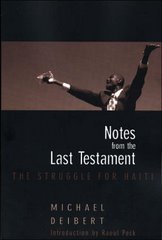
Michael Deibert is the author of Notes from the Last Testament: The Struggle for Haiti (Seven Stories Press).
By Michael Deibert
(A slightly difference version of this article appeared in Portuguese in the Brazilian daily Folha de Sao Paulo on 31 August 2008)
Masaya, Nicaragua – At the Museo y Galería de Héroes y Mártires in this city in Nicaragua’s southern heartland, the faces of young patriots who gave their lives to break this impoverished country out of its tradition of despotism gaze out at visitors from photographs lining the walls.
Amidst the firmament of Central America’s political upheaval in the latter half of the 20th century, this city, an hour south of the capital, Managua, played a decisive role. In February 1978, the Masaya neighborhood of Monimbó launched the opening salvo in what would become the final uprising to topple dictator Anastasio Somoza Debayle. Somoza would be driven from office a year later and the the Frente Sandinista de Liberación Nacional (FSLN), a left-wing guerrilla movement, rode triumphantly into Managua in a victory which would energize insurgencies throughout the region.
Today, one of the most visible leaders of that 1979 revolution, the FSLN’s Daniel Ortega, is again president, having been re-elected in 2006 after being ejected from that office during elections in 1990. The FSLN has transformed itself into one of Nicaragua’s two largest political parties, but the nation’s political landscape has undergone a great metamorphosis in the interim years.
“I was wounded fighting against the Contras,” says Lopez Davila, a 42 year-old cab driver plying his trade along Monimbó’s fume-choked lanes, referring to the remnants of Somoza’s Guardia Nacional and others, sponsored by the United States, that fought to drive the FSLN from power until peace accords were signed in the early 1990s. “But now, the politicians are all the same thing. We don’t believe in any of them.”
Even before returning to office 18 months ago, Ortega had solidified his position as the head of an increasingly centralized FSLN over which he and a small coterie of family members, and advisers exercise virtually unchallenged control. Despite Ortega’s continued inveighing against global capitalism in his speeches, the FSLN’s left-wing vanguard role has been replaced in economic matters by a more measured approach, seeking, for example, to increase production through a program of low-cost loans to farmers in what is still a largely agrarian society.
Diminished opposition
Ortega’s political machinations in recent years have attracted more attention than his government’s fiscal policies, however. These have ranged from plastering the nation with billboards lauding himself and his party to, critics charge, colluding with Nicaragua’s judicial and legislative bodies to bar his adversaries from any chance at the lever of power.
In June, Nicaragua’s Consejo Supremo Electoral (CSE) ruled that two small opposition parties, the Partido Conservador (Coservative Party, Nicaragua’s oldest political party) and the left-wing Movimiento Renovador Sandinista (Sandinista Renewal Movement or MRS), a party founded by FSLN dissidents in 1995, were ineligible to compete in municipal elections due to be held around the country in November. The official reason given by the CSE was that the two parties had not completed sufficient paperwork to contest the elections, though several other parties with similar problems were not stricken fron the ballot.
Government detractors claim the move is an attempt by the FLSN and its nominal opponent in the upcoming election, the Partido Liberal Constitucionalista (PLC), to rig the ballot in their favour. The decision by the CSE, which is stacked which loyalists of both Ortega and PLC leader Arnoldo Alemán, to bar Eduardo Montealegre, a former PLC member who came in second to Ortega in the 2006 elections, from the leadership of his newly-formed Alianza Liberal Nicaragüense party, would seem to reinforce their fears. Montealegre has since humbly rejoined the PLC.
A similar decision by the CSE to suspend elections in three municipalities in Nicaragua’s rugged Región Autónoma del Atlántico Norte area - a former Contra stronghold where local indigenous tribes have a history of hostility to the government in Managua - until April 2009 has already provoked rioting there in which a dozen people were injured.
“This arbitrary exclusion of these political parties is a real threat to the health of democracy in the country,” says Gonzalo Carrión Maradiaga, director of the Centro Nicaragüense de Derechos Humanos, a non-governmental organization that seeks to promote civil, political and economic rights. “This is completely calculated because together these parties form a threat to the FSLN and the PLC, and the fundamental motivation is to force Nicaragua into a bi-party system.”
Unlikely alliances
Carrión’s words might seem unduly fevered were it not for the fact that, in 1999, it was revealed that Oretga and Alemán had in fact entered into a secret political pact, giving the duo vast powers in Nicaragua’s Asamblea Nacional, where the FSLN currently holds 38 seats and the PLC 25 seats in the 92-member body. Beyond carving up political patronage jobs between FSLN and PLC supporters, el pacto, as it as known, has also enabled the two parties to exercise great influence over judicial institutions such as the CSE.
The rotund Alemán, a former president, was convicted in 2003 of corruption during his 1997 to 2002 tenure as Nicaragua’s chief of state. A 2004 report by the Berlin-based Transparency International, an organization that monitors governmental corruption, listed Alemán as one of the ten most corrupt leaders in the world, having an embezzled an estimated US$100 million from Nicaragua’s state coffers.
Initially sentenced to 20 years in prison, Alemán now dwells under expansively-defined house arrest near Managua, continuing to travel around the country to conduct political meetings. Given his weakened position, political observers in the country have likened Alemán’s current state as ranging from junior partner with Ortega in the alliance to the president’s “prisoner.”
Ortega’s deal with Alemán is not the only striking about-face that the FSLN leader has performed.
For a leader who once was the public face of a revolutionary movement promising equality between the sexes, few early acolytes could have pictured the FSLN, with Oretga at the forefront, joinning together with Nicaragua’s Catholic and evangelical churches as the most strident public proponents of the country’s draconian abortion law, one of the most restrictive in the world. Enacted in 2006 with the full support of the FSLN in congress, the law bans abortion completely, even in cases of rape, incest or life-threatening pregnancy, rights which Nicaraguan women had enjoyed for more than 100 years. Any healthcare workers who aids a women in obtaining an abortion can be imprisoned for up to 14 years.
The move left many former supporters feeling betrayed.
“The Sandinista revolution had a political and social pact with women, and this is treason to women and it is treason to the former program of the FSLN,” says Sofía Montenegro, Executive Director of the Movimiento Autónomo de Mujeres and a former editor of Barricada, the official FSLN newspaper during the post-Somoza period. She has since become a fierce critic of Ortega and the FSLN.
“Women got involved not only because they were against the dictatorship, but also because the offered total emancipation for women and the end of discrimination against women,” Montenegro asserts. “The proposal of the revolution was that women would be integrated fully into the society. The fact that they have taken away something that has been so long established is unbelievable and absurd.”
Despite such policies, while abroad, at least, Ortega – who routinely brands his foes as “traitors” in the pay of the United States - has thrown in his rhetorical lot with two of Latin America’s two most strident leaders Venezuelan President Hugo Chavez and Rafael Correa of Ecaudor, who have also often been accused of critics of veering towards authoritarian methods to bolster their own political positions. Follwing the death of Manuel Marulanda, one of the leader’s of Colombia’s Fuerzas Armadas Revolucionarias de Colombia (FARC) guerrilla group, Ortega eulogized Marulanda as “a brother” at the Foro de São Paulo conference of left-wing parties earlier this year. The FARC is classified as a terrorist organization by the U.S. State Department and the European Union.
The political landscape today
Ortega’s government still has its supporters, though they are increasingly hard to track down.
“Sincerely, the FSLN are the only party that understands the needs of the people,” says Benito Vilchez, the 47 year-old caretaker of the Combatants and Collaborators Historic Association in the northern city of León. Like the museum in Masaya, the building hosts a modest collection of photographs, yellowed newspaper clippings and political banners commemorating the struggle against the Somoza regime and the Contras, though with a stridently pro-FSLN political slant
“In 16 years of neo-liberal government, - they did nothing to help us,” says Vilchez. “We can see clearly that this is a government for the poor people.”
Perhaps more irritating to Ortega than his critics in the civil society is the nascent FSLN dissident movement as typified by the MRS. As a political force, the MRS finally began to come into its own under the aegis of Managua mayor Herty Lewites during the 2006 elections, during which Lewites opposed Ortega for the presidency. For his transgression, Lewites , who was running a strong third in opinion polls, was expelled from the FSLN. He subsequently died of an apparent heart attack just before the presidential ballot.
“There is a drastic difference between the FSLN today and the FSLN of the 1980s. The only thing that in common is the name,” says the MRS’ current president Enrique Sáenz, a deputy in the Asamblea Nacional. “Corruption is a big part of the (current) project. There is rhetoric of helping the poor, while a small group is in fact enriching itself.”
Echoes from history
Amidst the mutual recriminations, Nicaragua’s modern political history remains dominated by two narratives of power. The first is that of the Somoza dynasty, which the Sandinistas finally succeeded in bringing to its knees three decades ago.
Anastasio Somoza García, appointed head of the newly-created Guardia Nacional during the 1909-1933 occupation of the country by the United States, ruled the country for over 20 years, his tenure ended,when Nicaraguan poet Rigoberto López Pérez, assassinated him León in 1956. Followed by his son, Luis Somoza Debayle, who ruled the country until his death in 1967, the Somoza family mantle was then taken up by another son, Anastasio Somoza Debayle, had of the Guardia Nacional. Even among the ranks of Latin Americas most corrupt caudillos, the actions of the Somozas, which included pocketing most of the relief aid that poured into Nicaragua following a devastating 1972 earthquake, rank near the top.
At the other end of the spectrum, looming over Nicargua’s political discourse (and literally over Managua in the form of a giant, silhouetted statue), is the figure of Augusto César Sandino, perhaps the greatest hero in Nicaragua’s modern political pantheon.
A guerrilla leader against the United States in the first half of the 20th century, Sandino was a curious candidate for a national emblem. In addition to his anti-imperialist activities, Sandino was also an adherent of the Escuela Magnetico Espiritual de la Comuna Universal, a hodgepodge of spiritualism and political thought created in Argentina by a Basque electrician. Sandino the rebel was killed by the elder Somoza’s Guardia Nacional in 1934.
Despite his imperfections, it is Sandino’s mantle that most sides in the struggle in Nicaragua want to claim for themselves. The FSLN named themselves after him, while the MRS use Sandino’s iconic floppy hat as their emblem.
Amidst this battle of ghosts, historical relics and modern-day controversy, Nicaragua’s beleaguered populace has watched consumer prices climb 23 percent this year and expect costs to spiral even farther, and they may be growing weary of the backdoor deals of its endlessly scheming politicians.
Managua’s once busy downtown on the shores of polluted Lake Xolotlán, remains ghostly and deserted, much as it was following the earthquake of 1972. In the Plaza de la Republica, billboards of Ortega proclaim Hacia el sol de la Victoria (“Towards the sun of victory”). Alongside them, the city’s ruined old cathedral, casting a watchful eye over the country’s stunted economic and political growth, gazes down upon three diminutive street children and two stray dogs as the unlikely retinue makes their way across the otherwise deserted plaza, pushing a wooden cart piled high with rubbish. The cathedral’s once-grand clocks remain stopped at 12:35, the time of the earthquake.
Oretga y Aleman y Somoza son la misma cosa reads graffiti scrawled outside of the nearby PLC headquarters, which no one has yet bothered to paint over.
Ortega and Aleman and Somoza are the same thing.
Michael Deibert is the author of Notes from the Last Testament: The Struggle for Haiti (Seven Stories Press).
Friday, September 26, 2008
This is our moment

Grand Street, Williamsburg, Brooklyn, New York, September 2008. (Photo by Benjamin Deibert)
Tuesday, September 23, 2008
"Haiti Is Going From Catastrophe to Catastrophe"
"Haiti Is Going From Catastrophe to Catastrophe"
Michael Deibert interviews Chavannes Jean-Baptiste
Inter Press Service
NEW YORK, Sep 23, 2008 (IPS) - Peasant leader Chavannes Jean-Baptiste has been at the forefront of the struggles of Haiti's peasants for over 35 years. Born in the village of Papay in Haiti's Plateau Central, Jean-Baptiste helped found the Mouvman Peyizan Papay (MPP) peasant union as well as the Mouvman Peyizan Nasyonal Kongre Papay (MPNKP), the latter a 200,000-member national congress of peasant farmers and activists.Jean-Baptiste's role is an important one in a nation where, over the past 50 years, 90 percent of the tree cover has been destroyed for charcoal and to make room for farming, with resulting erosion destroying two-thirds of the country's arable farmland.
For his work on behalf of Haiti's peasantry, Chavannes Jean-Baptiste was awarded the 2005 Goldman Environmental Prize, sponsored by the Goldman Environmental Foundation, the world's largest prize for grassroots environmentalists.
In recent weeks, a series of hurricanes have struck Haiti, killing what is thought to be hundreds of people and devastating the country's already-decrepit infrastructure. The United Nations now estimates that 800,000 people are in need of emergency food aid. Haiti is currently the location of a U.N. peacekeeping force numbering over 9,000 uniformed personnel.
IPS correspondent Michael Deibert, who covered Haiti as a journalist from 2000 until 2006, sat down with Chavannes Jean-Baptiste during his recent visit to the United States. The interview was conducted in Haitian Kreyol in Brooklyn, New York, on Sep. 14, 2008.
Read the full interview here.
Michael Deibert interviews Chavannes Jean-Baptiste
Inter Press Service
NEW YORK, Sep 23, 2008 (IPS) - Peasant leader Chavannes Jean-Baptiste has been at the forefront of the struggles of Haiti's peasants for over 35 years. Born in the village of Papay in Haiti's Plateau Central, Jean-Baptiste helped found the Mouvman Peyizan Papay (MPP) peasant union as well as the Mouvman Peyizan Nasyonal Kongre Papay (MPNKP), the latter a 200,000-member national congress of peasant farmers and activists.Jean-Baptiste's role is an important one in a nation where, over the past 50 years, 90 percent of the tree cover has been destroyed for charcoal and to make room for farming, with resulting erosion destroying two-thirds of the country's arable farmland.
For his work on behalf of Haiti's peasantry, Chavannes Jean-Baptiste was awarded the 2005 Goldman Environmental Prize, sponsored by the Goldman Environmental Foundation, the world's largest prize for grassroots environmentalists.
In recent weeks, a series of hurricanes have struck Haiti, killing what is thought to be hundreds of people and devastating the country's already-decrepit infrastructure. The United Nations now estimates that 800,000 people are in need of emergency food aid. Haiti is currently the location of a U.N. peacekeeping force numbering over 9,000 uniformed personnel.
IPS correspondent Michael Deibert, who covered Haiti as a journalist from 2000 until 2006, sat down with Chavannes Jean-Baptiste during his recent visit to the United States. The interview was conducted in Haitian Kreyol in Brooklyn, New York, on Sep. 14, 2008.
Read the full interview here.
Wednesday, September 17, 2008
Congo: Between Hope and Despair
Congo: Between Hope and Despair
By Michael Deibert
(The following the complete text of my article on the situation in the Democratic Republic of Congo that appeared in the Summer 2008 edition of the World Policy Journal.)
RUTSHURU, DEMOCRATIC REPUBLIC OF THE CONGO—In the middle of a schoolyard in this war-torn corner of eastern Congo, a village of fragile tarpaulin has sprung up amid the weed-choked gravel. Surrounded by children in ragged clothing, Bonaparte Kananzo, a farmer, steps forward to explain what has brought the local population, now refugees in their own country, to this pass.
“We arrived here at the beginning of February,” explains Kananzo, who says that some 1,000-plus villagers trekked here through the lush mountains of North Kivu province fleeing fighting between forces loyal to the government of Congo’s president, Joseph Kabila, and the army of renegade general Laurent Nkunda. An ethnic Tutsi, Nkunda leads the Congrès National pour la Défense du Peuple (National Congress for the Defence of the People, CNDP), a politico-military organization.
“The war in Kivu brought a lot of insecurity to our town, a lot of violence against women and other things,” says Kananzo. “People are afraid to return home.”
It has been two years since the international community, led by the United States and the European Union, spent tens of millions of dollars organizing the Democratic Republic of the Congo’s (DRC) first democratic elections in 40 years, which solidified Joseph Kabila’s rule and marked the end of the main phase of Congo’s civil war. The war was a conflict which, according to a report released in January by the International Rescue Committee relief organization, killed an estimated 5.4 million people between August 1998 and April 2007— many from health-related concerns caused by the social and economic disruption of the ongoing conflict. Since the formal end of Congo’s 1998–2002 civil war, about 2.1 million have died from similar causes, the report said, with, at present, some 45,000 dying monthly.
As if to underline the gravity of Kananzo’s words—that intense combat and attendant atrocities, including widespread rape and the forced recruitment of child soldiers, have succeeded in emptying whole villages—the United Nations Office for the Coordination of Humanitarian Affairs estimates that, since 2003, some 800,000 people have been displaced by fighting in North Kivu out of a population of 4.2 million, or roughly one in five individuals.
In addition to the CNDP and Congolese government forces, two other armed groups operate and frequently clash in the region: the government’s local paramilitary allies such as the Patriotes Résistants Congolais (Congolese Resistance Patriots, PARECO), and the Forces Démocratiques de Libération du Rwanda (Democratic Forces for the Liberation of Rwanda, FDLR)—a group comprised mainly of ethnic Hutus with its roots in Rwanda’s 1994 genocide.
A Century of Blood
Congo’s bloody decades must be seen in the broader context of Central Africa’s regional conflicts that have left vast territories traumatized and victimized by rebel forces that sweep across borders, often with the complicity of governments that have profited from the terror and violence.
Congo—a nation as vast as Western Europe and dotted with rich reserves of cobalt, coltan, copper, diamonds, and gold —is a case study in human avarice, vanity, and misrule. With its western reaches comprising part of an African empire for centuries, by 1877, Congo was occupied by the forces of Belgium’s King Leopold II.
As brutal a tyrant as Africa has ever seen, Leopold, though cloaking his presence in the guise of a civilizing mission, instituted mutilation and massacre as the rules of the day while extracting huge quantities of rubber. After Leopold reluctantly relinquished his personal administration of the territory to his nation’s civilian bureaucrats in 1908, the Congolese were governed by colonial functionaries until independence in 1960. One of the heroes of that independence, Prime Minister Patrice Émery Lumumba, was killed the following year, and General Joseph-Désiré Mobutu seized power in a military coup in 1965, ruling the nation until his ouster in 1997.
Mobutu subsequently renamed Congo as Zaire and dubbed himself Mobutu Sese Seko Kuku Ngbendu Wa Za Banga (“The all-powerful warrior who, because of his endurance and inflexible will to win, goes from conquest to conquest, leaving fire in his wake”). Mobutu’s three decades of brutal kleptocratic rule saw the country virtually disintegrate: inflation, unemployment, illiteracy, and infant mortality rates sky-rocketed, while the dictator and his cronies enriched themselves. The name “Zaire,” incidentally, died with his ouster as the nation reverted to Democratic Republic of the Congo.
Recent events have been little kinder to Congo. Following the mass slaughter of Tutsis and moderate Hutus in neighboring Rwanda by Hutu extremists there in 1994 —and because of the subsequent success of the Tutsi-led Rwandan Patriotic Front (RPF) in wresting power from the authors of the genocide—an estimated two million refugees flooded into eastern Congo. Mixed in among them were many high-ranking figures in the brutal interahamwe Hutu militias that had taken the lead in organizing the genocidal massacres in Rwanda. Hundreds of thousands of Hutu civilian refugees feared RPF reprisals. The interahamwe, direct precursors of today’s FDLR who spread terror in vast reaches of eastern Congo, created spheres of influence in the squalid refugee camps of the provinces of North and South Kivu, from where they launched cross- border attacks against Rwanda’s new government and harassed local Congolese Tutsis known as Banyamulenge.
Mobutu, echoing the behavior of King Leopold II, had by this point ruled Congo for three decades as little more than a personal fiefdom, and allowed these génocidaires, as they were known, to go about their murderous business largely unmolested, much to the chagrin of the ruling government in Rwanda. In late 1996, using a rebellion by the Banyamulenge as cover, an umbrella group of Congolese rebel factions calling themselves the Alliance of Democratic Forces for the Liberation of Congo-Zaire (AFDL) launched an insurgency to oust Mobutu with extensive Rwandan and Ugandan backing. Rwanda’s President Paul Kagame and Uganda’s President Yoweri Museveni were both eager to see the duplicitous Mobutu fall so that they might pursuetheir own interests in Congo—a country of vast mineral wealth.
With longtime rebel leader Laurent-Désiré Kabila at the helm, the AFDL and their foreign patrons made quick progress across Congo’s vast interior, marching westward to the capital, Kinshasa, with tacit approval provided by the administration of U.S. President Bill Clinton, still stung by its failure to do anything to halt the Rwandan genocide two years earlier.
Tens of thousands (and possibly hundreds of thousands) of Hutu refugees are
thought to have been slain in eastern and central Congo as the AFDL and Rwandan security forces pursued the interahamwe and their civilian human shields through the forests and jungles of the region. Largely painted in the West in simplistic terms of good vs. evil, the rebellion against Mobutu was anything but a simple homegrown revolution, and in fact represented the extension and continuation of a brutal policy of ethnic warfare that would soon engulf the entire country.
Kabila‘s Gunpoint Diplomacy
Once Kabila ascended to power, however, relations with his Rwandan and Ugandan backers cooled rapidly. Apparently feeling that he had solidified his political base within Congo enough to jettison his foreign supporters—a conviction that would prove a bad miscalculation—Kabila ordered all Rwandan and Ugandan military units to depart Congo in August 1998.
Following their departure, and in apparent response to this order, a rebel group calling itself the Rally for Congolese Democracy (RCD), made up of Banyamulenge and other ethnic groups and operating with extensive Rwandan and Ugandan backing, took up arms in North Kivu province.
Kabila, in a dizzying about-face, en-listed the help of the very same interahamwe remnants his forces had once pursued through the region to defend his tottering government. With rebellion also erupting in the west of the country, Kabila recruited the governments of Angola, Namibia, and Zim-babwe to his side, and these forces, combined with still-loyal elements of the Congolese army, succeeded in stemming the rebel advance.
At the same time, in northern Congo, a new rebel group, the Mouvement pour la Libération du Congo (Movement for the Liberation of Congo, MLC), another partial creation of the Ugandan government, also appeared.
In August 1999, following a faltering series of peace talks, a split between the Rwandan and Ugandan factions within the RCD resulted in the two sides turning their weapons on one another in the central town of Kisangani, which lies astride the Congo River and is bitterly immortalized by V. S. Naipaul in his 1979 novel, A Bend in the River.
With the Rwandans and Ugandans squaring off against one another at various points across the country, the war expanded rapidly northward to the hitherto largely peaceful Ituri region. An amalgam of ethnic and linguistic groups like much of Congo, the dominant tribes in Ituri had traditionally been the Lendu, a group composed mainly of farmers who arrived from southern Sudan centuries before; and the Hema, a Nilotic people who came to the area more recently and devoted themselves to livestock grazing. The two had co-existed in a tense calm for many years, helping to form a tapestry that had encompassed other ethnic groups such as the Ngiti, who are sometimes associated with the Lendu, and the Gegere, sometimes linked to the Hema.
With the rest of Congo engulfed in war, the tensions between the Lendu and Hema erupted into violence in 1999, in a conflict that would last until 2007 and claim at least 60,000 lives. Rwanda and Uganda again proved only too happy tosupply men and arms to shore up local militias such as the Union des Patriotes Congolais (UPC), which claimed to be defending the interests of the Hema and Gegere, and the Forces de Résistance Patriotique d’Ituri (FRPI) and Front Nationaliste et Intégrationniste (FNI), which pretended to defend the interests of the Lendu and Ngiti people.
Growing Pains
Although the conflict in Congo continues most vigorously in the provinces of North and South Kivu in the east—a mineral-rich region of looming mountains, fertile pastures, and mist-shrouded volcanoes—the rest of the country has not been spared occasionally violent outbreaks that, while dismissed as the growing pains of a country emerging from decades of dictatorship by some, are viewed by others as signs of a deeper malaise at the heart of the international community’s involvement in the country.
In March 2008, Titinga Frédéric Pacéré, an independent United Nations expert for human rights, lamented Congo’s situation. Some 14,200 rape cases were registered in South Kivu alone between 2005 and 2007, Pacéré reported, while only 287 were taken to court. The decision of the United Nations Human Rights Council not to renew Pacéré’s mandate to continue working in the country has subsequently drawn vigorous criticism from human rights quarters.
Congolese security forces, meanwhile launched a scorched-earth campaign against the Bundu dia Kongo (“Kingdom of Kongo” in the Kikongo language, BDK) in the western province of Bas-Congo, torching and looting BDK strongholds throughout the province. The BDK, who only nominally acknowledge central state authority, have as their stated goal the reunification of Kingdom of Kongo, an empire that existed in various incarnations for nearly 500 years until the early twentieth century, encompassing swaths of what is now Angola, Gabon, the Republic of Congo (a former French colony once called Congo- Brazzaville), as well as the DRC. A June
2008 report on the violence published by the United Nations Mission in the Democratic Republic of the Congo, said that at least 100 people were killed in the clashes and noted that “the high death toll resulted, in large part, from unwarranted or excessive use of force.”
During a trip through Bas-Congo at the height of the violence, I frequently encountered individuals dressed in Congolese police uniforms speaking Lingala, the lingua franca of Congo’s army, who attested that they had been sent from Kinshasa to contain unrest there. Lorries full of armed men ferried police equipped with Uzi submachine guns and automatic weapons with fixed bayonets through country crossroads.
“There is a cleavage between east and west when you look at the election results,” says Theodore Trefon, who directs the Contemporary History Section at the Royal Museum for Central Africa in Tervuren, Belgium. Trefon points to President Kabila’s roots in the eastern province of Katanga, over 1,000 miles away from the DRC’s capital of Kinshasa, and where English and Swahili are spoken, as opposed to Lingala, Kikongo, and French in the west. “This is representative of a deep- rooted issue.”
Ethnic Enigmas
The current president, Joseph Kabila, who assumed office following the assassination of his father in 2001, remains something of an enigma. Said to be shy and reserved, the 38- year-old president goes for weeks at a time without making public appearances or statements, leading Congo’s rumor mill, always active on matters of political intrigue, to engage in frequent public speculation about possible ill-health or even plots against his life. Despite his seeming elusiveness, Kabila has surprised many with his adroit hand when it comes to international relations, deftly balancing allies such as Angola and Zimbabwe while also engaging potentially hostile states like Rwanda.
He has also shown great savvy in attracting foreign investment to boost the country’s economy, battered by a decade of war and Mobutu’s 30 years of larcenous rule. Just days ahead of an important EU-Africa summit held in Lisbon, Portugal, last December, the Chinese government announced a $5 billion loan to Congo, one of many such trade projects that Kabila’s government has overseen in its two years of democratically elected rule.
However, many of these investments have themselves been controversial. The activities of the Australian company Anvil Mining, for example, have come under close scrutiny: in October 2004, at least 73 people were killed when Congolese soldiers raided the town of Kilwa, in response to a half-dozen self-declared “rebels”from an obscure group that had appeared in the village. A quartet of human right organizations, including the London-based Global Witness, have charged that Anvil, the leading copper producer in the DRC, provided logistical support to the army during the siege, including allowing use of its company cars to transport bodies of those killed in summary executions and to ferry stolen goods looted by soldiers. Investigators for the United Nations mission were later able to confirm that three of the company’s drivers were behind the wheel of Anvil Mining vehicles used by the Congolese army during the raid. Similarly, the South African company AngloGold Ashanti has been accused of fostering links to the FNI militia to ensure the security of mining operations in Ituri during that region’s armed conflict.
The UN peacekeeping force in Congo (the world’s largest at some 17,000 troops), meanwhile, has also come under criticism since its creation in 1999. UN peacekeepers were linked to a gold smuggling enterprise with local militias in Ituri in 2005, and a 2004 internal UN report concluded that sexual abuse and exploitation of women and girls by both military and civil elements of the force appeared to be “significant, widespread and ongoing.”
The State of Modern-Day Congo
Today, a largely undefended population is at the mercy of competing armed factions; natural resources are being looted by avaricious multinationals with precious little oversight; the UN mission is at once under- manned, ineffective, bloated, and unresponsive; and the nominally elected government shows a commitment to representative democracy that is, at best, questionable.
Perhaps things did not have to be this way. Cold-War era backing for the Mobutu dictatorship was followed by the callous foreign policy of a Clinton administration that uncritically lauded Rwanda’s Paul Kagame and Uganda’s Yoweri Museveni as they supported the AFDL rebels’ bloody march across Congo. More than a decade of violence has followed, shredding an already fragile kaleidoscope of diverse ethnic groups that have been compressed within the country’s largely arbitrary, European-drawn borders. Congo’s African neighbors— especially overpopulated and resource-poor Uganda and Rwanda, though also Angola and Zimbabwe—are more than eager to throw political and military support behind ethnic factions in the DRC in an attempt to carve it into spheres of influence. Foreign companies, equally keen to profit from
Congo’s resources, have legitimized some of the worst human rights abusers in the country in their desire to exploit natural resources. And the international community is also culpable: anxious to write off Congo’s 2006 elections as a success, it continues to turn a blind eye to some of the more troubling signals sent by the behavior of Congo’s young president and those around him towards forces who would oppose his government.
If Congo’s future is to be different from its tragic past, there is much to be done. But time is running out when international intervention can still turn the tide toward a true democratic system where violence is suppressed before it can threaten the way of life of millions of innocent men, women, and children. Among the ingredients of a potential antidote to the country’s ills, would certainly be a more robust, transparent, and responsive United Nations mission; greater international diplomatic engagement to insure the right of expression and dissent for Congo’s diverse opposition; and an active and sustained campaign to demand accountability of the foreign companies doing business there.
Trapped between these competing forces, the Congolese people know only that the suffering that has seemed assured to them in recent years is continuing with precious little abatement.
Peace at Last?
In Bulengo, a camp for internally displaced persons reached from North Kivu’s provincial capital of Goma via a rough ride in a 4x4 down a dirt road, a group of children are performing traditional dances and singing in the Hunde language of eastern Congo to celebrate the installation of a new committee to advocate on behalf of those living in the camp. They are watched over by adults who, unlike them, can remember a time when life held the promise of something other than deprivation and seemingly endless war.
“All of these groups have caused a massive flight of the population here,” says Chantal Lenga, 32, dressed in a distinctive brightly colored blouse, or libaya. Referring to the combatants as she watches the ceremony, she adds. “Before the war, all of these communities lived together without any problems.”
Nearby, Baguma Bashombana, a diminutive, pygmy farmer dressed in tattered clothes, who arrived in the camp with 150 members of his community, echoes her words.
“The children, the fathers, the mothers, we are all hungry,” says Bashombana. “These fighters have all been negative forces that have menaced us.”
Michael Deibert is the author of Notes from the Last Testament: The Struggle for Haiti (Seven Stories Press, 2005). He has reported on Africa for a variety of publications since 2007 and served as the Democratic Republic of Congo correspondent for the Inter Press Service.
By Michael Deibert
(The following the complete text of my article on the situation in the Democratic Republic of Congo that appeared in the Summer 2008 edition of the World Policy Journal.)
RUTSHURU, DEMOCRATIC REPUBLIC OF THE CONGO—In the middle of a schoolyard in this war-torn corner of eastern Congo, a village of fragile tarpaulin has sprung up amid the weed-choked gravel. Surrounded by children in ragged clothing, Bonaparte Kananzo, a farmer, steps forward to explain what has brought the local population, now refugees in their own country, to this pass.
“We arrived here at the beginning of February,” explains Kananzo, who says that some 1,000-plus villagers trekked here through the lush mountains of North Kivu province fleeing fighting between forces loyal to the government of Congo’s president, Joseph Kabila, and the army of renegade general Laurent Nkunda. An ethnic Tutsi, Nkunda leads the Congrès National pour la Défense du Peuple (National Congress for the Defence of the People, CNDP), a politico-military organization.
“The war in Kivu brought a lot of insecurity to our town, a lot of violence against women and other things,” says Kananzo. “People are afraid to return home.”
It has been two years since the international community, led by the United States and the European Union, spent tens of millions of dollars organizing the Democratic Republic of the Congo’s (DRC) first democratic elections in 40 years, which solidified Joseph Kabila’s rule and marked the end of the main phase of Congo’s civil war. The war was a conflict which, according to a report released in January by the International Rescue Committee relief organization, killed an estimated 5.4 million people between August 1998 and April 2007— many from health-related concerns caused by the social and economic disruption of the ongoing conflict. Since the formal end of Congo’s 1998–2002 civil war, about 2.1 million have died from similar causes, the report said, with, at present, some 45,000 dying monthly.
As if to underline the gravity of Kananzo’s words—that intense combat and attendant atrocities, including widespread rape and the forced recruitment of child soldiers, have succeeded in emptying whole villages—the United Nations Office for the Coordination of Humanitarian Affairs estimates that, since 2003, some 800,000 people have been displaced by fighting in North Kivu out of a population of 4.2 million, or roughly one in five individuals.
In addition to the CNDP and Congolese government forces, two other armed groups operate and frequently clash in the region: the government’s local paramilitary allies such as the Patriotes Résistants Congolais (Congolese Resistance Patriots, PARECO), and the Forces Démocratiques de Libération du Rwanda (Democratic Forces for the Liberation of Rwanda, FDLR)—a group comprised mainly of ethnic Hutus with its roots in Rwanda’s 1994 genocide.
A Century of Blood
Congo’s bloody decades must be seen in the broader context of Central Africa’s regional conflicts that have left vast territories traumatized and victimized by rebel forces that sweep across borders, often with the complicity of governments that have profited from the terror and violence.
Congo—a nation as vast as Western Europe and dotted with rich reserves of cobalt, coltan, copper, diamonds, and gold —is a case study in human avarice, vanity, and misrule. With its western reaches comprising part of an African empire for centuries, by 1877, Congo was occupied by the forces of Belgium’s King Leopold II.
As brutal a tyrant as Africa has ever seen, Leopold, though cloaking his presence in the guise of a civilizing mission, instituted mutilation and massacre as the rules of the day while extracting huge quantities of rubber. After Leopold reluctantly relinquished his personal administration of the territory to his nation’s civilian bureaucrats in 1908, the Congolese were governed by colonial functionaries until independence in 1960. One of the heroes of that independence, Prime Minister Patrice Émery Lumumba, was killed the following year, and General Joseph-Désiré Mobutu seized power in a military coup in 1965, ruling the nation until his ouster in 1997.
Mobutu subsequently renamed Congo as Zaire and dubbed himself Mobutu Sese Seko Kuku Ngbendu Wa Za Banga (“The all-powerful warrior who, because of his endurance and inflexible will to win, goes from conquest to conquest, leaving fire in his wake”). Mobutu’s three decades of brutal kleptocratic rule saw the country virtually disintegrate: inflation, unemployment, illiteracy, and infant mortality rates sky-rocketed, while the dictator and his cronies enriched themselves. The name “Zaire,” incidentally, died with his ouster as the nation reverted to Democratic Republic of the Congo.
Recent events have been little kinder to Congo. Following the mass slaughter of Tutsis and moderate Hutus in neighboring Rwanda by Hutu extremists there in 1994 —and because of the subsequent success of the Tutsi-led Rwandan Patriotic Front (RPF) in wresting power from the authors of the genocide—an estimated two million refugees flooded into eastern Congo. Mixed in among them were many high-ranking figures in the brutal interahamwe Hutu militias that had taken the lead in organizing the genocidal massacres in Rwanda. Hundreds of thousands of Hutu civilian refugees feared RPF reprisals. The interahamwe, direct precursors of today’s FDLR who spread terror in vast reaches of eastern Congo, created spheres of influence in the squalid refugee camps of the provinces of North and South Kivu, from where they launched cross- border attacks against Rwanda’s new government and harassed local Congolese Tutsis known as Banyamulenge.
Mobutu, echoing the behavior of King Leopold II, had by this point ruled Congo for three decades as little more than a personal fiefdom, and allowed these génocidaires, as they were known, to go about their murderous business largely unmolested, much to the chagrin of the ruling government in Rwanda. In late 1996, using a rebellion by the Banyamulenge as cover, an umbrella group of Congolese rebel factions calling themselves the Alliance of Democratic Forces for the Liberation of Congo-Zaire (AFDL) launched an insurgency to oust Mobutu with extensive Rwandan and Ugandan backing. Rwanda’s President Paul Kagame and Uganda’s President Yoweri Museveni were both eager to see the duplicitous Mobutu fall so that they might pursuetheir own interests in Congo—a country of vast mineral wealth.
With longtime rebel leader Laurent-Désiré Kabila at the helm, the AFDL and their foreign patrons made quick progress across Congo’s vast interior, marching westward to the capital, Kinshasa, with tacit approval provided by the administration of U.S. President Bill Clinton, still stung by its failure to do anything to halt the Rwandan genocide two years earlier.
Tens of thousands (and possibly hundreds of thousands) of Hutu refugees are
thought to have been slain in eastern and central Congo as the AFDL and Rwandan security forces pursued the interahamwe and their civilian human shields through the forests and jungles of the region. Largely painted in the West in simplistic terms of good vs. evil, the rebellion against Mobutu was anything but a simple homegrown revolution, and in fact represented the extension and continuation of a brutal policy of ethnic warfare that would soon engulf the entire country.
Kabila‘s Gunpoint Diplomacy
Once Kabila ascended to power, however, relations with his Rwandan and Ugandan backers cooled rapidly. Apparently feeling that he had solidified his political base within Congo enough to jettison his foreign supporters—a conviction that would prove a bad miscalculation—Kabila ordered all Rwandan and Ugandan military units to depart Congo in August 1998.
Following their departure, and in apparent response to this order, a rebel group calling itself the Rally for Congolese Democracy (RCD), made up of Banyamulenge and other ethnic groups and operating with extensive Rwandan and Ugandan backing, took up arms in North Kivu province.
Kabila, in a dizzying about-face, en-listed the help of the very same interahamwe remnants his forces had once pursued through the region to defend his tottering government. With rebellion also erupting in the west of the country, Kabila recruited the governments of Angola, Namibia, and Zim-babwe to his side, and these forces, combined with still-loyal elements of the Congolese army, succeeded in stemming the rebel advance.
At the same time, in northern Congo, a new rebel group, the Mouvement pour la Libération du Congo (Movement for the Liberation of Congo, MLC), another partial creation of the Ugandan government, also appeared.
In August 1999, following a faltering series of peace talks, a split between the Rwandan and Ugandan factions within the RCD resulted in the two sides turning their weapons on one another in the central town of Kisangani, which lies astride the Congo River and is bitterly immortalized by V. S. Naipaul in his 1979 novel, A Bend in the River.
With the Rwandans and Ugandans squaring off against one another at various points across the country, the war expanded rapidly northward to the hitherto largely peaceful Ituri region. An amalgam of ethnic and linguistic groups like much of Congo, the dominant tribes in Ituri had traditionally been the Lendu, a group composed mainly of farmers who arrived from southern Sudan centuries before; and the Hema, a Nilotic people who came to the area more recently and devoted themselves to livestock grazing. The two had co-existed in a tense calm for many years, helping to form a tapestry that had encompassed other ethnic groups such as the Ngiti, who are sometimes associated with the Lendu, and the Gegere, sometimes linked to the Hema.
With the rest of Congo engulfed in war, the tensions between the Lendu and Hema erupted into violence in 1999, in a conflict that would last until 2007 and claim at least 60,000 lives. Rwanda and Uganda again proved only too happy tosupply men and arms to shore up local militias such as the Union des Patriotes Congolais (UPC), which claimed to be defending the interests of the Hema and Gegere, and the Forces de Résistance Patriotique d’Ituri (FRPI) and Front Nationaliste et Intégrationniste (FNI), which pretended to defend the interests of the Lendu and Ngiti people.
Growing Pains
Although the conflict in Congo continues most vigorously in the provinces of North and South Kivu in the east—a mineral-rich region of looming mountains, fertile pastures, and mist-shrouded volcanoes—the rest of the country has not been spared occasionally violent outbreaks that, while dismissed as the growing pains of a country emerging from decades of dictatorship by some, are viewed by others as signs of a deeper malaise at the heart of the international community’s involvement in the country.
In March 2008, Titinga Frédéric Pacéré, an independent United Nations expert for human rights, lamented Congo’s situation. Some 14,200 rape cases were registered in South Kivu alone between 2005 and 2007, Pacéré reported, while only 287 were taken to court. The decision of the United Nations Human Rights Council not to renew Pacéré’s mandate to continue working in the country has subsequently drawn vigorous criticism from human rights quarters.
Congolese security forces, meanwhile launched a scorched-earth campaign against the Bundu dia Kongo (“Kingdom of Kongo” in the Kikongo language, BDK) in the western province of Bas-Congo, torching and looting BDK strongholds throughout the province. The BDK, who only nominally acknowledge central state authority, have as their stated goal the reunification of Kingdom of Kongo, an empire that existed in various incarnations for nearly 500 years until the early twentieth century, encompassing swaths of what is now Angola, Gabon, the Republic of Congo (a former French colony once called Congo- Brazzaville), as well as the DRC. A June
2008 report on the violence published by the United Nations Mission in the Democratic Republic of the Congo, said that at least 100 people were killed in the clashes and noted that “the high death toll resulted, in large part, from unwarranted or excessive use of force.”
During a trip through Bas-Congo at the height of the violence, I frequently encountered individuals dressed in Congolese police uniforms speaking Lingala, the lingua franca of Congo’s army, who attested that they had been sent from Kinshasa to contain unrest there. Lorries full of armed men ferried police equipped with Uzi submachine guns and automatic weapons with fixed bayonets through country crossroads.
“There is a cleavage between east and west when you look at the election results,” says Theodore Trefon, who directs the Contemporary History Section at the Royal Museum for Central Africa in Tervuren, Belgium. Trefon points to President Kabila’s roots in the eastern province of Katanga, over 1,000 miles away from the DRC’s capital of Kinshasa, and where English and Swahili are spoken, as opposed to Lingala, Kikongo, and French in the west. “This is representative of a deep- rooted issue.”
Ethnic Enigmas
The current president, Joseph Kabila, who assumed office following the assassination of his father in 2001, remains something of an enigma. Said to be shy and reserved, the 38- year-old president goes for weeks at a time without making public appearances or statements, leading Congo’s rumor mill, always active on matters of political intrigue, to engage in frequent public speculation about possible ill-health or even plots against his life. Despite his seeming elusiveness, Kabila has surprised many with his adroit hand when it comes to international relations, deftly balancing allies such as Angola and Zimbabwe while also engaging potentially hostile states like Rwanda.
He has also shown great savvy in attracting foreign investment to boost the country’s economy, battered by a decade of war and Mobutu’s 30 years of larcenous rule. Just days ahead of an important EU-Africa summit held in Lisbon, Portugal, last December, the Chinese government announced a $5 billion loan to Congo, one of many such trade projects that Kabila’s government has overseen in its two years of democratically elected rule.
However, many of these investments have themselves been controversial. The activities of the Australian company Anvil Mining, for example, have come under close scrutiny: in October 2004, at least 73 people were killed when Congolese soldiers raided the town of Kilwa, in response to a half-dozen self-declared “rebels”from an obscure group that had appeared in the village. A quartet of human right organizations, including the London-based Global Witness, have charged that Anvil, the leading copper producer in the DRC, provided logistical support to the army during the siege, including allowing use of its company cars to transport bodies of those killed in summary executions and to ferry stolen goods looted by soldiers. Investigators for the United Nations mission were later able to confirm that three of the company’s drivers were behind the wheel of Anvil Mining vehicles used by the Congolese army during the raid. Similarly, the South African company AngloGold Ashanti has been accused of fostering links to the FNI militia to ensure the security of mining operations in Ituri during that region’s armed conflict.
The UN peacekeeping force in Congo (the world’s largest at some 17,000 troops), meanwhile, has also come under criticism since its creation in 1999. UN peacekeepers were linked to a gold smuggling enterprise with local militias in Ituri in 2005, and a 2004 internal UN report concluded that sexual abuse and exploitation of women and girls by both military and civil elements of the force appeared to be “significant, widespread and ongoing.”
The State of Modern-Day Congo
Today, a largely undefended population is at the mercy of competing armed factions; natural resources are being looted by avaricious multinationals with precious little oversight; the UN mission is at once under- manned, ineffective, bloated, and unresponsive; and the nominally elected government shows a commitment to representative democracy that is, at best, questionable.
Perhaps things did not have to be this way. Cold-War era backing for the Mobutu dictatorship was followed by the callous foreign policy of a Clinton administration that uncritically lauded Rwanda’s Paul Kagame and Uganda’s Yoweri Museveni as they supported the AFDL rebels’ bloody march across Congo. More than a decade of violence has followed, shredding an already fragile kaleidoscope of diverse ethnic groups that have been compressed within the country’s largely arbitrary, European-drawn borders. Congo’s African neighbors— especially overpopulated and resource-poor Uganda and Rwanda, though also Angola and Zimbabwe—are more than eager to throw political and military support behind ethnic factions in the DRC in an attempt to carve it into spheres of influence. Foreign companies, equally keen to profit from
Congo’s resources, have legitimized some of the worst human rights abusers in the country in their desire to exploit natural resources. And the international community is also culpable: anxious to write off Congo’s 2006 elections as a success, it continues to turn a blind eye to some of the more troubling signals sent by the behavior of Congo’s young president and those around him towards forces who would oppose his government.
If Congo’s future is to be different from its tragic past, there is much to be done. But time is running out when international intervention can still turn the tide toward a true democratic system where violence is suppressed before it can threaten the way of life of millions of innocent men, women, and children. Among the ingredients of a potential antidote to the country’s ills, would certainly be a more robust, transparent, and responsive United Nations mission; greater international diplomatic engagement to insure the right of expression and dissent for Congo’s diverse opposition; and an active and sustained campaign to demand accountability of the foreign companies doing business there.
Trapped between these competing forces, the Congolese people know only that the suffering that has seemed assured to them in recent years is continuing with precious little abatement.
Peace at Last?
In Bulengo, a camp for internally displaced persons reached from North Kivu’s provincial capital of Goma via a rough ride in a 4x4 down a dirt road, a group of children are performing traditional dances and singing in the Hunde language of eastern Congo to celebrate the installation of a new committee to advocate on behalf of those living in the camp. They are watched over by adults who, unlike them, can remember a time when life held the promise of something other than deprivation and seemingly endless war.
“All of these groups have caused a massive flight of the population here,” says Chantal Lenga, 32, dressed in a distinctive brightly colored blouse, or libaya. Referring to the combatants as she watches the ceremony, she adds. “Before the war, all of these communities lived together without any problems.”
Nearby, Baguma Bashombana, a diminutive, pygmy farmer dressed in tattered clothes, who arrived in the camp with 150 members of his community, echoes her words.
“The children, the fathers, the mothers, we are all hungry,” says Bashombana. “These fighters have all been negative forces that have menaced us.”
Michael Deibert is the author of Notes from the Last Testament: The Struggle for Haiti (Seven Stories Press, 2005). He has reported on Africa for a variety of publications since 2007 and served as the Democratic Republic of Congo correspondent for the Inter Press Service.
Sunday, September 14, 2008
Distilling the ties between Bacardi and Cuba
Posted on Sun, Sep. 14, 2008
Distilling the ties between Bacardi and Cuba
By Michael Deibert
The Miami Herald
The Miami Herald
BACARDI AND THE LONG FIGHT FOR CUBA.
Tom Gjelten. Viking. 480 pages. $27.95.
(Read the original article here)
When a Catalan merchant named Facundo Bacardi purchased an underperforming rum distillery in Santiago de Cuba in 1862, he likely could little have imagined how vast his business venture would one day become, nor how intertwined its rise would be with the fate of a nation.
Tom Gjelten. Viking. 480 pages. $27.95.
(Read the original article here)
When a Catalan merchant named Facundo Bacardi purchased an underperforming rum distillery in Santiago de Cuba in 1862, he likely could little have imagined how vast his business venture would one day become, nor how intertwined its rise would be with the fate of a nation.
The story of Facundo and his descendants is the focus of the new book by National Public Radio correspondent Tom Gjelten, who seeks in his narrative to view much of Cuba's history through the microcosm of a single sprawling, occasionally squabbling Cuban family. He is largely successful in painting an engaging portrait of a vibrant though often tragic national trajectory.
Gjelten writes that what made the family-held company unique was its ''intertwining of nationalist and capitalist identities.'' These dual strands never coalesce with greater passion than in Emilio Bacardi, Facundo's son and the dominant figure in the first half of the book. Twice imprisoned by the Spanish and subsequently Santiago de Cuba's first Cuban-born mayor and a national senator, Emilio represents perhaps the greatest flowering of these complementary identities. A fine portrait is likewise drawn of the corrupt playground Cuba became under presidents Ramón Grau San Martin and Fulgencio Batista.
Gjelten does not paint the island in stark primary colors of good and evil, instead portraying a Cuba of imperfect patriots, conflicted loyalties and sometimes disastrous rebellions. Fidel Castro's ill-advised nationalization of businesses finally succeeds in driving the Bacardis out in a melancholy coda to a business identity that always seemed inextricably linked with the soil on which it was founded.
The book has some shortcomings, as Gjelten appears to have gotten a little too close to his subject and thereby lost some of the objectivity that is so important in such a definitive undertaking. The Bacardi family is almost always portrayed as selfless, while the company's workers are often portrayed as difficult and opportunistic, though Gjelten does make a point of expounding upon the stark inequalities between Cuba's rural poor and urban elite.
The family squabbles that mark the narrative once the Bacardis move to the United States prove nowhere near as engaging as the chronicle of revolution, politics and commerce that precedes it, though the company's ability to get a pro-Bacardi amendment inserted into the Omnibus Appropriations Act of 1999 vividly illustrates how powerful corporations can bend legislation to suit their interests.
One is left with the sense that Cuba was a nation of missed opportunities. The original Bacardi credo of responsible civic engagement, one that the powerful in both Cuba and the United States could do well to remember, is perhaps best summed by lines that Emilio Bacardi penned following the start of the U.S. occupation of Cuba at the close of the 19th century: ``The obligation of those in authority is to be at the service of those who suffer. It is not for those who suffer to be at the disposition of those who command.''
Michael Deibert is the author of Notes from the Last Testament: The Struggle for Haiti.
Monday, September 08, 2008
A good speech by Joe Biden that never made it onto television
"When you lose your job, it's not just about your job, it's not just about your home, it's not just about whether you can take care of getting your kid to college...It's about your dignity, it's about your identity."
Indeed.
Indeed.
Friday, September 05, 2008
Looking for Walt Whitman's America in Saint Paul
Amidst days of writing and swimming off the coast of Belize, at the conclusion of a long trip through Central America, I tuned into the Republic convention, broadcast from Saint Paul, Minnesota, in my native United States.
How to describe what awaited me? In their nomination of Arizona Senator John McCain for the Republican presidential ballot, the party of Abraham Lincoln put on a stomach-churning display of vainglorious militarism, moral hypocrisy and hysterical speechifying that seemed designed to do nothing so much as deepen the divisions that already exist in a very polarized country.
Watching former Massachusetts governor and failed presidential candidate Mitt Romney, the billionaire son of a former Michigan governor who has never had to break a sweat doing a day’s work in his life, rant against “liberals” and “timid, liberal empty gestures,” was an experience rich in irony. Former Tennessee Senator and television mediocrity Fred Thompson told the audience that Democratic presidential nominee Barack Obama was "the most liberal, most inexperienced nominee to ever run for President." Former Arkansas governor Mike Huckabee at least came across as a human being, but the Republicans’ much-heralded Vice Presidential candidate Sarah Palin, by trying to paint herself as the darling of small-town America, appeared to equate being from a small town with being small-minded, a continuation of the proud ignorance that appears to be the Republican party’s standard fare these days. As someone who grew up in working-class Pennsylvania, Palin reminded me not of the values of hard work that I saw there, but rather of the worst nasty, gossipy tendencies and insularity that sometimes came along with them. Palin, who bears an uncanny resemblance to the actress who played “Elaine” on the television show Seinfeld and possesses a grating, nasal whine of a voice, mocked Barack Obama’s work as a community organizer in Chicago and went on to commit herself to overturning the Bill of Rights by saying that Obama, in dealing with suspected terrorists, is “worried that someone won’t read them their rights,” as if a lawless nation is something that Americans should be proud of.
John McCain, for his part, was content to allow his convention to denounce anything bipartisan, and seemingly anything modern, in an attempt to define patriotism solely in military terms and with a geometry that focuses on those to be excluded from the American family, not those included. The focus on McCain’s heroic service in Vietnam was particularly ironic as it was lauded by the very same people who lied and slandered Senator John Kerry, a three-time Purple Heart winner, when Kerry was running for the presidency in 2004. Coupled with the non-stop attacks on the press (“liberal,” “elite,” etc) at a convention nominating a candidate who has courted that very same press more enthusiastically than perhaps any other member of Congress, the effect was surreal and matched perhaps only by the seeming hoped-for amnesia of a party promising “change” that had been in charge of the presidency for the last eight years and both houses of Congress for much of that time, as well.
What a contrast, I thought, with Barack Obama’s declaration at the Democratic Convention in Denver that "patriotism has no party" and that "the men and women who serve in our battlefields may be Democrats and Republicans and Independents, but they have fought together and bled together and some died together under the same proud flag. They have not served a Red America or a Blue America - they have served the United States of America."
McCain’s claims in his speech last night that the fact that he and Obama are both Americans is the distinction that means most to him was a statement that flew in the face of the fact that his supporters spent three nights trashing Obama, Democrats and urban America as a whole. Indeed, the struggles of America’s working-class went almost unmentioned during the convention, after which it was announced the that unemployment rate in the United States - after eight years of Republican rule - had jumped to 6.1% , with 84,000 jobs lost in august and 605,000 jobs lost thus far this year.
The raging, angry, insular, overwhelmingly white Republican Party of John McCain does not reflect the America I know, the towns and cities that raised me, and the values that I found there. It says nothing to me of the country’s scientific or artistic prowess, its history as a beacon for immigrants or its famous encouraging of individual initiative.
The effect was particularly jarring as I watched the convention at the same time as reading Jerome Loving’s biography of Walt Whitman, a real American patriot and visionary who, had he been alive today, would no doubt have been equally derided and denounced by the frothing crowd in Saint Paul for his intellectual and secular humanistic bents (to say nothing of his homosexuality), despite his history of physical labour and his endless hours spent nursing wounded soldiers in the military of hospitals of Washington, DC during the Civil War.
As I watched the delegates in Minnestotra salute the stage in a quasi-facist raising of cowboy hats, I thought of Whitman’s expansive definition of our nation in his most famous poem, Song of Myself, and how it stood in contrast to the intolerance vision on display before me:
I am of old and young, of the foolish as much as the wise,
Regardless of others, ever regardful of others,
Maternal as well as paternal, a child as well as a man,
Stuffed with the stuff that is coarse and stuffed with the stuff
that is fine,
One of the Nation of many nations, the smallest the same and the
largest the same,
A Southerner soon as a Northerner, a planter nonchalant and
hospitable down by the Oconee I live,
A Yankee bound my own way ready for trade, my joints the limberest
joints on earth and the sternest joints on earth...
After such a display as I have witnessed over the last couple of days, John McCain’s much-vaunted reputation and honor seem too be worth little more than a cardboard tombstone, perhaps made of one of the vitriol-spewing, sloganeering signs waved by the delegates at the convention in St. Paul.
If my country falls for the bitter, cynical display that I have watched over the last several nights from the Republican Party, the reputation of the United States will be well on its way to joining it.
Let us hope that some wisdom will prevail.
How to describe what awaited me? In their nomination of Arizona Senator John McCain for the Republican presidential ballot, the party of Abraham Lincoln put on a stomach-churning display of vainglorious militarism, moral hypocrisy and hysterical speechifying that seemed designed to do nothing so much as deepen the divisions that already exist in a very polarized country.
Watching former Massachusetts governor and failed presidential candidate Mitt Romney, the billionaire son of a former Michigan governor who has never had to break a sweat doing a day’s work in his life, rant against “liberals” and “timid, liberal empty gestures,” was an experience rich in irony. Former Tennessee Senator and television mediocrity Fred Thompson told the audience that Democratic presidential nominee Barack Obama was "the most liberal, most inexperienced nominee to ever run for President." Former Arkansas governor Mike Huckabee at least came across as a human being, but the Republicans’ much-heralded Vice Presidential candidate Sarah Palin, by trying to paint herself as the darling of small-town America, appeared to equate being from a small town with being small-minded, a continuation of the proud ignorance that appears to be the Republican party’s standard fare these days. As someone who grew up in working-class Pennsylvania, Palin reminded me not of the values of hard work that I saw there, but rather of the worst nasty, gossipy tendencies and insularity that sometimes came along with them. Palin, who bears an uncanny resemblance to the actress who played “Elaine” on the television show Seinfeld and possesses a grating, nasal whine of a voice, mocked Barack Obama’s work as a community organizer in Chicago and went on to commit herself to overturning the Bill of Rights by saying that Obama, in dealing with suspected terrorists, is “worried that someone won’t read them their rights,” as if a lawless nation is something that Americans should be proud of.
John McCain, for his part, was content to allow his convention to denounce anything bipartisan, and seemingly anything modern, in an attempt to define patriotism solely in military terms and with a geometry that focuses on those to be excluded from the American family, not those included. The focus on McCain’s heroic service in Vietnam was particularly ironic as it was lauded by the very same people who lied and slandered Senator John Kerry, a three-time Purple Heart winner, when Kerry was running for the presidency in 2004. Coupled with the non-stop attacks on the press (“liberal,” “elite,” etc) at a convention nominating a candidate who has courted that very same press more enthusiastically than perhaps any other member of Congress, the effect was surreal and matched perhaps only by the seeming hoped-for amnesia of a party promising “change” that had been in charge of the presidency for the last eight years and both houses of Congress for much of that time, as well.
What a contrast, I thought, with Barack Obama’s declaration at the Democratic Convention in Denver that "patriotism has no party" and that "the men and women who serve in our battlefields may be Democrats and Republicans and Independents, but they have fought together and bled together and some died together under the same proud flag. They have not served a Red America or a Blue America - they have served the United States of America."
McCain’s claims in his speech last night that the fact that he and Obama are both Americans is the distinction that means most to him was a statement that flew in the face of the fact that his supporters spent three nights trashing Obama, Democrats and urban America as a whole. Indeed, the struggles of America’s working-class went almost unmentioned during the convention, after which it was announced the that unemployment rate in the United States - after eight years of Republican rule - had jumped to 6.1% , with 84,000 jobs lost in august and 605,000 jobs lost thus far this year.
The raging, angry, insular, overwhelmingly white Republican Party of John McCain does not reflect the America I know, the towns and cities that raised me, and the values that I found there. It says nothing to me of the country’s scientific or artistic prowess, its history as a beacon for immigrants or its famous encouraging of individual initiative.
The effect was particularly jarring as I watched the convention at the same time as reading Jerome Loving’s biography of Walt Whitman, a real American patriot and visionary who, had he been alive today, would no doubt have been equally derided and denounced by the frothing crowd in Saint Paul for his intellectual and secular humanistic bents (to say nothing of his homosexuality), despite his history of physical labour and his endless hours spent nursing wounded soldiers in the military of hospitals of Washington, DC during the Civil War.
As I watched the delegates in Minnestotra salute the stage in a quasi-facist raising of cowboy hats, I thought of Whitman’s expansive definition of our nation in his most famous poem, Song of Myself, and how it stood in contrast to the intolerance vision on display before me:
I am of old and young, of the foolish as much as the wise,
Regardless of others, ever regardful of others,
Maternal as well as paternal, a child as well as a man,
Stuffed with the stuff that is coarse and stuffed with the stuff
that is fine,
One of the Nation of many nations, the smallest the same and the
largest the same,
A Southerner soon as a Northerner, a planter nonchalant and
hospitable down by the Oconee I live,
A Yankee bound my own way ready for trade, my joints the limberest
joints on earth and the sternest joints on earth...
After such a display as I have witnessed over the last couple of days, John McCain’s much-vaunted reputation and honor seem too be worth little more than a cardboard tombstone, perhaps made of one of the vitriol-spewing, sloganeering signs waved by the delegates at the convention in St. Paul.
If my country falls for the bitter, cynical display that I have watched over the last several nights from the Republican Party, the reputation of the United States will be well on its way to joining it.
Let us hope that some wisdom will prevail.
Tuesday, September 02, 2008
Postcard from Belize
 After traveling on three boats and a bus, we arrived in the idyllic and largely deserted town of Plancencia, ambling out to meet the Caribbean waves here in Belize. It has been a long journey, one that has brought us face to face with many of the joys and difficulties of modern Central America, from Nicaragua's radiant towns and warm people facing down a cynical and corrupt political elite, to Guatemala continuing in the grip of hidden armed groups with links to current and former military officials, teetering on the edge of collapsing into the hands of drug traffickers.
The region remains stunning in its natural settings, with mist-shrouded hills, great mountain lakes and seductive stretches of Caribbean coastline along which Landino, Garifuna and indigenous cultures blend in an appealing potpourri. The politics, however, remain troubling.
Watching Barack Obama's stirring, emotional and intelligent speech from a hotel room in Guatemala, in the shadow of a lovely ochre-hued colonial church, and recently seeing snatches of the Republican convention on television, where an overwhelmingly white crowd saluted the stage with cowboy hats in a gesture that to this white, working-class boy was shockingly reminiscent of the fascist salutes of old, one is reminded of how much work there is left to do in the world.
Times and needs are changing and we must change with them. A sunset and the lilt of reggae tonight, and tomorrow to work once again.
Friday, August 22, 2008
The disappearance of José Rubén Zamora
The car of José Rubén Zamora, the founder of three of Guatemala's most important newspapers - El Periódico, Siglo Veintiuno and Nuestro Diario - was found abandoned early this morning in Guatemala City. I found out the news from a member of Zamora's family as I was trying to set up an interview with him for later today in connection with an article I am writing on the grupos clandestinos, criminal organizations that represent perhaps the greatest threat to Guatemala's fragile state and an end to the culture of impunity that has dominated here for so long.
My arrival in Guatemala City last evening marks my first return to this beautiful and terribly troubled land since the fall of 2003, when I spent several months here reporting on the presidential candidacy of Efraín Ríos Montt, a former military dictator who seemed in danger of winning the highest office in the land through means fair or foul. Ríos Montt, whose government Amnesty International estimated killed over 10,000 indigenous Guatemalans and peasant farmers during a single four-month period in 1982, was eventually defeated by former Guatemala City mayor Óscar Berger, who has since been succeeded by Álvaro Colom.
Despite the change in governments and the increasing marginalization of Ríos Montt’s Frente Republicano Guatemalteco political party, the threat posed by the grupos clandestinos and other parallel powers, many composed of both former and active-duty members of the country’s security services deeply enmeshed in a web of drug and weapons trafficking and human rights abuses committed during Guatemala’s long civil war, continues and in fact appears to have expanded and deepened in the five years since my last visit.
I sat and spoke with Zamora in his office at El Periódico one fall day in 2003, and listened to why he had found it necessary to make his newspaper a forum for detailing the links between government figures and the country's criminal underworld. His decision came at no small risk, as he well knew, as earlier that year, he had been held captive along with his family as a dozen armed individuals brandishing the identification of a government ministry and the national police stormed his home, stripped him, and beat his two teenage sons.
Zamora, who was awarded the 1995 International Press Freedom Award by the Committee to Protect Journalists and the 1994 Maria Moore Cabot Prize, vowed to me that day that “"I will continue on in Guatemala.”
Hours have passed since José Rubén Zamora’s disappearance, without word or ransom demand, and Guatemala’s brave civil society is understandably plunged once again into a fearful and tense time, as has so often been the case here.
My hope is that José Rubén Zamora, one of Guatemala’s greatest lights and a fearless champion of press freedom, will be returned to his family and his desk at El Periódico to continue on with his brave work. Dark forces seek to keep the free press in Guatemala from operating, and to continue with the stranglehold of impunity over the country. It is my solemn hope that they do not succeed.
Update 22 August 2008
The Prensa Latina agency is reporting that José Rubén Zamora was found, unconscious but alive, in the city of Chimaltenango, 50 kilometers west of Guatemala City.
My arrival in Guatemala City last evening marks my first return to this beautiful and terribly troubled land since the fall of 2003, when I spent several months here reporting on the presidential candidacy of Efraín Ríos Montt, a former military dictator who seemed in danger of winning the highest office in the land through means fair or foul. Ríos Montt, whose government Amnesty International estimated killed over 10,000 indigenous Guatemalans and peasant farmers during a single four-month period in 1982, was eventually defeated by former Guatemala City mayor Óscar Berger, who has since been succeeded by Álvaro Colom.
Despite the change in governments and the increasing marginalization of Ríos Montt’s Frente Republicano Guatemalteco political party, the threat posed by the grupos clandestinos and other parallel powers, many composed of both former and active-duty members of the country’s security services deeply enmeshed in a web of drug and weapons trafficking and human rights abuses committed during Guatemala’s long civil war, continues and in fact appears to have expanded and deepened in the five years since my last visit.
I sat and spoke with Zamora in his office at El Periódico one fall day in 2003, and listened to why he had found it necessary to make his newspaper a forum for detailing the links between government figures and the country's criminal underworld. His decision came at no small risk, as he well knew, as earlier that year, he had been held captive along with his family as a dozen armed individuals brandishing the identification of a government ministry and the national police stormed his home, stripped him, and beat his two teenage sons.
Zamora, who was awarded the 1995 International Press Freedom Award by the Committee to Protect Journalists and the 1994 Maria Moore Cabot Prize, vowed to me that day that “"I will continue on in Guatemala.”
Hours have passed since José Rubén Zamora’s disappearance, without word or ransom demand, and Guatemala’s brave civil society is understandably plunged once again into a fearful and tense time, as has so often been the case here.
My hope is that José Rubén Zamora, one of Guatemala’s greatest lights and a fearless champion of press freedom, will be returned to his family and his desk at El Periódico to continue on with his brave work. Dark forces seek to keep the free press in Guatemala from operating, and to continue with the stranglehold of impunity over the country. It is my solemn hope that they do not succeed.
Update 22 August 2008
The Prensa Latina agency is reporting that José Rubén Zamora was found, unconscious but alive, in the city of Chimaltenango, 50 kilometers west of Guatemala City.
Thursday, August 21, 2008
Congo: Between Hope and Despair
My new article on the situation in the Democratic Republic of Congo, Congo: Between Hope and Despair, has appeared in the Summer 2008 edition of the World Policy Journal and can found at newsstands or read in PDF format here.
Friday, August 08, 2008
TRADE-AFRICA: New Technology to Sever Timber's Link to Conflict?
TRADE-AFRICA: New Technology to Sever Timber's Link to Conflict?
By Michael Deibert
Inter Press Service
NEW YORK, Aug 8, 2008 (IPS) - While conflict diamonds or blood diamonds, as they are known, have gained attention the world over in terms of the role illicit gems play in fuelling warfare, the role that the timber trade has played in abetting conflict has received considerably less consideration. That may be beginning to change.
The world over, though particularly in West Africa, both legal and illegal commerce in timber has played a substantial role in the enabling of conflicts in countries such as Côte d'Ivoire, Liberia and Sierra Leone. The ruin globally wreaked on forests is having wide-ranging consequences.
According to the 2007 World Bank report ''At Loggerheads: Agricultural Expansion, Poverty Reduction, and Environment in the Tropical Forests'', nearly 70 million people—many from an indigenous background —live in remote areas of closed tropical forests, while an additional 735 million live in or near trop¬ical forests and savannas. Both groups rely heavily on forested areas for fuel, food and income.
The World Bank report went on to warn that tropical forests were shrinking at a rate of five percent a decade and that ''by the middle of the 21st century only shreds of this once-vast forest may be left''. This trend, the report noted, will have a dramatic effect on climate change, adding three billion tons of carbon dioxide to the atmosphere each year, something that would affect people far beyond forest-dwelling communities.
Stepping into this contentious landscape, Helveta, a firm based in the United Kingdom, is marketing software that it says will help regularise the fragmented supply chain for timber. It should also lessen the risk for companies of purchasing wood that has been illegally procured.
Read the full article here.
By Michael Deibert
Inter Press Service
NEW YORK, Aug 8, 2008 (IPS) - While conflict diamonds or blood diamonds, as they are known, have gained attention the world over in terms of the role illicit gems play in fuelling warfare, the role that the timber trade has played in abetting conflict has received considerably less consideration. That may be beginning to change.
The world over, though particularly in West Africa, both legal and illegal commerce in timber has played a substantial role in the enabling of conflicts in countries such as Côte d'Ivoire, Liberia and Sierra Leone. The ruin globally wreaked on forests is having wide-ranging consequences.
According to the 2007 World Bank report ''At Loggerheads: Agricultural Expansion, Poverty Reduction, and Environment in the Tropical Forests'', nearly 70 million people—many from an indigenous background —live in remote areas of closed tropical forests, while an additional 735 million live in or near trop¬ical forests and savannas. Both groups rely heavily on forested areas for fuel, food and income.
The World Bank report went on to warn that tropical forests were shrinking at a rate of five percent a decade and that ''by the middle of the 21st century only shreds of this once-vast forest may be left''. This trend, the report noted, will have a dramatic effect on climate change, adding three billion tons of carbon dioxide to the atmosphere each year, something that would affect people far beyond forest-dwelling communities.
Stepping into this contentious landscape, Helveta, a firm based in the United Kingdom, is marketing software that it says will help regularise the fragmented supply chain for timber. It should also lessen the risk for companies of purchasing wood that has been illegally procured.
Read the full article here.
Subscribe to:
Posts (Atom)